Curb Your Enthusiasm: Why the Midterms Might Not Change Much in US Middle East Policy
With less than a week before the midterm elections in the United States, the spotlight is on the economy and cultural divides. US foreign policy remains mostly on the sidelines, but this year’s inconclusive Iran war and its effect on America’s economy have shaped the broader political environment in this electoral cycle.
The Multiple Costs of the US–Iran War – From Hormuz to Europe and South Asia: The Widening Economic and Political Geography of the Conflict
Wars are decided by those who hold military power, but their costs are increasingly borne by those who have little or no voice in the decisions that start them. The US–Iran war shows this imbalance very clearly. Its economic consequences have gone far beyond the battlefield and have disrupted energy markets, trade routes, food supplies, public finances and investment in the Gulf, Europe, Africa and Asia. The most striking feature of the conflict, however, is not only the size of the damage but its very unequal distribution.
In recent weeks, the Iran-backed Houthis have fired missiles and drones deep into Saudi Arabia, striking high-profile targets, including Riyadh’s airport and Aramco’s headquarters. The attacks follow a rapid Houthi offensive in September to seize key parts of Yemen’s Red Sea coast, which Saudi-backed government forces are now trying to roll back. Fatima Abo Alasrar, an affiliated scholar at MEI and non-resident scholar at the Arab Gulf States Institute, joins hosts Alistair Taylor and Matthew Czekaj to unpack the latest phase of the conflict. They discuss what the Houthis want, Riyadh’s calculus and search for allies, and how this campaign ties into Iran’s confrontation with the United States.
Since 1967, Israeli settlements in the West Bank have been a contested feature of the Israeli-Palestinian conflict. The ultimate disposition of the settlements and ongoing activity related to their growth have repeatedly defied agreement in negotiations over a resolution to the conflict.
The Houthis are a political-military faction and Zaydi religious movement founded in northwestern Yemen in the 1980s. A key member of Iran’s Axis of Resistance with links to other militant organizations in the Arabian Peninsula and the Horn of Africa, the group has continued to pose a threat to Western interests on a global scale.
The India-Middle East-Europe Economic Corridor (IMEC) is a proposed multinational infrastructure initiative aimed at upgrading connectivity between the three regions through integrated trade, energy, and digital networks. Announced at the G20 summit in New Delhi in September 2023, IMEC is envisioned partially as a counterweight to China’s international infrastructure project, the Belt and Road Initiative.
After a decade of post-Arab Spring isolation, Turkey’s leaders have recognized that their ambition to position the country as an agenda-setter on the world stage requires active engagement in all directions. President Recep Tayyip Erdoğan’s consolidation of executive authority has centralized foreign policy decision-making and tied it to his domestic political priorities, transforming the country’s revisionist approach to one shaped primarily by personal and pragmatic interests.
MEI Senior Fellow Brian Katulis engages friends, colleagues, and policy experts in casual conversations on the most important happenings in the Middle East.
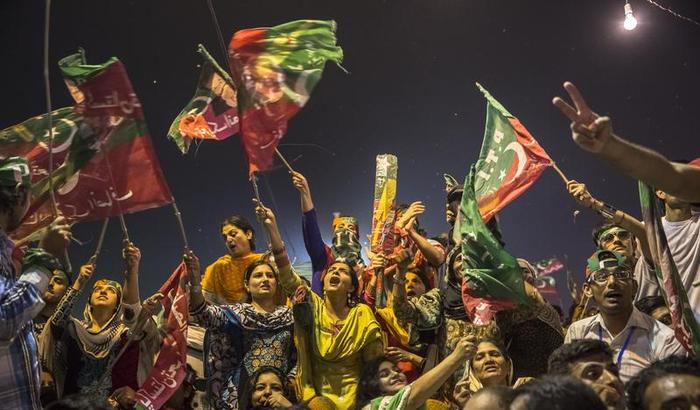
In the wake of Pakistan’s recently concluded elections, this panel will offer insight and analysis into what the results are likely to mean for the future of the country and region. The speakers will reflect on the possible composition of a new government and the implications of the election for the future of Pakistan’s democratic system.
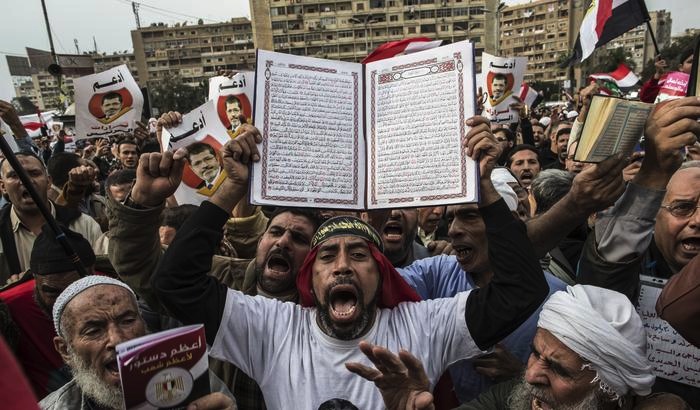
The main streets of Manshiyat Abdel Moneim Riad, a choked grid of hastily constructed apartment blocks spreading out from a power station at Cairo’s northern edge, are organized according to a simple principle: shops and cafes on the edge, mounds of waste, animals, and rough teenagers from the narrow tributary streets in the middle. Rickshaws and trucks battle for position and skirt potholes in between. Men in search of a bit of air brush away flies at sidewalk cafes and survey the scene with contempt.
Mahathir and his country’s reputation in the Middle East point to the wider global importance of Malaysia’s 13th general election and the potential for the diverse country to serve as a model for nations like Egypt, which have struggled after Arab Spring revolutions with key existential questions: determining the proper place of religion and women in public life, the role of the state in the economy, and national identity. Indeed, it remains unclear what the place of non-Muslims and secular-oriented populations will be in nations governed by parties that are committed to building states and societies defined principally in Islamic terms.
Beijing Hosts Simultaneous Visits of Mahmoud Abbas and Benjamin Netanyahu: What, if Any, Significance?
DR. ROBERT BIANCHI INTERVIEWED
In The Guardian, May 8, 2013
“China welcomes Binyamin Netanyahu—Visits from Israeli prime minister and president prompt speculation about China’s possible role as a Middle East mediator.”
Go West at What Cost? China’s Pivot on Middle East Studies
“… China’s move to gain a foothold in Middle East diplomacy, might not be such a bad thing … But the consequences for China moving closer to U.S. and Israel on Middle East policy could also mean alienating its partners in Muslim societies in the region.” [May 10, 2013] Read this article …
China’s Iraq Oil Strategy Comes Into Sharper Focus
“…Despite the inherent risks in dealing with complex and unstable markets such as Iraq, Chinese investors have been gaining a foothold in the country’s energy sector and in doing so have begun to face a unique set of challenges. In addition to having to navigate a tumultuous political and security environment, China is engaging a country that for a long period of time remained effectively under U.S. military occupation even as the central Iraqi government operated under a framework of limited sovereignty …
This article was originally published on Salon.com on May 10, 2013
Watching Syria is like looking through a kaleidoscope. The picture seems to change dramatically in response to the slightest jolt, but the components remain the same. The past week has seen lots of jolts, but no real change in the elements that make up the sad picture.
Iraq's Oil Sector Open for Business: The Asia Connection
Post-occupation Iraq’s oil production ― buoyed by the existence of vast unexploited reserves ― is resurgent. Asian national oil companies (NOCs), which tend to be less risk averse than many of their Western counterparts, are increasingly making their presence felt.
What Pakistan’s Democratic Future Holds for the United States
With elections set to take place on May 11, Pakistan stands at an important juncture of its history. The Election Commission of Pakistan, arguably the most independent and impartial that the country has had, is working diligently to ensure that the electoral process is free and fair. A democratically elected government could, for the first time in Pakistan’s history, relinquish power to another civilian government. Such a development, which marks a new phase in the Pakistan’s democratic struggle, indicates the need for a reassessment of U.S.
The International Response to Syria's Humanitarian Catastrophe
Tue, 5/7/2013 12:15 pm to 1:15 pmLocation: Carnegie Endowment – Root Room1779 Massachusetts Ave NWWashingtonDistrict of Columbia20036 The Middle East Institute is pleased to welcome Valerie Amos, the UN under-secretary-general for Humanitarian Affairs, for a discussion about the humanitarian crisis inside Syria. Now in its second year, the Syrian conflict has generated more than 1.3 million refugees and left 4.25 million internally displaced. According to the UN, some 6.8 million people are in desperate need of assistance.
The oldest peer-reviewed publication dedicated to the study of the modern Middle East, MEI’s flagship journal covers politics, society, and culture in the region.