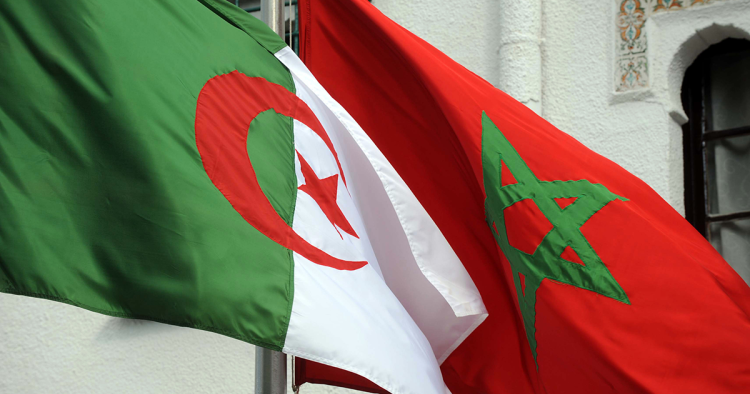
During an interview on 29 December with the French daily Le Figaro, Algerian President Abdelmadjid Tebboune declared that his country had cut ties with Morocco in the summer of 2021 to “avoid war.”[i] Tebboune’s comments reflected just how far relations had deteriorated, and that avoiding conflict required a strong response. Hence, the diplomatic break of August 2021. What has resulted in this bilateral nadir? Three distinct and long-standing dynamics contributed to this escalation: the status of the Western Sahara conflict, the foreign policy priorities of the current Algerian leadership in Algiers, and Morocco’s own foreign policy, including its growing relationship with Israel.
Despite these tensions, the costs of conflict—including the prospect of significant economic disruptions, social harm, and regime instability—continue to make active hostilities unlikely, even on a small scale. However, tensions are likely to continue, not only due to the impasse over the Western Sahara, but also because Algiers continues to view Rabat with suspicion, and maintaining tension helps put pressure on the latter. Furthermore, Algiers’ antagonism toward Rabat has a significant domestic component: it serves as a public justification for a strong army. This is an important factor in the aftermath of the protest movement of 2019 that led to the removal of former president Abdelaziz Bouteflika and began to implicitly threaten the military’s political role.
Continue reading in Manara Magazine
Photo by FAROUK BATICHE/AFP via Getty Images
The Middle East Institute (MEI) is an independent, non-partisan, not-for-profit, educational organization. It does not engage in advocacy and its scholars’ opinions are their own. MEI welcomes financial donations, but retains sole editorial control over its work and its publications reflect only the authors’ views. For a listing of MEI donors, please click here.