This individual is a guest contributor. MEI is not able to assist with contact requests.
Shahmahmood Miakhel is the Country Director in Afghanistan for the US Institute of Peace (USIP). Prior to that he was a Governance Advisor for the United Nations Assistance Mission in Afghanistan (UNAMA), and, from 2003–2005, a Deputy Minister of the Interior in the Government of Afghanistan. In 1994–1995 he worked for the United Nations Development Programme (UNDP) and United Nations Office for Project Services (UNOPS) in South and Southeast Afghanistan helping to establish District Rehabilitation Shuras (DRS). He also worked as a reporter for the Pashto service of the Voice of America from 1985–1990.
Fixing America’s Failed Strategies in the Middle East
The Middle East is both central to key United States interests and prone to instability. Yet US national security and defense strategic guidance has struggled to account for the unique demands of the region. Calls for strategic divestiture from the region have grown in prominence among analysts and policymakers alike in recent years.
Despite efforts to extend the cease-fire in Lebanon and disarm Iranian proxy Hizballah, fighting continues between the militant group and Israeli forces. Hosts Alistair Taylor and Matthew Czekaj are joined by MEI Senior Fellow Fadi Nicholas Nassar to examine what the renewed fighting means for attempts to counter Iranian influence in Lebanon and what could lie ahead. They discuss the prospects for a lasting agreement, Iran’s broader proxy strategy, and how Washington can help strengthen the sovereignty of the Lebanese state.
Battered but Still Standing, Egypt Tries to Weather the Economic Ravages of the Iran War
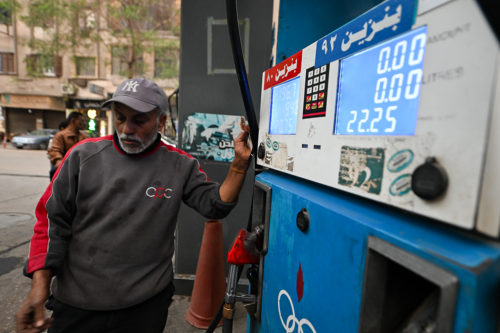
While Egypt is not in the direct line of fire in the US-Israeli war with Iran, its economy is acutely vulnerable to the conflict. In addition to the rising energy prices and shortages that have affected much of the world, it also struggled with issues that reflected its economy’s own underlying structural vulnerabilities.
From Hormuz to the Sahel: A Fertilizer Shock, and a Maghreb Solution
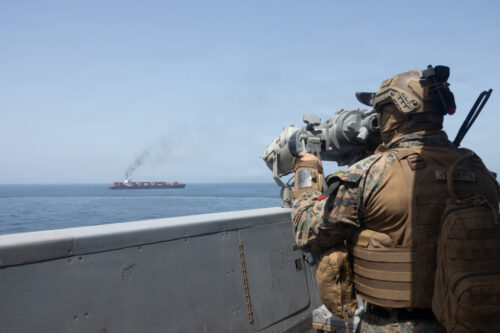
The war-time disruptions of international shipping passing through the Strait of Hormuz are spreading through the fertilizer market and affecting supply chains encompassing regions that have no margins to absorb the impact. The Sahel is one such region and now faces a severe threat of widespread hunger.
Join us to see our latest exhibition, Beyond the Weave: Contemporary Dialogues with AlSadu, at the upcoming First Friday Open House as part of Art Walk Dupont.
Violence, Settlements, and Creeping Annexation in the West Bank
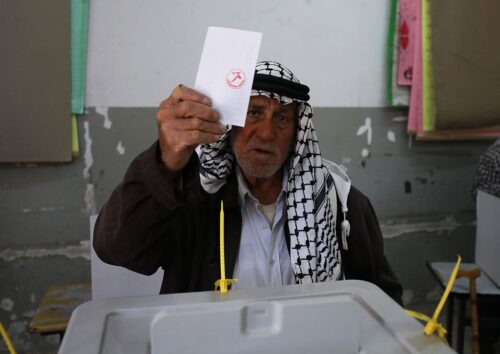
As international attention remains fixed on the fallout from the Iran war, conditions in the West Bank continue to deteriorate. Hosts Alistair Taylor and Matthew Czekaj speak with MEI Senior Fellow Lucy Kurtzer-Ellenbogen about the sharp rise in settler violence, expanding settlement activity, and growing Palestinian displacement across the territory. They examine how recent Israeli legal and administrative measures are reshaping realities on the ground, the implications for Israeli-Palestinian relations, and what the United States should do to play a constructive mediator role.
Why Iran’s Oil Pain Does Not Guarantee Capitulation
President Donald Trump now appears to share a view gaining traction in some policy circles: that sustained pressure on Iran’s oil sector could inflict lasting damage on its production and eventually force Tehran to compromise. The thesis is appealingly simple, yet dangerously incomplete.
Syria is in the midst of a fragile transition. Many observers see positive momentum, with new humanitarian initiatives underway and fresh funding beginning to flow. But the risks remain serious: regional spillover, deep humanitarian needs, funding shortfalls, Israeli strikes, sectarian tensions, stalled political tracks, and continued reports of abuses by multiple actors.
America Cannot Afford to Miss This Opening in Lebanon
President Donald Trump has an opportunity to do something no American president has managed in nearly half a century: end the war between Israel and Lebanon for good.
In the Trump administration’s diplomatic track with Tehran, one crucial variable is missing: steady US engagement with its Arab partners, particularly in the Gulf, on what the strategic endgame with Iran looks like.