تمت ترجمة هذا النص بواسطة الذكاء الاصطناعي وقد يحتوي على أخطاء.
تخطي إلى المحتوى

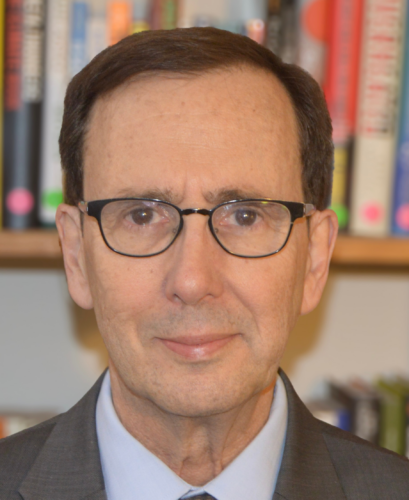
Shahmahmood Miakhel

Country Director, Afghanistan

الخبرة

أفغانستان

This individual is a guest contributor. MEI is not able to assist with contact requests.

Shahmahmood Miakhel is the Country Director in Afghanistan for the US Institute of Peace (USIP). Prior to that he was a Governance Advisor for the United Nations Assistance Mission in Afghanistan (UNAMA), and, from 2003–2005, a Deputy Minister of the Interior in the Government of Afghanistan. In 1994–1995 he worked for the United Nations Development Programme (UNDP) and United Nations Office for Project Services (UNOPS) in South and Southeast Afghanistan helping to establish District Rehabilitation Shuras (DRS). He also worked as a reporter for the Pashto service of the Voice of America from 1985–1990.

The Latest from Shahmahmood Miakhel
تصفية حسب
10031 Results
How Iran, China, and Russia Use the Shadow Fleet to Evade US Sanctions
  • Policy Memo
  • How Iran, China, and Russia Use the Shadow Fleet to Evade US Sanctions

    Crude oil legally sanctioned by the United States and its allies today makes up an estimated 18% of global tanker capacity, or 6-7% of total unrefined petroleum flows — shares that have been growing. Increased pressure on Russian exports and US intervention in Venezuela have further constrained Russian flows and temporarily removed Venezuela, the smallest sanctioned producer, from the market. Iranian exports, however, remain largely untouched.

    AI, the Gulf, and the US: A Primer
  • Report
  • AI, the Gulf, and the US: A Primer

    The Gulf states are betting big on artificial intelligence (AI). Their motive is simple: While hydrocarbons will remain part of the energy mix for the foreseeable future, the revenue and influence tied to crude are already beginning to diminish. AI is not just about technology; it is a hedge, and potentially a new foundation for sustaining and even increasing their power in the rapidly shifting world order.

    Riyadh takes the helm in Yemen
  • التحليل
  • Riyadh takes the helm in Yemen

    Saudi Arabia has stepped up its efforts to unify and restructure Yemen’s anti-Houthi forces after the rapid expansion and sudden implosion of the United Arab Emirates-backed secessionist Southern Transitional Council following Abu Dhabi’s military withdrawal from the country.

    February 25, 2026

    Iran looms large over Trump’s address to the nation
  • تعليق
  • Iran looms large over Trump’s address to the nation

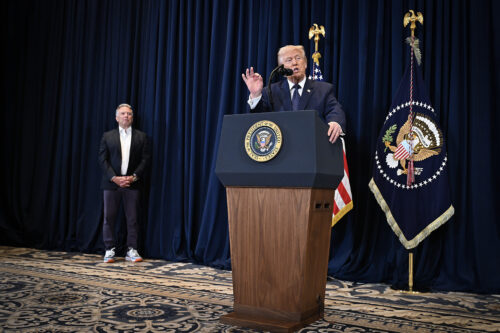
    US President Donald Trump takes to the podium tonight to deliver the first State of the Union address of his second term.

    “It’s going to be a long speech because we have a lot to talk about,” Trump said ahead of the address. The State of the Union—an annual speech delivered by the US president to Congress—typically focuses heavily on domestic policy issues, and that’s likely to be the case with tonight’s speech as well. Concerns about the health of America’s economy and growing public controversy about the Trump administration’s immigration policies are two of the domestic policy issues Trump will likely address.

    Board of Peace Meets as Storm Clouds Gather for Another Possible Middle East War
  • التحليل
  • Board of Peace Meets as Storm Clouds Gather for Another Possible Middle East War

    US President Donald Trump hosted an idiosyncratic gathering of global representatives in Washington on February 19 that included some key Middle East figures meeting under the banner of peace to discuss the next steps in Gaza just as the US was sending more military forces to the region to pressure and possibly target Iran.

    Bibi’s Hail Mary on Iran
  • Podcast
  • Bibi’s Hail Mary on Iran

    Hosts Alistair Taylor and Matthew Czekaj are joined by MEI Senior Fellow Natan Sachs to discuss Israeli Prime Minister Benjamin Netanyahu’s February 11 visit to the White House, Israel’s anxieties surrounding the ongoing US-Iran talks, and the domestic political dynamics Netanyahu is operating under. Taylor, Czekaj, and Sachs unpack what Netanyahu hoped to achieve during the visit, particularly regarding Iran, and what his relationship with President Donald Trump can tell us about the relative coordination and policy alignment between the US and Israel. They also examine Netanyahu’s political standing at home, two and half years since the October 7 attacks, as the 2026 election campaign begins in Israel. Finally, Sachs assesses what lies ahead for Israeli politics.

    February 19, 2026

    The Potential and Predicament of East Med Energy
  • الحدث
  • The Potential and Predicament of East Med Energy

    Please join us for this half-day conference exploring the promises and complexities of the Eastern Mediterranean’s energy landscape.

    February 18, 2026, 10:00 AM – 1:30 PM

    ندوة عبر الإنترنت على Zoom

    Courage Runs in the Iranian People’s DNA
  • Podcast
  • Courage Runs in the Iranian People’s DNA

    Brian sits down with Holly Dagres, Libitzky Family Senior Fellow at the Washington Institute for Near East Policy, to discuss Iranian public opinion and protest movements. Dagres, who was born in Los Angeles and moved to Iran at age thirteen, offers a rare insider perspective on the views and aspirations of the Iranian people. The conversation explores the formative experiences of her teenage years in Iran, the roots of the country’s powerful women’s movements, the power of youth voices, and US policy toward Iran.

    Syria’s Path Toward Stabilization — and How the US Can Help
    Photo by Sally Hayden/SOPA Images/LightRocket via Getty Images
  • Policy Memo
  • Syria’s Path Toward Stabilization — and How the US Can Help

    After more than 50 years of brutal dictatorial rule and 13 years of civil conflict, the first year of Syria’s transition has been complex, imperfect, and fraught with difficulties. However, despite some significant challenges, Syria is clearly stabilizing. To sustain this progress, the United States must remain engaged.

    US Military Posture and Strike Options Against Iran
  • سلسلة الإحاطات الافتراضية
  • US Military Posture and Strike Options Against Iran

    On January 14, as the Iranian regime brutally cracked down on the largest street protests the country had seen in years, US President Donald Trump urged Iranians to persevere, posting on social media “help is on its way.” At the time, however, limited US military resources in the theater constrained the president’s military options. In the ensuing month since Trump’s post, the Pentagon has repositioned significant forces to the Middle East. This has led to wide speculation that the US is preparing for renewed strikes on Iran even as the Trump administration pursues diplomatic talks with the Iranian regime. To better understand the military planning and force posture dynamics shaping US policy choices, this briefing featured two Distinguished Military Fellows, former commander of the 5th Fleet VADM Kevin Donegan, USN (Ret.), and former Deputy Assistant Secretary of Defense for the Middle East Mick Mulroy. MEI Senior Fellow Jason Campbell moderated the discussion.

    February 17, 2026, 11:00 AM – 12:00 PM

    After Rojava: What’s Next for the Kurds?
  • Podcast
  • After Rojava: What’s Next for the Kurds?

    Dramatic developments in Syria have delivered a major blow to Kurdish ambitions for self-rule. In a rapid offensive, Damascus moved into northeast Syria, forcing the Kurdish-led Syrian Democratic Forces (SDF) out and effectively dismantling the autonomous region the Kurds had built during the civil war.

    US-Israel Relations
  • تعليق
  • US-Israel Relations

    The United States is Israel’s closest ally, and its support is a central pillar of Israel’s national security. The US provides Israel access to purchase advanced weapon systems, ammunition and weapon emergency supplies in times of war, intelligence sharing, opportunities for cooperation in defense technology, and crucial diplomatic cover at the UN Security Council and elsewhere. It also provides Israel with regular security aid, to be spent in the United States, currently at an annual rate of $3.8bn (under an MOU that expires in 2028). Since October 2023, the US also offered active military support, in a break from the historical norm. It contributed substantially to Israel’s defense against Iranian ballistic missiles, in conjunction with Arab regional partners, and bombed nuclear sites in Iran in support of Israel’s campaign in the “12 Day War” of June 2025.