This article is part of a collection of short essays written by the Fellows of the Middle East Institute to explore aspects of the ongoing war with Iran. The intent of the collection is to help readers see new and unexpected elements of the dynamics and impact of the ongoing hostilities and to think harder, deeper, and broader about the implications of the conflict. To read the other essays from this collection, as well as download the full report, please click here.
In the aftermath of the Cold War, a group of American policymakers began arguing for the expansion of the North Atlantic Treaty Organization (NATO). They envisioned not just enlargement eastward in Europe, but also a broadening of NATO’s mission southward into the Middle East. During that first decade, the region was rife with instability: from the 1991 Gulf War and the collapse of the Israeli-Palestinian peace process to civil wars in Algeria and Yemen, turmoil in Lebanon, and the rise of transnational Islamist militancy. The chaos along NATO’s southern borders could become its new raison d’être and an even stronger case for growing the alliance.
“NATO will either develop a strategy and structure to go ‘out of area’ or it will ‘go out of business,’” is how Senator Richard Lugar put it in an address to the State Department in 1993. Ronald Asmus, a policy expert and leading advocate of NATO enlargement, argued the organization needed a political reinvention, one that rebalanced the alliance and extended its engagement “well beyond [Europe] into the broader Middle East.” A decade later, both Asmus and the Middle East Institute’s Vice President for Policy Kenneth Pollack, then at the Brookings Institution, saw the September 11, 2001, terrorist attacks and 2003 Iraq War as decisive. It was time for Washington to acknowledge the greater Middle East as a primary strategic challenge for NATO’s new agenda. This was part of a new burden-sharing logic. Europe felt an urgency to stabilize its southern and eastern flanks; the Americans were focused on threats from the Middle East.
Yet today, more than 30 years since it overcame and outlasted the threat from the Eastern Bloc, NATO is struggling. Russia is waging war on Ukraine, with spillover felt all along NATO’s eastern flank. The United States, the North Atlantic Alliance’s largest, most important member, is trying to pivot to Asia. And fresh conflict has erupted on Europe’s doorstep, across the Middle East, with Western strategic rivals Russia and China both seeking advantage. Unexpectedly, for an alliance feeling unmoored, herein lies opportunity.
NATO’s Role in a Shifting World Order
“I’m not happy with NATO,” US President Donald Trump flatly stated at the 32-member political-military organization’s July 2026 summit in Ankara. His comment was part of a pattern that has only intensified since the beginning of the American war on Iran. Ahead of a meeting last spring with NATO Secretary-General Mark Rutte, the US president expressed deep disappointment with the alliance that “wasn’t there when we needed them.” Trump singled out Spain for refusing to give the US access to basing for Iran operations, calling Madrid “a terrible partner in NATO.” But Iran only served as an excuse for Trump to denounce a collective defense organization he had never been fond of.
The root of this transatlantic rift has ostensibly been an imbalance in defense spending, a real problem that has persisted for many decades. To President Trump’s credit, his constant pressure on NATO members to commit to increased defense funding has expedited, solidified, and boosted earlier pledges — most recently, to 5% of GDP, when also counting defense-adjacent budgetary outlays for critical infrastructure. At the Ankara Summit, Secretary-General Rutte announced quantifiable progress and celebrated the “Trump trillion” in member pledges — with Spain remaining the outlier, asking for an opt-out from increased defense spending.
Despite Trump’s blanket complaints, the level of support for America’s war with Iran has varied widely among European allies. It is true that Spain refused to allow the US access to its airspace for attacks on Iran, arguing the war is a violation of international law. And no European NATO member sent troops to fight alongside Americans in Operation Epic Fury — notwithstanding the fact that reportedly none were asked to contribute, consulted, or even informed before the war commenced. But within days of the start of hostilities, Germany’s Chancellor Friedrich Merz, for example, assured President Trump, “We are on the same page in terms of getting this terrible regime in Iran away.” Berlin has allowed Washington to use the logistical hub in Ramstein and other bases for the Iran intervention, even if Merz would come to openly criticize the war and reject the possibility of European involvement. “What does […] Donald Trump expect a handful […] of European frigates to do in the Strait of Hormuz that the powerful US Navy cannot do? This is not our war,” Germany’s defense minister said.
Nevertheless, the war’s consequences have been more severe for Europeans than for Americans, given Europe’s dependence on hydrocarbon imports and continued vulnerability to energy shocks after cutting ties with Russia. It is in Europe’s own interest to step up.
Politically Unpopular, Strategically Invaluable
Strategically, transatlantic security cooperation is as important as ever. As in most partnerships, the two sides have differing needs and fulfill varying, often complementary roles. To strip it down to the basics, Europeans rely on America’s security guarantee. Without the US nuclear deterrent, the rest of the alliance is vulnerable next to Russia; President Vladimir Putin’s nuclear saber-rattling is a reminder. The United States, for its part, benefits from forward basing and diplomatic cover offered by its treaty allies.
There is a rationale for instituting a clearer division of labor and more equal burden-sharing in the moment, but one important political obstacle currently stands in the way. Throughout Europe, President Trump is the most unpopular American president in a generation, likely in no small part due to his unpredictable or dismissive rhetoric regarding the value of alliances and liberal-democratic values. More than three quarters of Europeans now lack confidence in American leadership. Even though the 2003 Iraq War also divided Europe and ramped up anti-Americanism, President George W. Bush’s unpopularity then pales in comparison to Trump’s now.
In turn, NATO is growing less popular — or, at best, becoming a partisan issue — in the United States. Republicans especially have been souring on the alliance — from 55% in 2022 believing the US benefits a great deal from the partnership to 38% in 2026. Democrats remain favorable, with 82% seeing NATO benefits for the United States. However, emerging political figures in the Democratic Party are showing signs of populist, protectionist, and isolationist impulses. A new debate is emerging. Leadership and public opinion go hand in hand, and American attachments are at present tenuous. Transatlantic security can, therefore, be expected to become a harder sell on both sides of the aisle in America going forward. Yet, for all NATO members, the strategic case for maintaining and further strengthening the alliance remains clear.
Iran ought to be a case in point. The Islamic Republic regime has orchestrated over 100 terrorist plots on European territory since 1979. Iranian drones in the hands of Russian units are terrorizing the Ukrainian civilian population, and missiles produced by Tehran have flown more than once into Europe. European trade and energy imports depend on freedom of navigation through the Strait of Hormuz and the Red Sea — both currently held hostage by Iran and its regional non-state proxies. This state of affairs certainly argues for a larger European role — military and diplomatic — in supporting America’s efforts to degrade the Iranian threat in the Gulf region and beyond. And Washington should have expended more diplomatic capital prior to embarking on this war to secure it. History is instructive as to how NATO might have been involved.
In the run-up to the First Gulf War in 1991, following Saddam Hussein’s invasion of Kuwait, the US formed a substantial coalition of more than 40 countries, including 19 European states, to check Iraqi aggression. The effort was led by James Baker, secretary of state in the administration of President George H.W. Bush. Baker undertook the arduous but enormously useful work of coalition-building, spending weeks traveling to allied capitals to secure military, logistical, and financial support. NATO as an organization, aided by individual member contributions, provided early-warning aircraft, naval forces to secure Mediterranean shipping routes, and air defense, medical support, refueling, and transportation assistance. This formidable coalition assured Americans of material burden-sharing and broad diplomatic backing.
Maritime Security in the Strait of Hormuz
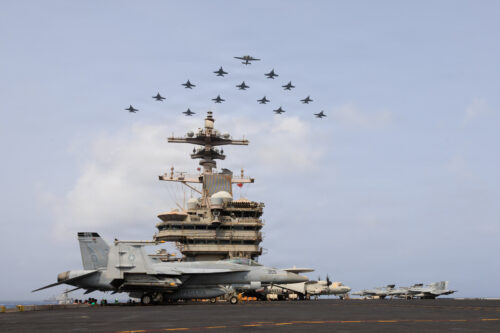
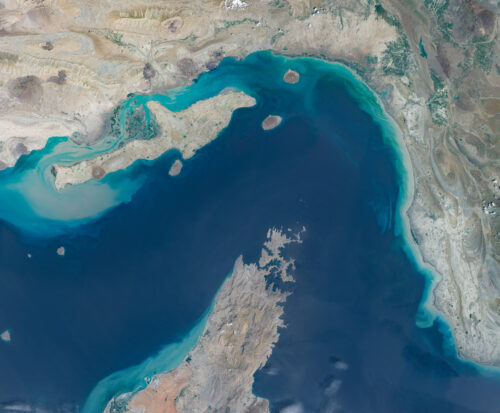
Today, one way America’s NATO allies could be especially helpful in the context of the Iran war is by contributing to maritime security in and around the Gulf. Indeed, several European governments have already expressed a willingness to do so. At this year’s Ankara Summit, a coalition co-led by the United Kingdom and France signaled readiness to lead efforts to secure freedom of passage in the Strait of Hormuz after the war. And last spring, the European Union’s high representative for foreign affairs, Kaja Kallas, floated the possibility of replicating Operation Aspides — the EU’s mission aimed at protecting commercial vessels from the Houthis in the Red Sea — in the Gulf. In the Black Sea, NATO members Romania, Bulgaria, and Turkey have been informally aiding Ukraine in exercising freedom of navigation and continuing commercial trade despite Russian attacks on ports and ships. In the Strait of Hormuz as well, Europeans could share the burden and work with America’s Gulf partners to ensure freedom of navigation and deter future Iranian aggression.
European contributions to maritime security in the Gulf could take several forms, drawing on capabilities the alliance already possesses. Minesweeping and mine-countermeasures are the most obvious, given the importance of the sea mine threat in Iran’s arsenal of options. European navies can contribute some of the world’s most capable mine-hunting fleets: Poland, France, and Finland lead the continent in mine and counter-mine warfare.
Additionally, Europeans could lead a convoy protection operation employing frigates and destroyers to escort tankers passing through the Strait of Hormuz — this effort would be modeled on Operation Aspides in the Red Sea, as EU High Representative Kallas has previously suggested. Notably, they already have a local operational basis on which to build up such a new mission: the European Union has maintained a small maritime-awareness mission in the strait, led by France since 2020, in response to increasing Iranian attacks on commercial vessels. Even a scaled down European contribution, such as intelligence collection and liaison functions performed by a multinational Gulf-focused operation in coordination with the US, as proposed by Admiral James Stavridis (USN, ret.), could have a significant impact.
Finally, Europeans bring complex intelligence, surveillance, and reconnaissance (ISR) capacity, maritime patrol aircraft, and satellite coverage that could be shared with Gulf partners to extend warning times against drone and missile attacks on shipping, utilizing mechanisms similar to those used in the Red Sea. The United States could play an intermediary role under such a scheme, facilitating coordination between NATO members and Middle Eastern allies to secure an equitable division of labor in pursuit of the common goal — ensuring freedom of navigation as well as deterrence of Iran and its proxies.
The Abraham Accords and NATO
That said, NATO allied assistance need not be limited to military efforts. There is an under-explored avenue the Europeans can exploit to relieve American strain in the Middle East and contribute to burden-sharing: buying into the Abraham Accords. This, too, would be in Europe’s interest.
Washington’s 2020 normalization framework between Israel and the United Arab Emirates, Bahrain, Morocco, and Sudan — though never fully implemented by Khartoum — laid the foundations for a US-aligned regional bloc, valuable in countering Iran and promoting broader regional security.
Europe can supply something the accords have so far lacked: credible advocacy for tying normalization back to the Palestinian question. So far, the framework’s elite-driven bargains have outpaced public legitimacy across the Arab world. Furthermore, Saudi Arabia’s continued abstention hinges on the unresolved Palestinian issue. European governments — with a decades-long track record of engagement in Israeli-Palestinian diplomacy — could enhance confidence-building. They could also, in the spirit of meaningful burden-sharing, add material support to reconstruction efforts in Gaza and southern Lebanon.
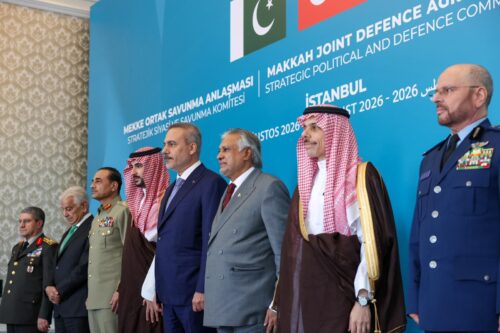
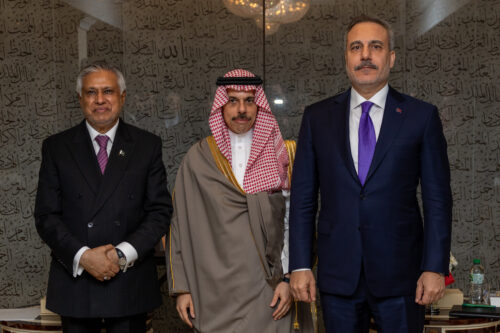
Until now, Europeans have preferred to watch from the sidelines. The Americans should encourage a larger European role. But ultimately, European elites must embrace the notion themselves that engagement with the Abraham Accords inarguably advances European interests. Building European support for the accords would bring numerous security benefits: increased coordination and interoperability with countries in the Middle East and North Africa, the option of joint planning under US Central Command (CENTCOM) toward integrated air and missile defense, intelligence fusion against Iranian proxy networks, and naval coordination for mine countermeasures and escort capabilities described above. A European contribution to the Abraham Accords would create a seat at the table and a strategic stake for the continent. A passive, hands-off policy has proven detrimental: Saudi Arabia’s, Turkey’s, and Pakistan’s recent moves to deepen intra-regional defense ties under the Mecca Pact, for example, are part of broader regional trends that challenge the US-backed Abraham Accords as well as NATO security architecture in Europe.
Beyond security, the Abraham Accords offer potential commercial and diplomatic opportunities for Europeans. Overlapping interests and innovation in the fields of energy transition, artificial intelligence, semiconductors, critical minerals, and infrastructure provide avenues for bringing Europe and the Gulf closer together. The accords have already demonstrated how normalization unlocks capital and technology flows once political barriers are removed. The surge in Israeli-Emirati trade and the trillion-dollar-scale Gulf investment pledges into the American economy can be considered benefits of increased regional cooperation. Europe is the Gulf’s second-largest trading partner (after China). Of course, the Europeans, Americans, and Israelis do not share identical objectives, either in the security or in the commercial realm. Nevertheless, combined European-American efforts could demonstrably enhance regional stability and prosperity in ways that neither side can achieve entirely on its own.
For NATO’s European members already searching for a maritime and diplomatic role to justify their southern-flank relevance, buying into the Abraham Accords is a way to convert Middle Eastern instability from a source of transatlantic friction into a shared strategic project.
Tackling Moscow’s Misconduct in the Middle East
Deterring Russia has undoubtedly returned as a primary concern for Europeans but should not be considered solely the responsibility of Central-Eastern Europe, particularly since Moscow’s destabilizing activities are not confined to NATO’s eastern flank. Russia’s inroads into MENA over the past decade, for instance, present complex and wide-reaching challenges to the security of the alliance as a whole. The Russian intervention in Syria beginning in 2015, including its military’s targeting of civilian areas as well as Russian security services’ documented efforts to facilitate, trumpet, and otherwise exploit the flow of north-bound Middle Eastern refugees, worsened Europe’s migrant crisis around this time. Moreover, Moscow’s military mission in Syria created a framework from which Russia built up battleground-level cooperation with Iran and its proxies. Beyond the immediate region, Russia has also used its foothold in Syria to deploy private militaries into Libya and deep into Sub-Saharan Africa, orchestrating coups, again weaponizing migration, and amplifying anti-Western sentiments across the continent.
Over the ensuing 11 years, Moscow’s strategic partnership with Tehran has borne fruit for both sides. Iranian support, particularly in the form of mass-produced combat drones and missiles, enabled Russian wins in Ukraine — if not in territory, then in attacks on civilian centers and critical infrastructure. In recent months, Russia reciprocated by supplying Iran with sophisticated weapons, providing intelligence used to target American soldiers and bases, and engaging in nuclear cooperation throughout the war. European intelligence revealed that Moscow has been sending explosives, drone components, and ammunition to Tehran via the Caspian Sea — an inland maritime route that is particularly difficult to disrupt — in an effort to replenish Iranian stockpiles damaged by US and Israeli airstrikes, and this illicit, trans-Caspian arms trafficking has flowed both ways. Russia has also delivered weapons and intelligence for targeting Western commercial ships to Iran’s proxies across the Middle East, including Hizballah, Hamas, and the Houthis. Furthermore, Russia and Iran have for years operated a global shadow fleet of oil tankers that American lawmakers are struggling to effectively sanction.
Iran’s Axis of Resistance is already recovering from the damage it sustained from American and Israeli attempts to destroy it. NATO cannot credibly claim to be countering Russia while treating Iran as someone else’s problem, when the two states share targeting data, propaganda networks, and sanctions-evasion routes.
NATO’s own leadership has begun to acknowledge this convergence, even if the alliance’s posture has yet to catch up with the rhetoric. Secretary-General Rutte has warned that growing cooperation is strengthening the military capabilities of Russia and Iran, with direct consequences for both the war in Ukraine and rising instability across the Middle East, describing a widening network of coordination between Russia, Iran, China, and North Korea that is reshaping security dynamics across multiple theatres. Rutte pointed specifically to Iran supplying Russia with drone and military technology used in Ukraine in exchange for Russian financing, which Iran in turn uses to fund regional instability.
At this stage, American unilateral action against Iran and disjointed European efforts against Russia are disconnected. Instead, the two fronts need to be aligned and integrated. A bargain seems obvious. The Europeans need more help on Ukraine — they are short on air-defense stocks and in need of additional military and intelligence assistance — in a theater the US has since identified as a secondary national security concern. The US needs European diplomatic support to reach a sustainable deal for freedom of navigation in the Strait of Hormuz. Minesweeping in the strait, as well as enhanced operations in the Red Sea, would also significantly aid US efforts. Washington should, thus, volunteer more assistance to the Europeans for Ukraine in exchange for Europe stepping up efforts to disrupt Russian assistance to Iran.
Conclusion
Three decades ago, a small group of American strategists saw what others missed: that Europe’s security and Middle Eastern stability were intimately connected. The current conflict in Iran has, indeed, starkly highlighted how deeply the Gulf’s stability remains intertwined with Europe’s. But even prior to the war’s outbreak, Russian-Iranian cooperation played out daily on Ukrainian battlefields. Russia and Iran are learning from and supporting each other in their respective wars. Today, NATO’s future depends on addressing those links between the Middle East and the transatlantic space. And yet, the alliance still functionally treats these theaters as separate files.
What is needed now is a NATO response that connects the dots between Hormuz and the Black Sea, between drone shipments and shadow fleets, and between the Abraham Accords and the alliance’s own southern flank. This requires European leadership to do the hard work of explaining why Middle Eastern security should matter to European publics. President Trump’s transactional pressure has forced overdue burden-sharing. However, his administration’s lack of tact has undermined trust not just with elites but with many ordinary citizens across the continent. It is true that European leaders must step up — not as a favor to Washington but because the alternative is watching the next crisis arrive on terms set entirely by Moscow and Tehran. It is equally true that for NATO to have any hope of achieving security throughout the transatlantic space, Washington simply cannot shed its crucial responsibility for global leadership.
Iulia Joja is a Senior Fellow at the Middle East Institute.
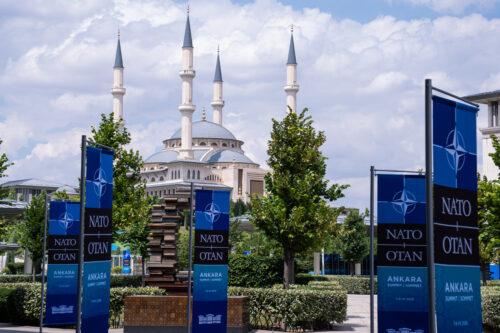
Top image: NATO Summit banners are displayed in front of the Presidential Nation’s Library, with the Millet Mosque seen in the background, ahead of the 36th NATO Heads of State and Government Summit in Ankara, Turkey, on July 6, 2026. Photo by Omer Taha Cetin/Anadolu via Getty Images.
The Middle East Institute (MEI) is an independent, non-partisan, not-for-profit, educational organization. It does not engage in advocacy and its scholars’ opinions are their own. MEI welcomes financial donations, but retains sole editorial control over its work and its publications reflect only the authors’ views. For a listing of MEI donors, please click here.
The Mecca Joint Défense Agreement: A New Geometry of Middle Eastern Power?