The Unavoidable Neighbor: Managing Iran Beyond the War
Gulf states and their partners are increasingly looking beyond their most immediate interests of containing the war with Iran. While recent talks between Saudi Arabia, Turkey, Pakistan, and Iran have kept de-escalation on the agenda, a broader regional security framework and non-aggression pact has also emerged, envisioning a longer-lasting solution to regional conflicts. The talks have yet to produce a settlement, but they reflect a growing recognition that Gulf security cannot depend entirely on Washington. Iran will still be there, and its neighbors will have to find ways of living with it.
Recent Elections and What They May Mean for the Middle East
Recent elections for the Israeli Knesset and American Congress may make less of a difference in the Middle East than some people think. Elections are significant indicators of national political trends, but do not always translate into changes in national security strategies. That is likely the case now in both nations.
The Coming Debate Over the US Military Presence in the Gulf
The war with Iran is hardly over, but the debate over the shape and nature of the post-conflict American posture in the Gulf region is just beginning. Undoubtedly, how the war ends will affect how the United States adjusts its role. While this debate is still in its early stages, something of a conventional wisdom is already developing in policy circles that could seriously compromise American influence in the Middle East.
Wars don’t just end. They get interpreted, reinterpreted, and turned into strategic doctrine. That is what happened after the Iran-Iraq War of the 1980s, a conflict that saw the United States back Tehran’s Iraqi adversaries. The war taught Tehran three lessons it never unlearned: that Washington wants the Islamic Republic gone, that Iran stands essentially alone in the world, and that it cannot survive a direct, overt fight with the U.S. and Israel.
From Oil to AI: How Water Constraints Shape the Gulf’s Digital Future
Gulf Cooperation Council states are investing hundreds of billions in AI infrastructure, data centers, and semiconductor capabilities, making technology central to post-oil economic diversification. Yet this expansion faces a critical constraint: severe water scarcity turns AI growth into a challenge, as data centers in some of the world’s most water-stressed territories strain already overextended hydrological systems. The U.S.-Iran war has also underscored the physical vulnerability of the infrastructure supporting these ambitions. Together, these pressures raise pressing questions about the sustainability and scalability of Gulf states’ AI-driven development strategies.
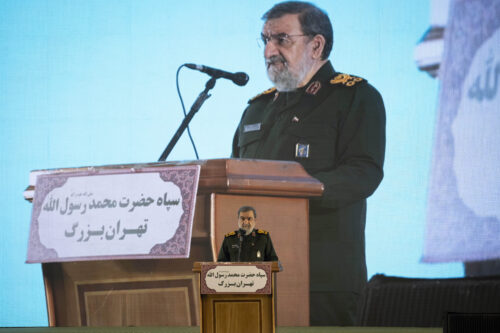
Within 48 hours this week, Iran filled six of the most important posts in its battered military and security establishment. Read together with the biographies and mandates behind them, the appointments show how Tehran is drawing lessons from successive wars and preparing for a prolonged period of insecurity, without proving it has abandoned negotiation.
In an August 9 interview with Axios, when asked about the endless swings of the Iran standoff, he shrugged it off as familiar territory. “It’ll work out in the end. It always does. It’s like a chess game.”
Washington’s Four Wrong Assumptions About the Iran War
The United States has long confused Iran for a rational actor with a low pain threshold, sensitive to battlefield losses and vulnerable to domestic unrest, which would bring it to the negotiating table. Each of those assumptions is wrong.
The “Anti-Strategic President” Needs to Revive a Policy Process to Resolve Iran
President Donald Trump’s disdain for strategy extends to process: mass National Security Council firings and reliance on a tiny circle of advisors have left the interagency policy process dormant amid the Iran war. The result is improvised, damaging moves like the Strait of Hormuz toll scheme. Reviving a professional, deliberative policy process is essential.
It has become a commonplace for Americans to describe our current war with Iran as stuck in a kind of limbo, neither full war nor real peace. We’re not the only ones. Iraq finds itself caught in a limbo of its own, between America and Iran, between the tolerable and the intolerable, between progress and relapse.
MENA Energy Recap, Q2-2026: Mideast Energy Confronts its Hormuz Era
The MENA Energy Recap is a quarterly review of key energy developments that took place in the region from April through June of 2026 and what they signal in the months ahead. The Recap views these developments through the lens of policy and strategy, energy security, and markets.
In many ways, the U.S.-Israeli war against Iran and the war in Gaza that preceded it seem transformative. After decades of shadow warfare, Iran and Israel have now attacked each other’s homelands directly. And Israel and the United States have joined forces in a genuinely novel way to wage war against Iran.
It is now clear the United States is sinking into the quagmire of its war with Iran with no clear idea of how to get out. More than five months of intermittent bombing of Iran have not brought Tehran any closer to surrender. Recurring threats by US President Donald Trump to launch a massive military campaign against the country aren’t causing Iran to submit to US demands.
As the US-Israel-Iran war enters its sixth month, the conflict has taken a sharp turn. After a brief lull in the fighting, Iran launched a surprise ballistic missile attack on US forces on July 28, and the US and Saudi Arabia struck back at Iran-backed militias in Iraq, marking Riyadh’s entry into the war. MEI Senior Fellow Alex Vatanka joins host Alistair Taylor to discuss the escalation, what may come next, and the state of talks over sharing the Strait of Hormuz.
This report considers the lack of Palestinian political agency as a driver of regional insecurity that must be resolved before wider conflicts can be settled. The author analyses the conditions that contributed to the destruction of Palestinian political capacity, including Israeli policies, Palestinian shortcomings, and exploitation by Iran, and makes recommendations for an Arab strategic initiative.