تمت ترجمة هذا النص بواسطة الذكاء الاصطناعي وقد يحتوي على أخطاء.
تخطي إلى المحتوى

الأبحاث والتعليقات

اقرأ الأبحاث والتحليلات والتعليقات المتعمقة من زملاء وخبراء معهد الشرق الأوسط عن الشرق الأوسط. 

Trump’s South Caucasus Peacemaking Is His Most Successful, but It Remains Unfinished
  • تعليق
  • Trump’s South Caucasus Peacemaking Is His Most Successful, but It Remains Unfinished

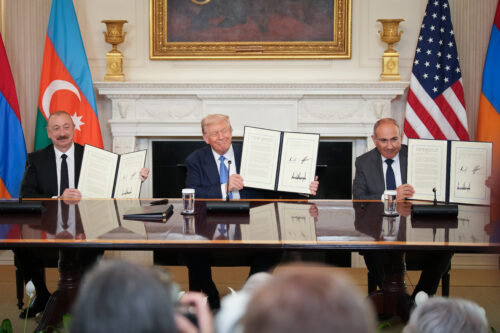
    Of all the fronts in President Trump’s peacemaking agenda, the South Caucasus has delivered the most concrete results. The August 2025 Washington Declaration, signed between Armenia and Azerbaijan and witnessed by Trump, marked an important step toward peace in the region. The two sides initialed a peace agreement and advanced plans to unblock regional connectivity, including through the establishment of the Trump Route for International Peace and Prosperity (TRIPP), which would connect Azerbaijan to its Nakhijevan exclave through southern Armenia. Implementation of TRIPP has since made notable progress, but construction has yet to start. A breakthrough on those two tracks would, in turn, unlock Armenia–Türkiye normalization, transforming a long-fractured region into an area of trade and interdependence.
    The Iran War Was Always About Regime Change
  • تعليق
  • The Iran War Was Always About Regime Change

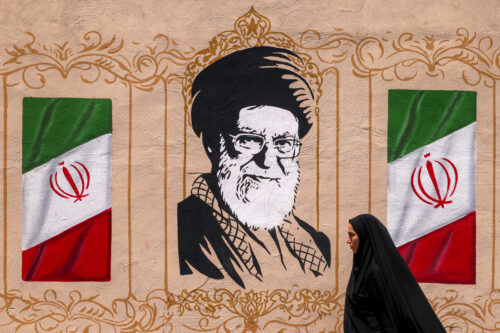
    Wars don’t just end. They get interpreted, reinterpreted, and turned into strategic doctrine. That is what happened after the Iran-Iraq War of the 1980s, a conflict that saw the United States back Tehran’s Iraqi adversaries. The war taught Tehran three lessons it never unlearned: that Washington wants the Islamic Republic gone, that Iran stands essentially alone in the world, and that it cannot survive a direct, overt fight with the U.S. and Israel.

    Iran’s New War Cabinet Is Really an Old One
  • التحليل
  • Iran’s New War Cabinet Is Really an Old One

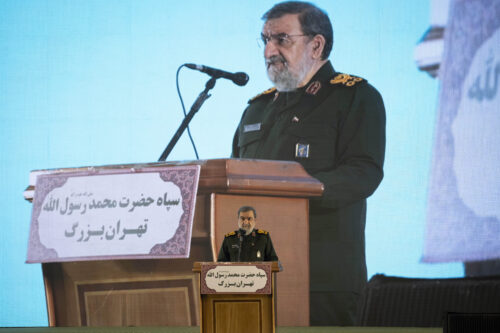
    Within 48 hours this week, Iran filled six of the most important posts in its battered military and security establishment. Read together with the biographies and mandates behind them, the appointments show how Tehran is drawing lessons from successive wars and preparing for a prolonged period of insecurity, without proving it has abandoned negotiation.

    Additional Research & Commentary

    معلومات أساسية

    Israeli Settlements in the West Bank
  • معلومات أساسية
  • Israeli Settlements in the West Bank

    Since 1967, Israeli settlements in the West Bank have been a contested feature of the Israeli-Palestinian conflict. The ultimate disposition of the settlements and ongoing activity related to their growth have repeatedly defied agreement in negotiations over a resolution to the conflict.

    June 9, 2026

    The Houthis
  • معلومات أساسية
  • The Houthis

    The Houthis are a political-military faction and Zaydi religious movement founded in northwestern Yemen in the 1980s. A key member of Iran’s Axis of Resistance with links to other militant organizations in the Arabian Peninsula and the Horn of Africa, the group has continued to pose a threat to Western interests on a global scale.

    May 15, 2026

    The India-Middle East-Europe Economic Corridor
  • معلومات أساسية
  • The India-Middle East-Europe Economic Corridor

    The India-Middle East-Europe Economic Corridor (IMEC) is a proposed multinational infrastructure initiative aimed at upgrading connectivity between the three regions through integrated trade, energy, and digital networks. Announced at the G20 summit in New Delhi in September 2023, IMEC is envisioned partially as a counterweight to China’s international infrastructure project, the Belt and Road Initiative.

    June 3, 2026

    Turkish Foreign Policy
  • معلومات أساسية
  • Turkish Foreign Policy

    After a decade of post-Arab Spring isolation, Turkey’s leaders have recognized that their ambition to position the country as an agenda-setter on the world stage requires active engagement in all directions. President Recep Tayyip Erdoğan’s consolidation of executive authority has centralized foreign policy decision-making and tied it to his domestic political priorities, transforming the country’s revisionist approach to one shaped primarily by personal and pragmatic interests.

    April 23, 2026

    المدونات الصوتية

    التركيز على الشرق الأوسط

    البودكاست الأسبوعي الرائد لمعهد الشرق الأوسط حول السياسة الخارجية الأمريكية والقضايا السياسية والاجتماعية المعاصرة في الشرق الأوسط.

    إزالة الحافة من الشرق الأوسط

    براين كاتوليس، زميل أول في معهد الشرق الأوسط كاتوليس يشارك الأصدقاء والزملاء وخبراء السياسة في محادثات غير رسمية حول أهم الأحداث في الشرق الأوسط. 

    إعادة التفكير في الديمقراطية

    زميل أول في معهد الشرق الأوسط غونول تول تستضيف كبار العلماء وقادة الفكر حول اتجاهات الديمقراطية العالمية وحالة النظام الدولي الليبرالي. 

    تصفية حسب
    8783 Results
    Covering Egypt, Covering Islam: What the Media Get Wrong (and Occasionally Right)
    معهد الشرق الأوسط
  • Video
  • Covering Egypt, Covering Islam: What the Media Get Wrong (and Occasionally Right)

    Drawing on over thirty years' experience covering Middle Eastern and Islamic issues, mostly for the BBC, Roger Hardy argues that the media have all too often shown a chronic lack of understanding of Islam and Muslim societies – and by distorting or sensationalizing Muslim issues have made it harder to combat extremism and win the 'war of ideas.' As Arab and Muslim protesters take to the streets of Cairo and the Arab world, Hardy examines if coverage and understanding of the Muslim world has deepened or improved.

    February 17, 2011

    Covering Egypt, Covering Islam: What the Media Get Wrong (and Occasionally Right)
    معهد الشرق الأوسط
  • Podcast
  • Covering Egypt, Covering Islam: What the Media Get Wrong (and Occasionally Right)

    Drawing on over thirty years' experience covering Middle Eastern and Islamic issues, mostly for the BBC, Roger Hardy argues that the media have all too often shown a chronic lack of understanding of Islam and Muslim societies – and by distorting or sensationalizing Muslim issues have made it harder to combat extremism and win the 'war of ideas.' As Arab and Muslim protesters take to the streets of Cairo and the Arab world, Hardy examines if coverage and understanding of the Muslim world has deepened or improved.

    February 17, 2011

    Kuwait at Fifty
    معهد الشرق الأوسط
  • التحليل
  • Kuwait at Fifty

    *This Policy Insight first appeared as a feature article in the Majalla on February 9, 2011.

    Half a century after independence and two decades since the liberation from Iraqi occupation, Kuwait’s bitter experience with pan-Arabism and ongoing regional power plays have affected its growth. However, since the downfall of Saddam Hussein in 2003, and thanks to robust oil revenues, Kuwait has witnessed an unprecedented boom, albeit amidst raging internal disputes over the need for reform and the future direction of the country.

    Betrayal

    After Mubarak: What Do the Egyptian People Really Want?
    معهد الشرق الأوسط
  • Video
  • After Mubarak: What Do the Egyptian People Really Want?

    The Middle East Institute is proud to host Steven Kull and Shibley Telhami for an examination of Egyptian views and attitudes towards governance and their future. As Egyptian demonstrators celebrate the resignation of President Hosni Mubarak, many wonder what kind of system the Egyptian people really want. How do they view the Muslim Brotherhood? If Egypt were to become more democratic what are we likely to see in terms of its relation with the US, Israel and other countries in the region?

    February 16, 2011

    After Mubarak:What do the Egyptian People Really Want?
    معهد الشرق الأوسط
  • Podcast
  • After Mubarak:What do the Egyptian People Really Want?

    The Middle East Institute is proud to host Steven Kull and Shibley Telhami for an examination of Egyptian views and attitudes towards governance and their future. As Egyptian demonstrators celebrate the resignation of President Hosni Mubarak, many wonder what kind of system the Egyptian people really want. How do they view the Muslim Brotherhood? If Egypt were to become more democratic what are we likely to see in terms of its relation with the US, Israel and other countries in the region?

    February 16, 2011

    After Mubarak
    معهد الشرق الأوسط
  • التحليل
  • After Mubarak

    The shock waves of Hosni Mubarak’s resignation have just started to roll across the Middle East, but in Egypt the upheaval has barely begun. The country now embarks on what the protesters in Tahrir square hope will be a transition to a true, civilian-led democracy. In the meantime, Egypt is headed for a period of military rule in some form, with the ultimate intentions of the armed forces leadership still in doubt. Will the military act to effect the “genuine transition” now demanded by the Obama Administration and the protesters themselves?

    February 14, 2011

    Turkey as an Alternative Democratization Model for the Middle East
    معهد الشرق الأوسط
  • التحليل
  • Turkey as an Alternative Democratization Model for the Middle East

    The popular uprisings against authoritarian regimes in Tunisia, Yemen, Jordan and Egypt herald the beginning of a new political era in the Middle East. At the center of this new political order is a generation of young Arabs, educated, highly marginalized, and numerous. The members of the so-called Arab “youth bulge” are demanding neither the unification of the Arab world as espoused by the pan-Arabists of the 1960s, nor an Islamic state of the 1980s, but rather a dignified life, social justice, and freedom.

    US-Libya Relations: Surviving the Wikileaks Controversy?
    معهد الشرق الأوسط
  • Video
  • US-Libya Relations: Surviving the Wikileaks Controversy?

    US-Libya Business Association Honorary Chairman Amb. David Mack and Executive Director Charles Dittrich traveled to Libya for five days in mid-December. They met with Libyan government officials, Libyan private business leaders and representatives of American companies working in the country. They will share impressions regarding the political and economic climate in Libya and the implications for both overall US-Libyan relations and the prospects for American business interests.

    February 10, 2011

    US-Libya Relations: Surviving the Wikileaks Controversy?
    معهد الشرق الأوسط
  • Podcast
  • US-Libya Relations: Surviving the Wikileaks Controversy?

    US-Libya Business Association Honorary Chairman Amb. David Mack and Executive Director Charles Dittrich traveled to Libya for five days in mid-December. They met with Libyan government officials, Libyan private business leaders and representatives of American companies working in the country. They will share impressions regarding the political and economic climate in Libya and the implications for both overall US-Libyan relations and the prospects for American business interests.

    February 10, 2011

    Solar Power Scale-Up in the MENA: Resolving the Associated Water Use Challenges
    معهد الشرق الأوسط
  • التحليل
  • Solar Power Scale-Up in the MENA: Resolving the Associated Water Use Challenges

    The Middle East and North Africa (MENA) region provides excellent conditions for the development of Concentrated Solar Power (CSP),[1] notably much irradiation and unused flat land[2] in close proximity to road networks and some transmission lines. Hence, a number of initiatives are underway to scale-up several donors are jointly launching a program to scale-up CSP in the MENA to several gigawatt (GW) over the next decade.[3]

    February 10, 2011

    Impacts of Water Scarcity on the Social Welfare of Citizens in the Middle East
    معهد الشرق الأوسط
  • التحليل
  • Impacts of Water Scarcity on the Social Welfare of Citizens in the Middle East

    Over the past century, the Middle East and North Africa (MENA) has undergone huge changes. According to 2007 estimates, its population has risen from less than 50 million a century ago to over 331 million, and is expected to reach some 385 million people by 2015. During this same period, the environment has deteriorated and natural resources have dwindled due to development patterns which were largely unsustainable. In most cases, policies were overwhelmingly sets of provisional short-term measures, meant to tackle momentary challenges rather than engage in long-term planning.

    February 10, 2011

    Living with Soil Salinity: Is It Possible?
    معهد الشرق الأوسط
  • التحليل
  • Living with Soil Salinity: Is It Possible?

    Soil and groundwater salinity has emerged as the most significant agricultural problem facing the Sultanate of Oman. Scant rainfall, coupled with high temperature, is always conducive to the accumulation of salts in soils. These conditions are predominant in Oman. Secondary soil salinity has increased at a very rapid rate due to the persistent use of saline groundwater, which, over time, has become more concentrated due to increased pumping by farmers in the Batinah region – the country’s most important agricultural area.

    February 10, 2011

    Low-Cost Methods to Treat Greywater: A Case Study from Oman
    معهد الشرق الأوسط
  • التحليل
  • Low-Cost Methods to Treat Greywater: A Case Study from Oman

    Oman is an arid country where the pressure on freshwater reserves is as severe as that of any other arid or semi-arid country in the world. Increasing water availability by treating and reusing wastewater, particularly for irrigation, is a government policy in Oman. Identification of alternative sources of water and development of appropriate technology to harness them in order to reduce pressure on freshwater reserves and production capacity in Oman is a priority.

    February 10, 2011

    Innovating Ways to Face the Effects of Environmental Degradation
    معهد الشرق الأوسط
  • التحليل
  • Innovating Ways to Face the Effects of Environmental Degradation

    The environmental degradation process in the Maghreb is mainly of natural origin, but has been accelerated by human activities. The most dangerous threats caused by environmental degradation are soil degradation and desertification, pollution, droughts, floods, and water scarcity.

    Action is urgently needed to return lands to their original vocation, to implement large-scale reforestation, to rehabilitate the steppe and oasis, and to ensure the stability of rural communities. But what kind of action, and action by whom?

    February 10, 2011

    Improvement of Air Quality in Egypt: The Role of Natural Gas
    معهد الشرق الأوسط
  • التحليل
  • Improvement of Air Quality in Egypt: The Role of Natural Gas

    Egypt has had more than four decades of intensive natural gas exploration and development activities, which have become the main focus of the country’s hydrocarbon industry.

    February 10, 2011

    اقرأ مجلة الشرق الأوسط

    تُعد المجلة الرئيسية لمعهد الشرق الأوسط أقدم مطبوعة محكّمة مكرّسة لدراسة الشرق الأوسط الحديث، وتغطي المجلة الرئيسية في المعهد السياسة والمجتمع والثقافة في المنطقة.





