تمت ترجمة هذا النص بواسطة الذكاء الاصطناعي وقد يحتوي على أخطاء.
تخطي إلى المحتوى

الأبحاث والتعليقات

اقرأ الأبحاث والتحليلات والتعليقات المتعمقة من زملاء وخبراء معهد الشرق الأوسط عن الشرق الأوسط. 

Trump’s South Caucasus Peacemaking Is His Most Successful, but It Remains Unfinished
  • تعليق
  • Trump’s South Caucasus Peacemaking Is His Most Successful, but It Remains Unfinished

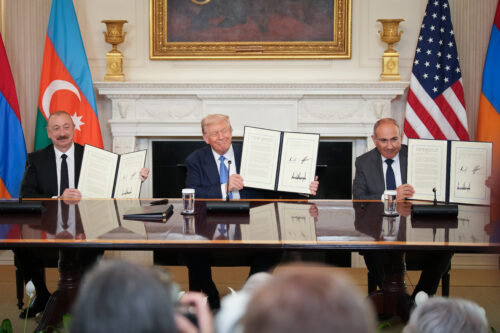
    Of all the fronts in President Trump’s peacemaking agenda, the South Caucasus has delivered the most concrete results. The August 2025 Washington Declaration, signed between Armenia and Azerbaijan and witnessed by Trump, marked an important step toward peace in the region. The two sides initialed a peace agreement and advanced plans to unblock regional connectivity, including through the establishment of the Trump Route for International Peace and Prosperity (TRIPP), which would connect Azerbaijan to its Nakhijevan exclave through southern Armenia. Implementation of TRIPP has since made notable progress, but construction has yet to start. A breakthrough on those two tracks would, in turn, unlock Armenia–Türkiye normalization, transforming a long-fractured region into an area of trade and interdependence.
    The Iran War Was Always About Regime Change
  • تعليق
  • The Iran War Was Always About Regime Change

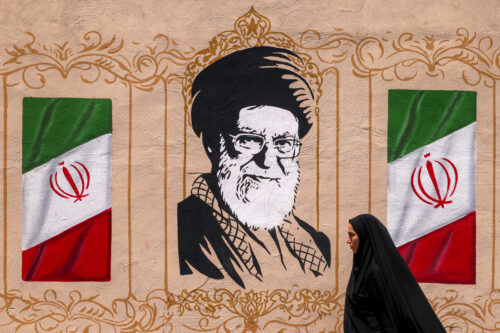
    Wars don’t just end. They get interpreted, reinterpreted, and turned into strategic doctrine. That is what happened after the Iran-Iraq War of the 1980s, a conflict that saw the United States back Tehran’s Iraqi adversaries. The war taught Tehran three lessons it never unlearned: that Washington wants the Islamic Republic gone, that Iran stands essentially alone in the world, and that it cannot survive a direct, overt fight with the U.S. and Israel.

    Iran’s New War Cabinet Is Really an Old One
  • التحليل
  • Iran’s New War Cabinet Is Really an Old One

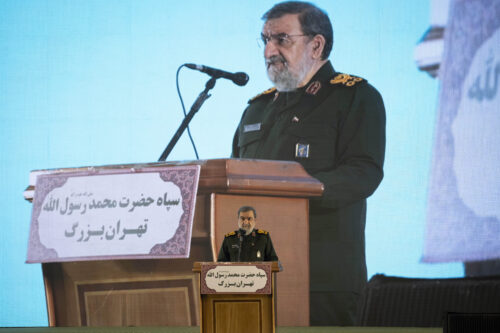
    Within 48 hours this week, Iran filled six of the most important posts in its battered military and security establishment. Read together with the biographies and mandates behind them, the appointments show how Tehran is drawing lessons from successive wars and preparing for a prolonged period of insecurity, without proving it has abandoned negotiation.

    Additional Research & Commentary

    معلومات أساسية

    Israeli Settlements in the West Bank
  • معلومات أساسية
  • Israeli Settlements in the West Bank

    Since 1967, Israeli settlements in the West Bank have been a contested feature of the Israeli-Palestinian conflict. The ultimate disposition of the settlements and ongoing activity related to their growth have repeatedly defied agreement in negotiations over a resolution to the conflict.

    June 9, 2026

    The Houthis
  • معلومات أساسية
  • The Houthis

    The Houthis are a political-military faction and Zaydi religious movement founded in northwestern Yemen in the 1980s. A key member of Iran’s Axis of Resistance with links to other militant organizations in the Arabian Peninsula and the Horn of Africa, the group has continued to pose a threat to Western interests on a global scale.

    May 15, 2026

    The India-Middle East-Europe Economic Corridor
  • معلومات أساسية
  • The India-Middle East-Europe Economic Corridor

    The India-Middle East-Europe Economic Corridor (IMEC) is a proposed multinational infrastructure initiative aimed at upgrading connectivity between the three regions through integrated trade, energy, and digital networks. Announced at the G20 summit in New Delhi in September 2023, IMEC is envisioned partially as a counterweight to China’s international infrastructure project, the Belt and Road Initiative.

    June 3, 2026

    Turkish Foreign Policy
  • معلومات أساسية
  • Turkish Foreign Policy

    After a decade of post-Arab Spring isolation, Turkey’s leaders have recognized that their ambition to position the country as an agenda-setter on the world stage requires active engagement in all directions. President Recep Tayyip Erdoğan’s consolidation of executive authority has centralized foreign policy decision-making and tied it to his domestic political priorities, transforming the country’s revisionist approach to one shaped primarily by personal and pragmatic interests.

    April 23, 2026

    المدونات الصوتية

    التركيز على الشرق الأوسط

    البودكاست الأسبوعي الرائد لمعهد الشرق الأوسط حول السياسة الخارجية الأمريكية والقضايا السياسية والاجتماعية المعاصرة في الشرق الأوسط.

    إزالة الحافة من الشرق الأوسط

    براين كاتوليس، زميل أول في معهد الشرق الأوسط كاتوليس يشارك الأصدقاء والزملاء وخبراء السياسة في محادثات غير رسمية حول أهم الأحداث في الشرق الأوسط. 

    إعادة التفكير في الديمقراطية

    زميل أول في معهد الشرق الأوسط غونول تول تستضيف كبار العلماء وقادة الفكر حول اتجاهات الديمقراطية العالمية وحالة النظام الدولي الليبرالي. 

    تصفية حسب
    8783 Results
    Pakistan's Media is Under Fire
    معهد الشرق الأوسط
  • التحليل
  • Pakistan's Media is Under Fire

    This piece first appeared as a Commentary on McClatchyDC.com, August 24, 2010

    It is hard to imagine a government that faces more existential threats to its people, state, and democracy than the current civilian government in Pakistan.

    August 24, 2010

    Karachi's Melting Pot Boils Over
    معهد الشرق الأوسط
  • التحليل
  • Karachi's Melting Pot Boils Over

    This Commentary first appeared as an op-ed on Foreign Policy's AfPak Channel, August 18, 2010.

    The desperate plight of over 20 million Pakistani citizens displaced and dispossessed by the most ferocious flooding in the history of the young state is heartbreaking. Nature is extracting a cruel price on a population already racked by debilitating poverty and a brutal insurgency.

    August 18, 2010

    Culture as a Tool of War
    معهد الشرق الأوسط
  • Video
  • Culture as a Tool of War

    The Middle East Institute is proud to host Rochelle Davis, professor of Anthropology at the Center for Contemporary Arab Studies in the School of Foreign Service at Georgetown University, to discuss US military conceptions of culture and the war in Iraq.

    July 27, 2010

    US Interest Wanes in the Mission that Remains in Iraq
    معهد الشرق الأوسط
  • التحليل
  • US Interest Wanes in the Mission that Remains in Iraq

    This Commentary first appeared as an op-ed in The National, July 25, 2010.

    After the March 2003 invasion of Iraq by United States and coalition forces, a short but sharp war, and the declaration of “Mission Accomplished” aboard an American aircraft carrier, Iran felt isolated and encircled on all sides by US might. Not so today.

    Tehran has closely observed US travails in Iraq over the years, and watched with satisfaction as the US began withdrawing its forces in anticipation of a full withdrawal by the end of 2011.

    July 25, 2010

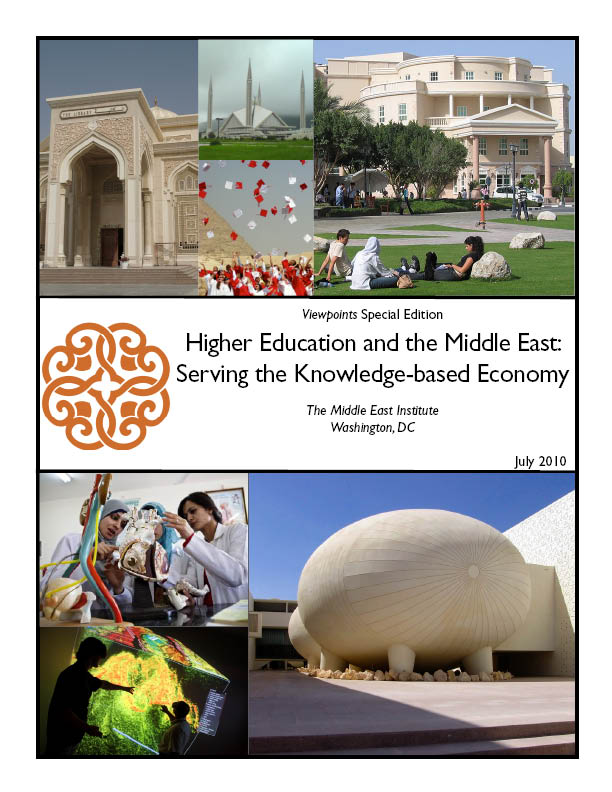
    Higher Education and the Middle East: Serving the Knowledge-based Economy
  • التحليل
  • Higher Education and the Middle East: Serving the Knowledge-based Economy

    This is the first of three volumes examining the internationalization of higher education and the Middle East. The 12 essays included in this volume explore some of the changes that are taking place and the challenges that lie ahead as Middle Eastern countries seek to build sustainable higher education systems and strengthen their economies. Within the dynamic global higher education landscape, is the Middle East a stagnant backwater or a center of creative initiative? What are, and should be the roles of foreign partners and providers?

    July 16, 2010

    'Blockade' and 'Embargo' Have Different Meanings
    معهد الشرق الأوسط
  • التحليل
  • 'Blockade' and 'Embargo' Have Different Meanings

    This Commentary first appeared as an op-ed in McClatchy News, July 6, 2010.

    The misuse and abuse of language is yet another obstacle to obtaining peace in the Middle East. In recent weeks the media, government officials and commentators have so garbled the use of the words “blockade” and “embargo” to describe events in Gaza that understanding what is occurring, the legal implications, and developing a reasonable policy are almost impossible.

    July 7, 2010

    From the Director’s Chair: The Making of the Documentary Film Veiled Voices
    معهد الشرق الأوسط
  • التحليل
  • From the Director’s Chair: The Making of the Documentary Film Veiled Voices

    Last year, I completed an hour-long documentary, Veiled Voices, profiling the role that women can play as religious leaders in the Middle East.  This essay briefly discusses my discoveries over the four years working on the project and the decisions I made regarding how to responsibly and visually represent these women on film.

    July 2, 2010

    Tupac and the Ayatollahs
    معهد الشرق الأوسط
  • التحليل
  • Tupac and the Ayatollahs

    In February 2010, Stockholm, Sweden hosted the Persian Hip Hop Festival: Voices of Change. Persian rappers came from around the world to call for changes in Iran through their rap music. Prior to her performance, one of Iran’s female rappers, Ghogha (Rebel), said to the audience:

    I come from a place where music is a crime. New
    ideas are crimes. They execute young people for
    having new ideas. We have come together here to
    remember the children of Iran.[1]

    July 2, 2010

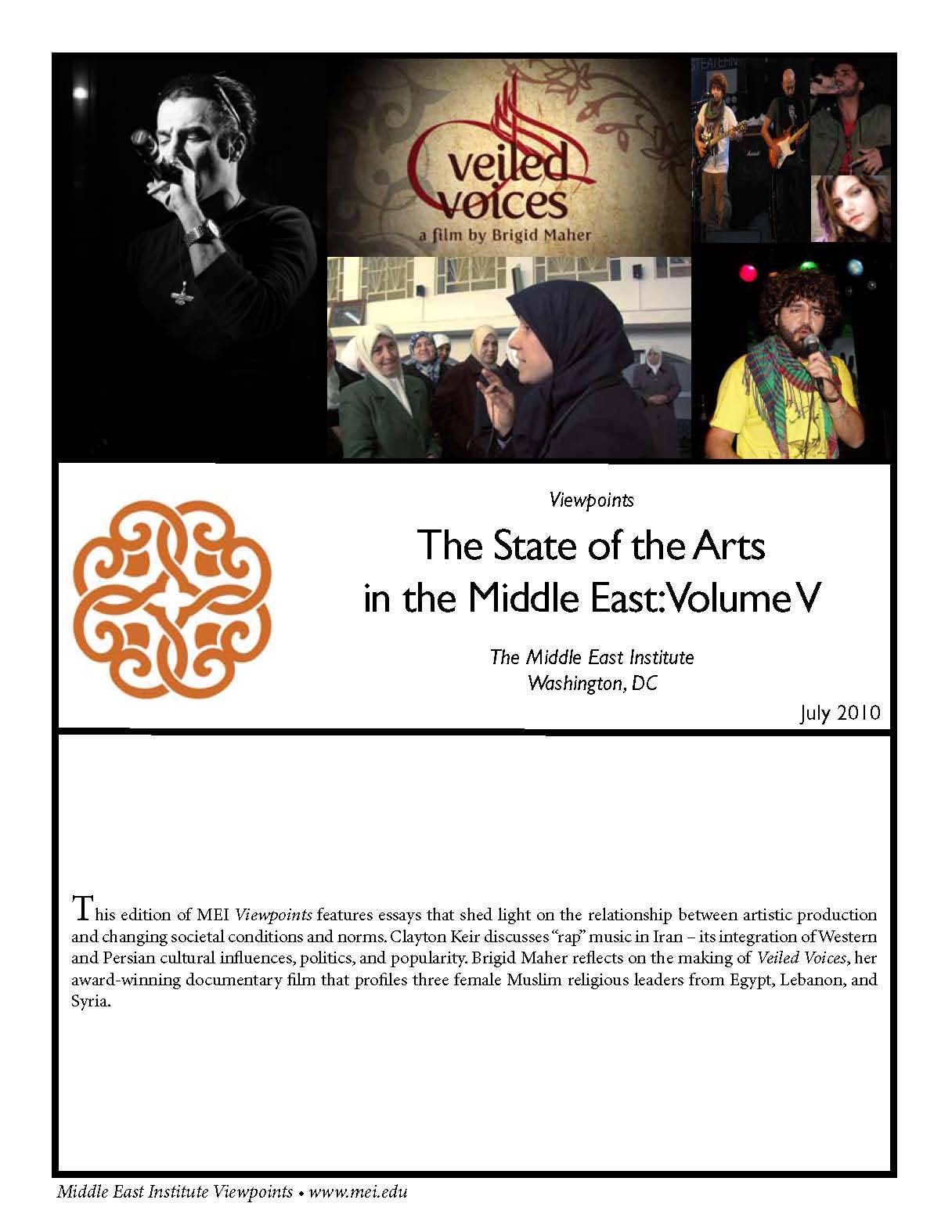
    Introduction to The State of the Arts in the Middle East: Volume V
  • التحليل
  • Introduction to The State of the Arts in the Middle East: Volume V

    This edition of MEI Viewpoints features essays that shed light on the relationship between artistic production and changing societal conditions and norms. Clayton Keir discusses “rap” music in Iran – its integration of Western and Persian cultural influences, politics, and popularity. Brigid Maher reflects on the making of Veiled Voices, her award-winning documentary film that profiles three female Muslim religious leaders from Egypt, Lebanon, and Syria.

    July 1, 2010

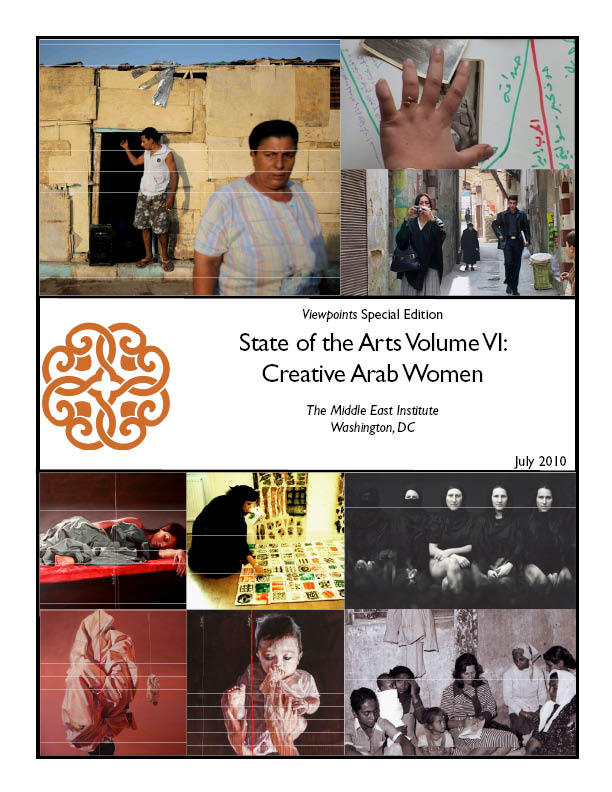
    Introduction to The State of the Arts in the Middle East: Volume VI: Creative Arab Women
  • التحليل
  • Introduction to The State of the Arts in the Middle East: Volume VI: Creative Arab Women

    Creative Arab Women is the sixth edition of the MEI Viewpoints series on the State of the Arts in the Middle East. The 14 essays in this collection offer a glimpse into the rich and varied cultural output of Arab women in the region and the diaspora. Partly reminiscences and partly calls to action, they are essays of survival and empowerment that add a deeply personal dimension to the subject of the role of Arab women as cultural producers. MEI is grateful to Dr.

    July 1, 2010

    اقرأ مجلة الشرق الأوسط

    تُعد المجلة الرئيسية لمعهد الشرق الأوسط أقدم مطبوعة محكّمة مكرّسة لدراسة الشرق الأوسط الحديث، وتغطي المجلة الرئيسية في المعهد السياسة والمجتمع والثقافة في المنطقة.