تمت ترجمة هذا النص بواسطة الذكاء الاصطناعي وقد يحتوي على أخطاء.
تخطي إلى المحتوى

الأبحاث والتعليقات

اقرأ الأبحاث والتحليلات والتعليقات المتعمقة من زملاء وخبراء معهد الشرق الأوسط عن الشرق الأوسط. 

Trump, Syria, and the Hizballah Question
  • Podcast
  • Trump, Syria, and the Hizballah Question

    US President Donald Trump recently proposed that Syria intervene militarily against Hizballah in Lebanon. Is that a good idea? This episode of Middle East Focus features a recent MEI Virtual Briefing. Director of Communications Zeina Al-Shaib is joined by Ambassador David Hale, MEI Distinguished Diplomatic Fellow and Charles Lister, MEI Senior Fellow. Together they examine the prospects and implications of renewed Syrian involvement in Lebanon, the potential impact on US relations with both countries, and how evolving dynamics in Lebanon and Syria could reshape the regional balance of power and affect countries such as Turkey and Israel.

    July 9, 2026

    Trump’s Family Business Deals Risk Further Undermining the Credibility of US Middle East Policy
  • التحليل
  • Trump’s Family Business Deals Risk Further Undermining the Credibility of US Middle East Policy

    President Trump’s family businesses are once again in the spotlight as a new financial disclosure showed they earned $2 billion in income in 2025 — a dramatic increase on the year before, with much of it coming from Gulf entities, raising emoluments concerns. Mounting perceptions of corruption, combined with unresolved crises in Iran and Israel-Palestine, are eroding trust among key partners in the Middle East. With the 2026 midterms approaching, these entanglements could represent a major political vulnerability and further undermine America’s already-strained standing in the region.

    Do the Gulf States Need a New Playbook?
  • Podcast
  • Do the Gulf States Need a New Playbook?

    After the US-Israel-Iran war — and the strikes that followed the cease-fire — the Gulf states find themselves dangerously exposed. Host Alistair Taylor is joined by MEI Associate Fellow Gregory Gause to discuss the war’s impact on the Gulf, their partnership with the United States, and whether the turmoil of recent months will push Gulf leaders to reassess their alliances and international engagement.

    July 2, 2026

    Additional Research & Commentary

    معلومات أساسية

    The Houthis
  • معلومات أساسية
  • The Houthis

    The Houthis are a political-military faction and Zaydi religious movement founded in northwestern Yemen in the 1980s. A key member of Iran’s Axis of Resistance with links to other militant organizations in the Arabian Peninsula and the Horn of Africa, the group has continued to pose a threat to Western interests on a global scale.

    May 15, 2026

    The Abraham Accords
    الصورة من تصوير أليكس وونغ/Getty Images
  • معلومات أساسية
  • The Abraham Accords

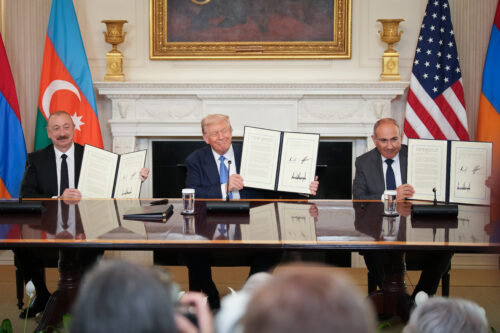
    تقدم هذه الوثيقة المعلوماتية لمحة عامة عن كيفية التوصل إلى اتفاقيات أبراهام، والمصالح الأمريكية المعنية، وعواقبها الاقتصادية والاستراتيجية، وآفاق التوسع في المستقبل.

    17 نوفمبر 2025

    Turkish Foreign Policy
  • معلومات أساسية
  • Turkish Foreign Policy

    After a decade of post-Arab Spring isolation, Turkey’s leaders have recognized that their ambition to position the country as an agenda-setter on the world stage requires active engagement in all directions. President Recep Tayyip Erdoğan’s consolidation of executive authority has centralized foreign policy decision-making and tied it to his domestic political priorities, transforming the country’s revisionist approach to one shaped primarily by personal and pragmatic interests.

    April 23, 2026

    الصحراء الغربية: لماذا لا يزال الصراع مهمًا
  • Video
  • الصحراء الغربية: لماذا لا يزال الصراع مهمًا

    مع دخول نزاع الصحراء الغربية عقده الخامس، لا يزال النزاع الإقليمي دون حل وغير معروف إلى حد كبير. تحلل إنتصار فقير من معهد الشرق الأوسط (MEI) التاريخ المعقد للصحراء الغربية والمطالبات المتنافسة من قبل المغرب والجمهورية العربية الصحراوية الديمقراطية. وتبحث في التطورات الأخيرة، مثل اعتراف الرئيس ترامب بسيادة المغرب على الإقليم وانهيار وقف إطلاق النار الذي دام 30 عامًا، بالإضافة إلى الأسئلة الجوهرية التي لا تزال دون إجابة بعد نصف قرن.

    7 أغسطس 2025

    المدونات الصوتية

    التركيز على الشرق الأوسط

    البودكاست الأسبوعي الرائد لمعهد الشرق الأوسط حول السياسة الخارجية الأمريكية والقضايا السياسية والاجتماعية المعاصرة في الشرق الأوسط.

    إزالة الحافة من الشرق الأوسط

    براين كاتوليس، زميل أول في معهد الشرق الأوسط كاتوليس يشارك الأصدقاء والزملاء وخبراء السياسة في محادثات غير رسمية حول أهم الأحداث في الشرق الأوسط. 

    إعادة التفكير في الديمقراطية

    زميل أول في معهد الشرق الأوسط غونول تول تستضيف كبار العلماء وقادة الفكر حول اتجاهات الديمقراطية العالمية وحالة النظام الدولي الليبرالي. 

    تصفية حسب
    8749 Results
    Rebuilding Trust Begins with Trust
    معهد الشرق الأوسط
  • التحليل
  • Rebuilding Trust Begins with Trust

    This Op/Ed was published first on February 3, 2010 by McClatchy Tribune.

    The bipartisan Kerry Lugar Bill provides a multi-year, super-sized economic aid program to the people of Pakistan. This is the right approach to improved US-Pakistan relations. The majority of Pakistanis distrust the US because they believe we favor military dictators over civilian democrats and are quick to abandon promised economic aid programs once we have achieved our security goals.

    February 3, 2010

    The Khamenei-Ahmadinejad Regime and the Challenge of the Iranian Opposition
    معهد الشرق الأوسط
  • Video
  • The Khamenei-Ahmadinejad Regime and the Challenge of the Iranian Opposition

    The Middle East Institute is proud to host Iranian scholars Ali Alfoneh and Alex Vatanka for a discussion about the ongoing unrest in Iran and the implications for the stability and future of the Islamic Republic. With the Green Movement having proved its staying power, some scholars and analysts are starting to predict the beginning of the end for the regime of Supreme Leader, Ali Khamenei, while others dismiss the idea as wishful thinking and argue that the Islamic Republic is here for the long-term.

    February 3, 2010

    Humanitarian Relief for Yemen in Jeopardy
    معهد الشرق الأوسط
  • التحليل
  • Humanitarian Relief for Yemen in Jeopardy

    The convergence of multiple crises in an already vulnerable environment has left Yemen and aid agencies at a crossroads. The context has become an extremely complex and challenging one within which to reduce hunger, malnutrition, and fragility. Yet it is precisely because of these challenges that humanitarian intervention is vital to keep struggling populations from tipping into utter disaster.

    February 2, 2010

    Labor Migration to the GCC States: Patterns, Scale, and Policies
    معهد الشرق الأوسط
  • التحليل
  • Labor Migration to the GCC States: Patterns, Scale, and Policies

    “In some areas of the Gulf, you can’t tell whether you are in an Arab Muslim country or in an Asian district.”

    — Majeed al-Alawi, Bahrain Minister of Labor (October 2007)

    February 2, 2010

    Sri Lankan Migration to the Gulf: Female Breadwinners – Domestic Workers
    معهد الشرق الأوسط
  • التحليل
  • Sri Lankan Migration to the Gulf: Female Breadwinners – Domestic Workers

    Several waves of Sri Lankan migration have taken place since the country gained independence in 1948. Beginning in the mid-1950s, wealthy, educated, English-speaking elites have migrated to Commonwealth countries such as Australia and the United Kingdom. In addition, since the upsurge in ethnic hostilities in the early 1980s, Tamil-speaking Hindu migrants have left the country, with many settling in Canada. In contrast with these permanent migrants, since 1976 a growing number of Sri Lankans have become migrant workers.

    February 2, 2010

    Migration and Human Rights in the Gulf
    معهد الشرق الأوسط
  • التحليل
  • Migration and Human Rights in the Gulf

    Millions of people around the world have left their home countries in search of employment. In 2005, there were 191 million migrants, or about 3% of the world’s population, living in other countries.[1]Today, that number has grown to about 200 million. An estimated one person in 35 is an international migrant. Almost all countries are affected by international migration. The Gulf countries are no exception.

    February 2, 2010

    Kerala Emigrants in the Gulf
    معهد الشرق الأوسط
  • التحليل
  • Kerala Emigrants in the Gulf

    How many Indians work abroad? We have no answer to this question even today. However, available evidence indicates that the state of Kerala in India has the highest number of emigrants in the Gulf countries.1

    February 2, 2010

    A Lexicon of Migrants in the United Arab Emirates (UAE)
    معهد الشرق الأوسط
  • التحليل
  • A Lexicon of Migrants in the United Arab Emirates (UAE)

    The millions of foreign nationals working in the Gulf are often lumped together as “migrant workers,” but this is misleading. The population of foreign workers in the UAE, for example, is complex and heterogeneous. One layer of that complexity is manifested by the lexicon used by migrants to identify other migrants.

    February 2, 2010

    Migrant Workers in Kuwait: The Role of State Institutions
    معهد الشرق الأوسط
  • التحليل
  • Migrant Workers in Kuwait: The Role of State Institutions

    The treatment of migrant domestic workers is one of the defining stories told about the Arab Gulf states. Every year hundreds of news media and human rights reports detailing migrant domestic workers’ experiences of exploitation and abuse circulate globally. The narratives of these accounts are remarkably consistent. They often begin with the story of an impoverished woman from the global South, who, in order to improve the situation of her family, migrates to the oil-rich Gulf states in search of work and a more prosperous future.

    February 2, 2010

    Malayali Migrant Women's Perceptions of the Gulf States
    معهد الشرق الأوسط
  • التحليل
  • Malayali Migrant Women's Perceptions of the Gulf States

    Studies of Gulf women migrants focus on the most noticeable or “problematic” categories — domestic workers and the sex trade — and are generally policy-driven short surveys, using data collected in the Gulf itself.

    February 2, 2010

    The International Political Economy of Gulf Migration
    معهد الشرق الأوسط
  • التحليل
  • The International Political Economy of Gulf Migration

    Over the past three decades there has been much discussion about the impact of labor migration to the Gulf on the countries of origin. However, much less understood is the impact of this labor migration on the Gulf Cooperation Council (GCC) states — Bahrain, Kuwait, Oman, Qatar, Saudi Arabia, and the United Arab Emirates (UAE) and their citizens. There has been documentation that the patterns of migration have changed from Arab migrants to Southeast Asians.

    February 2, 2010

    Remittances from GCC Countries: A Brief Outlook
    معهد الشرق الأوسط
  • التحليل
  • Remittances from GCC Countries: A Brief Outlook

    Over the past decade, most of the Gulf Cooperation Council (GCC) countries (Bahrain, Kuwait, Oman, Qatar, Saudi Arabia, and the United Arab Emirates) experienced robust economic growth. The main force behind this growth is a strong labor force, composed mainly of expatriates. Largely due to its geographical proximity, the Gulf has been a preferred destination for workers from South Asia for years. More recently, however, the GCC has attracted foreign labor from all over the world.

    February 2, 2010

    Remittances to Kerala: Impact on the Economy
    معهد الشرق الأوسط
  • التحليل
  • Remittances to Kerala: Impact on the Economy

    The money that migrants send home is important not only to their families but also to their country’s balance of payments. In many developing countries, remittances represent a significant proportion of the Gross Domestic Product (GDP) as well as foreign exchange earning.

    February 2, 2010

    Business Elites, Unofficial Citizenship, and Privatized Governance in Dubai
    معهد الشرق الأوسط
  • التحليل
  • Business Elites, Unofficial Citizenship, and Privatized Governance in Dubai

    Several scholars of citizenship and migration in the oil-rich Gulf Arab states have noted the divisions between citizens and non-citizens in terms of mobility, access, geographic location, job prospects, and rights (or lack thereof) in these countries.[1]These “rentier” states, such as the United Arab Emirates (UAE), which rely on oil for the majority of their income, highly police the boundaries of citizenshi

    February 2, 2010

    Westerners in the United Arab Emirates: A View from Abu Dhabi
    معهد الشرق الأوسط
  • التحليل
  • Westerners in the United Arab Emirates: A View from Abu Dhabi

    It is not hyperbole to say that Emirati nationals (al-muwatinin) are vastly outnumbered by foreigners in their country at a ratio higher than almost anywhere else on earth. And, while a growing ethnographic literature documents late 20th century trends among South Asian migrant workers in the Gulf states, few have examined the less populous though highly visible and influential Westerners who work and live there. They deserve our attention.

    February 2, 2010

    اقرأ مجلة الشرق الأوسط

    تُعد المجلة الرئيسية لمعهد الشرق الأوسط أقدم مطبوعة محكّمة مكرّسة لدراسة الشرق الأوسط الحديث، وتغطي المجلة الرئيسية في المعهد السياسة والمجتمع والثقافة في المنطقة.