تمت ترجمة هذا النص بواسطة الذكاء الاصطناعي وقد يحتوي على أخطاء.
تخطي إلى المحتوى

الأبحاث والتعليقات

اقرأ الأبحاث والتحليلات والتعليقات المتعمقة من زملاء وخبراء معهد الشرق الأوسط عن الشرق الأوسط. 

Trump’s South Caucasus Peacemaking Is His Most Successful, but It Remains Unfinished
  • تعليق
  • Trump’s South Caucasus Peacemaking Is His Most Successful, but It Remains Unfinished

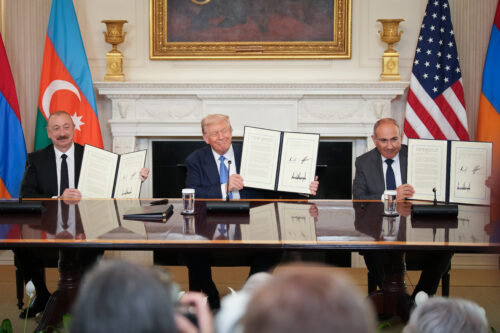
    Of all the fronts in President Trump’s peacemaking agenda, the South Caucasus has delivered the most concrete results. The August 2025 Washington Declaration, signed between Armenia and Azerbaijan and witnessed by Trump, marked an important step toward peace in the region. The two sides initialed a peace agreement and advanced plans to unblock regional connectivity, including through the establishment of the Trump Route for International Peace and Prosperity (TRIPP), which would connect Azerbaijan to its Nakhijevan exclave through southern Armenia. Implementation of TRIPP has since made notable progress, but construction has yet to start. A breakthrough on those two tracks would, in turn, unlock Armenia–Türkiye normalization, transforming a long-fractured region into an area of trade and interdependence.
    The Iran War Was Always About Regime Change
  • تعليق
  • The Iran War Was Always About Regime Change

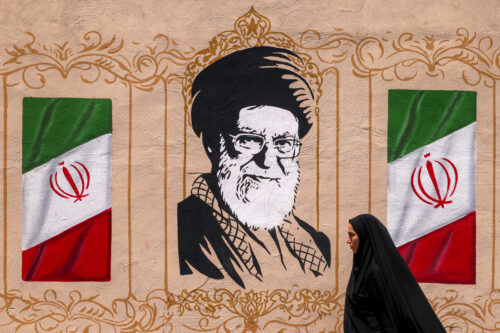
    Wars don’t just end. They get interpreted, reinterpreted, and turned into strategic doctrine. That is what happened after the Iran-Iraq War of the 1980s, a conflict that saw the United States back Tehran’s Iraqi adversaries. The war taught Tehran three lessons it never unlearned: that Washington wants the Islamic Republic gone, that Iran stands essentially alone in the world, and that it cannot survive a direct, overt fight with the U.S. and Israel.

    Iran’s New War Cabinet Is Really an Old One
  • التحليل
  • Iran’s New War Cabinet Is Really an Old One

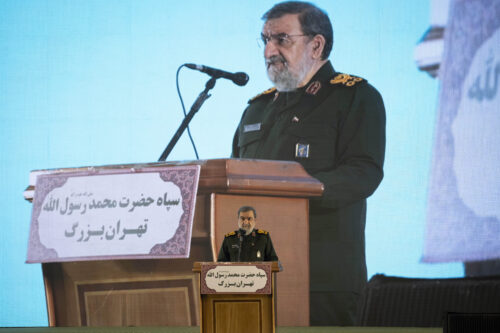
    Within 48 hours this week, Iran filled six of the most important posts in its battered military and security establishment. Read together with the biographies and mandates behind them, the appointments show how Tehran is drawing lessons from successive wars and preparing for a prolonged period of insecurity, without proving it has abandoned negotiation.

    Additional Research & Commentary

    معلومات أساسية

    Israeli Settlements in the West Bank
  • معلومات أساسية
  • Israeli Settlements in the West Bank

    Since 1967, Israeli settlements in the West Bank have been a contested feature of the Israeli-Palestinian conflict. The ultimate disposition of the settlements and ongoing activity related to their growth have repeatedly defied agreement in negotiations over a resolution to the conflict.

    June 9, 2026

    The Houthis
  • معلومات أساسية
  • The Houthis

    The Houthis are a political-military faction and Zaydi religious movement founded in northwestern Yemen in the 1980s. A key member of Iran’s Axis of Resistance with links to other militant organizations in the Arabian Peninsula and the Horn of Africa, the group has continued to pose a threat to Western interests on a global scale.

    May 15, 2026

    The India-Middle East-Europe Economic Corridor
  • معلومات أساسية
  • The India-Middle East-Europe Economic Corridor

    The India-Middle East-Europe Economic Corridor (IMEC) is a proposed multinational infrastructure initiative aimed at upgrading connectivity between the three regions through integrated trade, energy, and digital networks. Announced at the G20 summit in New Delhi in September 2023, IMEC is envisioned partially as a counterweight to China’s international infrastructure project, the Belt and Road Initiative.

    June 3, 2026

    Turkish Foreign Policy
  • معلومات أساسية
  • Turkish Foreign Policy

    After a decade of post-Arab Spring isolation, Turkey’s leaders have recognized that their ambition to position the country as an agenda-setter on the world stage requires active engagement in all directions. President Recep Tayyip Erdoğan’s consolidation of executive authority has centralized foreign policy decision-making and tied it to his domestic political priorities, transforming the country’s revisionist approach to one shaped primarily by personal and pragmatic interests.

    April 23, 2026

    المدونات الصوتية

    التركيز على الشرق الأوسط

    البودكاست الأسبوعي الرائد لمعهد الشرق الأوسط حول السياسة الخارجية الأمريكية والقضايا السياسية والاجتماعية المعاصرة في الشرق الأوسط.

    إزالة الحافة من الشرق الأوسط

    براين كاتوليس، زميل أول في معهد الشرق الأوسط كاتوليس يشارك الأصدقاء والزملاء وخبراء السياسة في محادثات غير رسمية حول أهم الأحداث في الشرق الأوسط. 

    إعادة التفكير في الديمقراطية

    زميل أول في معهد الشرق الأوسط غونول تول تستضيف كبار العلماء وقادة الفكر حول اتجاهات الديمقراطية العالمية وحالة النظام الدولي الليبرالي. 

    تصفية حسب
    8783 Results
    Introduction to The State of the Arts in the Middle East: Volume IV
  • التحليل
  • Introduction to The State of the Arts in the Middle East: Volume IV

    Literature, visual art, and photography not only serve an aesthetic purpose, but often act as mediums through which their creators explore deeply personal experiences and their broader social implications. In this, the fourth volume of MEI’s “The State of the Arts in the Middle East,” Najat Rahman considers the works of the Palestinian artists Emily Jacir and Eman Haram, and W. Scott Chahanovich (with Pauline Pannier) discusses the memoirs of the Moroccan-born writer Abdellah Taïa.

    March 1, 2010

    Turkey and Israel: What Lies Behind the Recent Volte Face
    معهد الشرق الأوسط
  • التحليل
  • Turkey and Israel: What Lies Behind the Recent Volte Face

    In recent months, the Israeli-Turkish relationship, strong and stable during the 1990s, has been placed under severe pressure. Tensions began in January 2009 when Israel launched military operations in Gaza, later prompting Turkish Prime Minister Recep Tayyip Erdogan to walk out of a televised debate with Israeli President Shimon Peres following a heated exchange over the issue.

    Does US Policy Hurt or Help Al Qaeda?
    معهد الشرق الأوسط
  • التحليل
  • Does US Policy Hurt or Help Al Qaeda?

    Al Qaeda has a major, long term, existential problem in the Middle East and the greater Muslim world. It is a problem that it certainly cannot fix on its own. However, America’s counterterrorism policy has given Al Qaeda hope for the short term and if we continue that policy, it may well assist them in their ultimate goal of establishing a hegemonic Caliphate in the Muslim world.

    February 23, 2010

    Writing on Culture: The Missing Factor in Discussions on the Middle East
    معهد الشرق الأوسط
  • Video
  • Writing on Culture: The Missing Factor in Discussions on the Middle East

    The Middle East Institute is proud to host MEI scholar Andrea Rugh for a discussion about Middle Eastern culture and her most recent book, Simple Gestures: A Cultural Journey Into the Middle East. Since US involvement in Iraq and Afghanistan, the importance of culture has become all too clear. Yet, although most scholars agree on its importance, few address culture in ways that provide better understanding to audiences who might benefit, such as policy makers, the media and the American public.

    February 23, 2010

    Rebuilding Trust Begins with Trust
    معهد الشرق الأوسط
  • التحليل
  • Rebuilding Trust Begins with Trust

    This Op/Ed was published first on February 3, 2010 by McClatchy Tribune.

    The bipartisan Kerry Lugar Bill provides a multi-year, super-sized economic aid program to the people of Pakistan. This is the right approach to improved US-Pakistan relations. The majority of Pakistanis distrust the US because they believe we favor military dictators over civilian democrats and are quick to abandon promised economic aid programs once we have achieved our security goals.

    February 3, 2010

    The Khamenei-Ahmadinejad Regime and the Challenge of the Iranian Opposition
    معهد الشرق الأوسط
  • Video
  • The Khamenei-Ahmadinejad Regime and the Challenge of the Iranian Opposition

    The Middle East Institute is proud to host Iranian scholars Ali Alfoneh and Alex Vatanka for a discussion about the ongoing unrest in Iran and the implications for the stability and future of the Islamic Republic. With the Green Movement having proved its staying power, some scholars and analysts are starting to predict the beginning of the end for the regime of Supreme Leader, Ali Khamenei, while others dismiss the idea as wishful thinking and argue that the Islamic Republic is here for the long-term.

    February 3, 2010

    Humanitarian Relief for Yemen in Jeopardy
    معهد الشرق الأوسط
  • التحليل
  • Humanitarian Relief for Yemen in Jeopardy

    The convergence of multiple crises in an already vulnerable environment has left Yemen and aid agencies at a crossroads. The context has become an extremely complex and challenging one within which to reduce hunger, malnutrition, and fragility. Yet it is precisely because of these challenges that humanitarian intervention is vital to keep struggling populations from tipping into utter disaster.

    February 2, 2010

    Labor Migration to the GCC States: Patterns, Scale, and Policies
    معهد الشرق الأوسط
  • التحليل
  • Labor Migration to the GCC States: Patterns, Scale, and Policies

    “In some areas of the Gulf, you can’t tell whether you are in an Arab Muslim country or in an Asian district.”

    — Majeed al-Alawi, Bahrain Minister of Labor (October 2007)

    February 2, 2010

    Sri Lankan Migration to the Gulf: Female Breadwinners – Domestic Workers
    معهد الشرق الأوسط
  • التحليل
  • Sri Lankan Migration to the Gulf: Female Breadwinners – Domestic Workers

    Several waves of Sri Lankan migration have taken place since the country gained independence in 1948. Beginning in the mid-1950s, wealthy, educated, English-speaking elites have migrated to Commonwealth countries such as Australia and the United Kingdom. In addition, since the upsurge in ethnic hostilities in the early 1980s, Tamil-speaking Hindu migrants have left the country, with many settling in Canada. In contrast with these permanent migrants, since 1976 a growing number of Sri Lankans have become migrant workers.

    February 2, 2010

    Migration and Human Rights in the Gulf
    معهد الشرق الأوسط
  • التحليل
  • Migration and Human Rights in the Gulf

    Millions of people around the world have left their home countries in search of employment. In 2005, there were 191 million migrants, or about 3% of the world’s population, living in other countries.[1]Today, that number has grown to about 200 million. An estimated one person in 35 is an international migrant. Almost all countries are affected by international migration. The Gulf countries are no exception.

    February 2, 2010

    Kerala Emigrants in the Gulf
    معهد الشرق الأوسط
  • التحليل
  • Kerala Emigrants in the Gulf

    How many Indians work abroad? We have no answer to this question even today. However, available evidence indicates that the state of Kerala in India has the highest number of emigrants in the Gulf countries.1

    February 2, 2010

    A Lexicon of Migrants in the United Arab Emirates (UAE)
    معهد الشرق الأوسط
  • التحليل
  • A Lexicon of Migrants in the United Arab Emirates (UAE)

    The millions of foreign nationals working in the Gulf are often lumped together as “migrant workers,” but this is misleading. The population of foreign workers in the UAE, for example, is complex and heterogeneous. One layer of that complexity is manifested by the lexicon used by migrants to identify other migrants.

    February 2, 2010

    Migrant Workers in Kuwait: The Role of State Institutions
    معهد الشرق الأوسط
  • التحليل
  • Migrant Workers in Kuwait: The Role of State Institutions

    The treatment of migrant domestic workers is one of the defining stories told about the Arab Gulf states. Every year hundreds of news media and human rights reports detailing migrant domestic workers’ experiences of exploitation and abuse circulate globally. The narratives of these accounts are remarkably consistent. They often begin with the story of an impoverished woman from the global South, who, in order to improve the situation of her family, migrates to the oil-rich Gulf states in search of work and a more prosperous future.

    February 2, 2010

    Malayali Migrant Women's Perceptions of the Gulf States
    معهد الشرق الأوسط
  • التحليل
  • Malayali Migrant Women's Perceptions of the Gulf States

    Studies of Gulf women migrants focus on the most noticeable or “problematic” categories — domestic workers and the sex trade — and are generally policy-driven short surveys, using data collected in the Gulf itself.

    February 2, 2010

    The International Political Economy of Gulf Migration
    معهد الشرق الأوسط
  • التحليل
  • The International Political Economy of Gulf Migration

    Over the past three decades there has been much discussion about the impact of labor migration to the Gulf on the countries of origin. However, much less understood is the impact of this labor migration on the Gulf Cooperation Council (GCC) states — Bahrain, Kuwait, Oman, Qatar, Saudi Arabia, and the United Arab Emirates (UAE) and their citizens. There has been documentation that the patterns of migration have changed from Arab migrants to Southeast Asians.

    February 2, 2010

    اقرأ مجلة الشرق الأوسط

    تُعد المجلة الرئيسية لمعهد الشرق الأوسط أقدم مطبوعة محكّمة مكرّسة لدراسة الشرق الأوسط الحديث، وتغطي المجلة الرئيسية في المعهد السياسة والمجتمع والثقافة في المنطقة.