تمت ترجمة هذا النص بواسطة الذكاء الاصطناعي وقد يحتوي على أخطاء.
تخطي إلى المحتوى

الأبحاث والتعليقات

اقرأ الأبحاث والتحليلات والتعليقات المتعمقة من زملاء وخبراء معهد الشرق الأوسط عن الشرق الأوسط. 

Trump’s South Caucasus Peacemaking Is His Most Successful, but It Remains Unfinished
  • تعليق
  • Trump’s South Caucasus Peacemaking Is His Most Successful, but It Remains Unfinished

    Of all the fronts in President Trump’s peacemaking agenda, the South Caucasus has delivered the most concrete results. The August 2025 Washington Declaration, signed between Armenia and Azerbaijan and witnessed by Trump, marked an important step toward peace in the region. The two sides initialed a peace agreement and advanced plans to unblock regional connectivity, including through the establishment of the Trump Route for International Peace and Prosperity (TRIPP), which would connect Azerbaijan to its Nakhijevan exclave through southern Armenia. Implementation of TRIPP has since made notable progress, but construction has yet to start. A breakthrough on those two tracks would, in turn, unlock Armenia–Türkiye normalization, transforming a long-fractured region into an area of trade and interdependence.
    The Iran War Was Always About Regime Change
  • تعليق
  • The Iran War Was Always About Regime Change

    Wars don’t just end. They get interpreted, reinterpreted, and turned into strategic doctrine. That is what happened after the Iran-Iraq War of the 1980s, a conflict that saw the United States back Tehran’s Iraqi adversaries. The war taught Tehran three lessons it never unlearned: that Washington wants the Islamic Republic gone, that Iran stands essentially alone in the world, and that it cannot survive a direct, overt fight with the U.S. and Israel.

    Iran’s New War Cabinet Is Really an Old One
  • التحليل
  • Iran’s New War Cabinet Is Really an Old One

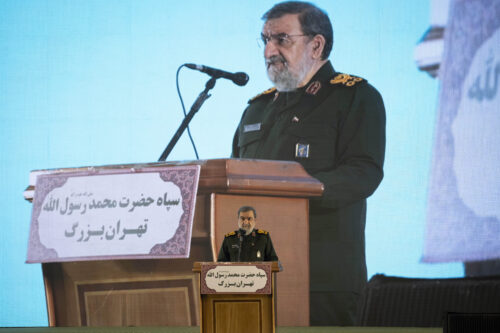
    Within 48 hours this week, Iran filled six of the most important posts in its battered military and security establishment. Read together with the biographies and mandates behind them, the appointments show how Tehran is drawing lessons from successive wars and preparing for a prolonged period of insecurity, without proving it has abandoned negotiation.

    Additional Research & Commentary

    معلومات أساسية

    Israeli Settlements in the West Bank
  • معلومات أساسية
  • Israeli Settlements in the West Bank

    Since 1967, Israeli settlements in the West Bank have been a contested feature of the Israeli-Palestinian conflict. The ultimate disposition of the settlements and ongoing activity related to their growth have repeatedly defied agreement in negotiations over a resolution to the conflict.

    June 9, 2026

    The Houthis
  • معلومات أساسية
  • The Houthis

    The Houthis are a political-military faction and Zaydi religious movement founded in northwestern Yemen in the 1980s. A key member of Iran’s Axis of Resistance with links to other militant organizations in the Arabian Peninsula and the Horn of Africa, the group has continued to pose a threat to Western interests on a global scale.

    May 15, 2026

    The India-Middle East-Europe Economic Corridor
  • معلومات أساسية
  • The India-Middle East-Europe Economic Corridor

    The India-Middle East-Europe Economic Corridor (IMEC) is a proposed multinational infrastructure initiative aimed at upgrading connectivity between the three regions through integrated trade, energy, and digital networks. Announced at the G20 summit in New Delhi in September 2023, IMEC is envisioned partially as a counterweight to China’s international infrastructure project, the Belt and Road Initiative.

    June 3, 2026

    Turkish Foreign Policy
  • معلومات أساسية
  • Turkish Foreign Policy

    After a decade of post-Arab Spring isolation, Turkey’s leaders have recognized that their ambition to position the country as an agenda-setter on the world stage requires active engagement in all directions. President Recep Tayyip Erdoğan’s consolidation of executive authority has centralized foreign policy decision-making and tied it to his domestic political priorities, transforming the country’s revisionist approach to one shaped primarily by personal and pragmatic interests.

    April 23, 2026

    المدونات الصوتية

    التركيز على الشرق الأوسط

    البودكاست الأسبوعي الرائد لمعهد الشرق الأوسط حول السياسة الخارجية الأمريكية والقضايا السياسية والاجتماعية المعاصرة في الشرق الأوسط.

    إزالة الحافة من الشرق الأوسط

    براين كاتوليس، زميل أول في معهد الشرق الأوسط كاتوليس يشارك الأصدقاء والزملاء وخبراء السياسة في محادثات غير رسمية حول أهم الأحداث في الشرق الأوسط. 

    إعادة التفكير في الديمقراطية

    زميل أول في معهد الشرق الأوسط غونول تول تستضيف كبار العلماء وقادة الفكر حول اتجاهات الديمقراطية العالمية وحالة النظام الدولي الليبرالي. 

    تصفية حسب
    8783 Results
    Religious Apartheid in Iran
    معهد الشرق الأوسط
  • التحليل
  • Religious Apartheid in Iran

    The religious make-up of Iran’s population is marked by a paradox: while many religions and sects are present, the overall picture is one of homogeneity, as over 99% of Iranians are Muslims, and of these somewhere between 75% and 90% adhere to Twelver Shi‘ism, Iran’s official state religion for the last five centuries. However, the exact numbers are unknown, since Iranian censuses ask citizens for their religious affiliation but allow only four choices: Islam, Christianity, Judaism, and Zoroastrianism, the latter three constituting the “recognized” minorities.

    January 29, 2009

    Azerbaijani Ethno-nationalism: A Danger Signal for Iran
  • التحليل
  • Azerbaijani Ethno-nationalism: A Danger Signal for Iran

    By the Treaty of Turkmenchay in 1828, Iran was forced to cede its dependent khanates north of the river Aras to Russia. The majority population of both North (Russo-Soviet) and South (Iranian) Azerbaijan belong to the same ethnic group within the Turkic linguistic family. Many Azerbaijanis tend not to differentiate between the modern republic and Iranian Azerbaijan; they consider the Iranian Azeris “kith and kin.” In fact, many Azerbaijanis actually have family on the other side.

    January 29, 2009

    Iran’s International Relations: Pragmatism in a Revolutionary Bottle
    معهد الشرق الأوسط
  • التحليل
  • Iran’s International Relations: Pragmatism in a Revolutionary Bottle

    Revolutions, though essentially domestic affairs, cause a tear in the very fabric of the prevailing international system, disrupting the balance of power and the normal flow of diplomacy. Iran’s religiously inspired revolution has been no exception. On the one hand, it undid the intricate international web that had sustained the Pahlavi monarchy, and on the other it brought forth a series of priorities more consistent with the perceptions and values of the new elite and the ideological regime that the revolution had spawned.

    January 29, 2009

    Culture and the Range of Options in Iran's International Politics
    معهد الشرق الأوسط
  • التحليل
  • Culture and the Range of Options in Iran's International Politics

    Iran’s political culture is most compatible with a proactive foreign policy based on “patriotic cosmopolitanism,” a kind of doctrine with two apparently antithetical components: the idea of global citizenship, regardless of people’s political affiliation; but also political committment to sustain one’s own values — in this case, Iranian values. Ideally, this formulation should appeal to religious intellectuals and pro-Mossadeq nationalists.

    January 29, 2009

    The Geopolitical Factor in Iran’s Foreign Policy
  • التحليل
  • The Geopolitical Factor in Iran’s Foreign Policy

    Revolutions either expand to export their ideologies or preserve themselves from the outside world. The 1979 Islamic revolution of Iran is no exception. A careful reading of Iran’s actions in the region shows how and why Iran has shifted its policies to meet the latter aim. Since the revolution, Iran’s leaders have faced the challenge of balancing their ideological (idealism) and geopolitical (pragmatism) approaches to foreign policy.

    January 29, 2009

    Iranian Foreign Policy: Concurrence of Ideology and Pragmatism
    معهد الشرق الأوسط
  • التحليل
  • Iranian Foreign Policy: Concurrence of Ideology and Pragmatism

    The Islamic Republic of Iran has pursued, as have other post-revolutionary states, certain principles and ideals that were revered in the movement that led to the revolution. Although Iran’s foreign policy during the past three decades has had an ideological component, this has not prevented it from translating ideology into operational policy in its foreign relations.

    January 29, 2009

    Educational Attainment in Iran
  • التحليل
  • Educational Attainment in Iran

    Originally posted, January 2009

    Educational attainment has improved considerably in the Islamic Republic of Iran over the past three decades. During this period the improvement for women has been greater than for men. In recent years, women have gained access to education at different levels and in many fields.

    January 29, 2009

    Iran's Tactical Foreign Policy Rhetoric
    معهد الشرق الأوسط
  • التحليل
  • Iran's Tactical Foreign Policy Rhetoric

    The author, Bidjan Nashat, is a consultant on international development and Middle Eastern affairs at the World Bank and for German political foundations. He has studied at the Hertie School of Governance and at the universities of Tübingen, Georgetown and Yale and holds a Magister Artium in International Relations and Iranian Studies, and a Master of Public Policy.

    January 29, 2009

    Attitudes towards the Internet in an Iranian University
  • التحليل
  • Attitudes towards the Internet in an Iranian University

    Iranian universities are undoubtedly experiencing their hardest period since the Cultural Revolution of 1980-1982.[1]All this is taking place in the name of “Islam” or “religion,” with little attention paid to the complexities of their definitions, nor indeed to those of “non-religion,” “non-Islam,”

    January 29, 2009

    The Kurdish Factor in Iran-Iraq Relations
  • التحليل
  • The Kurdish Factor in Iran-Iraq Relations

    Kurdish issues have been an important part of the myriad political and socioeconomic problems that have preoccupied the Islamic Republic of Iran since its inception. The Kurdish factor has also been an important determinant of Iran’s regional foreign policy in the past three decades. Shortly after the onset of the Iran-Iraq War of 1980-1988, the Iraqi government began to woo the Kurdish Democratic Party of Iran (KDPI) as potential leverage in its war effort.

    January 29, 2009

    Iranian-Lebanese Shi'ite Relations
  • التحليل
  • Iranian-Lebanese Shi'ite Relations

    Next to the Arab-Israeli conflict, perhaps few other topics in the history of the modern Middle East have captured the interest of policymakers and scholars alike as has post-revolutionary Iranian-Lebanese Shi‘ite relations, particularly the creation of Hizbullah. Although both groups have come to this topic with a set of similar questions — namely, what is the impact of this transnational network among Lebanese Shi‘ites and how does it operate? — thankfully, they have arrived at very different conclusions.

    January 29, 2009

    Literary Voices
    معهد الشرق الأوسط
  • التحليل
  • Literary Voices

    The history of modern Persian literature is closely aligned with some of the oppositional movements that culminated in the 1979 revolution. The origins of modern Persian writing are inseparable from a preoccupation that literature speak to the concerns of the masses. Mohamad Ali Jamalzadeh, the reputed father of modern Persian prose, was among the first and most influential advocates of this view to overcome the elitist language and style of early 20th century literature.

    January 29, 2009

    Communication, Media, and Popular Culture in Post-revolutionary Iran
    معهد الشرق الأوسط
  • التحليل
  • Communication, Media, and Popular Culture in Post-revolutionary Iran

    In the news media and the prevailing political discourse, Iran is often portrayed as a closed society. Characterizations of Iran as a theocratic state, fundamentalist society, and a rogue nation depict Iran as an “Islamic” totalitarian state devoid of any freedom and trappings of “civil society.” At the same time, cinéphiles the world over applaud the work of Iranian filmmakers. One can cite numerous other examples of robust cultural activities in Iran.

    January 29, 2009

    Twists and Turns in Turkish-Iranian Relations
    معهد الشرق الأوسط
  • التحليل
  • Twists and Turns in Turkish-Iranian Relations

    Bilateral relations between Turkey and Iran have been marked by relative peace and stability for the past four centuries. Since the founding of the modern Republic of Turkey in 1923 and the creation of an absolutist monarchy in Iran in 1925, the ruling regimes of both countries have sought to consolidate their domestic power and to pursue an independent foreign policy. Neither Turkey nor Iran has viewed one another as an immediate threat to the attainment of these vital objectives.

    January 29, 2009

    Iranian Society: A Surprising Picture
    معهد الشرق الأوسط
  • التحليل
  • Iranian Society: A Surprising Picture

    Iranian society has changed dramatically over the past 30 years, and bears little resemblance either to the expectations of or the picture painted by the leadership of the Islamic Republic. Indeed, as much as the ruling clerics like to project self-confidence and the ability to predict the future, they could not have envisaged a society with these characteristics. While many of these surprising developments have occurred because of the policies of the Islamic Republic, others have occurred despite or regardless of them.

    January 29, 2009

    اقرأ مجلة الشرق الأوسط

    تُعد المجلة الرئيسية لمعهد الشرق الأوسط أقدم مطبوعة محكّمة مكرّسة لدراسة الشرق الأوسط الحديث، وتغطي المجلة الرئيسية في المعهد السياسة والمجتمع والثقافة في المنطقة.