تمت ترجمة هذا النص بواسطة الذكاء الاصطناعي وقد يحتوي على أخطاء.
تخطي إلى المحتوى

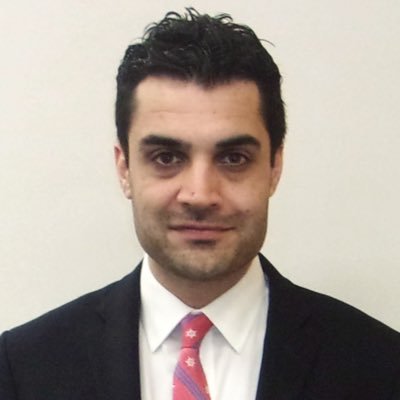
Shahmahmood Miakhel

Country Director, Afghanistan

الخبرة

أفغانستان

This individual is a guest contributor. MEI is not able to assist with contact requests.

Shahmahmood Miakhel is the Country Director in Afghanistan for the US Institute of Peace (USIP). Prior to that he was a Governance Advisor for the United Nations Assistance Mission in Afghanistan (UNAMA), and, from 2003–2005, a Deputy Minister of the Interior in the Government of Afghanistan. In 1994–1995 he worked for the United Nations Development Programme (UNDP) and United Nations Office for Project Services (UNOPS) in South and Southeast Afghanistan helping to establish District Rehabilitation Shuras (DRS). He also worked as a reporter for the Pashto service of the Voice of America from 1985–1990.

The Latest from Shahmahmood Miakhel

تصفية حسب
10031 Results
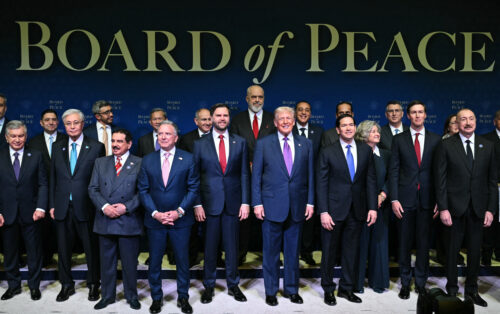
Bolstering US, Japan, and Gulf Cooperation in the High Tech Field
  • الحدث
  • Bolstering US, Japan, and Gulf Cooperation in the High Tech Field

    In recent years, both Washington and the Middle East have been looking eastward. The United States has been executing its own “pivot to Asia,” seeking to strengthen alliances and manage competition in the Indo-Pacific, while many Middle Eastern states are simultaneously deepening their economic and strategic ties with Asian partners. This dual pivot is creating new intersections for US–Japan cooperation. The discussion featured Ambassador Barbara Leaf, Mohammed Soliman and Amane Kobayashi, and was moderated by Ken Pollack. Drawing on their experience, the speakers examined how Japanese, American, and Gulf public and private initiatives can be integrated to create more dynamic, cutting-edge economies, symbiotic diplomatic relationships, and stronger mutual security ties.

    January 30, 2026, 8:30 AM – 10:00 AM

    معهد الشرق الأوسط 1763 N St NW واشنطن، مقاطعة كولومبيا 20036

    Integration or conflict in northeastern Syria? Ten key points to consider
    Photo by OMAR HAJ KADOUR / AFP via Getty Images
  • التحليل
  • Integration or conflict in northeastern Syria? Ten key points to consider

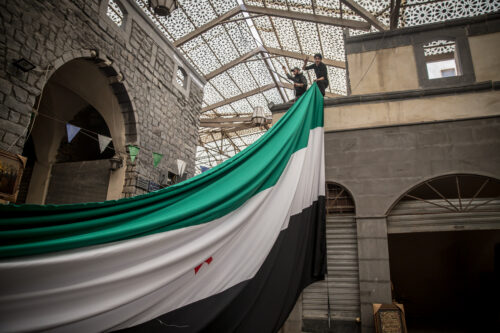
    After 10 months of US-mediated talks failed to achieve an integration of the Syrian Democratic Forces into Syria’s transitional state, hostilities erupted in early January. US diplomacy stepped in to try to calm tensions and force through the integration of the SDF’s Kurdish core into the Syrian state. Here are 10 key takeaways and indications of where things could go next.

    Ambiguous Uncertainties: Phase Two of Trump’s Plan for Gaza
  • Podcast
  • Ambiguous Uncertainties: Phase Two of Trump’s Plan for Gaza

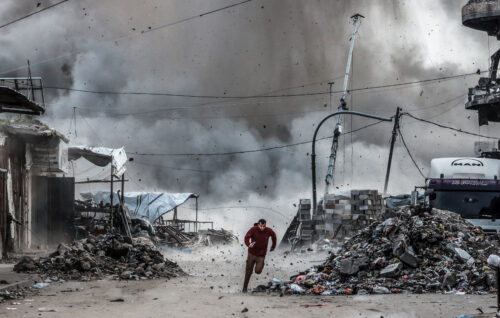
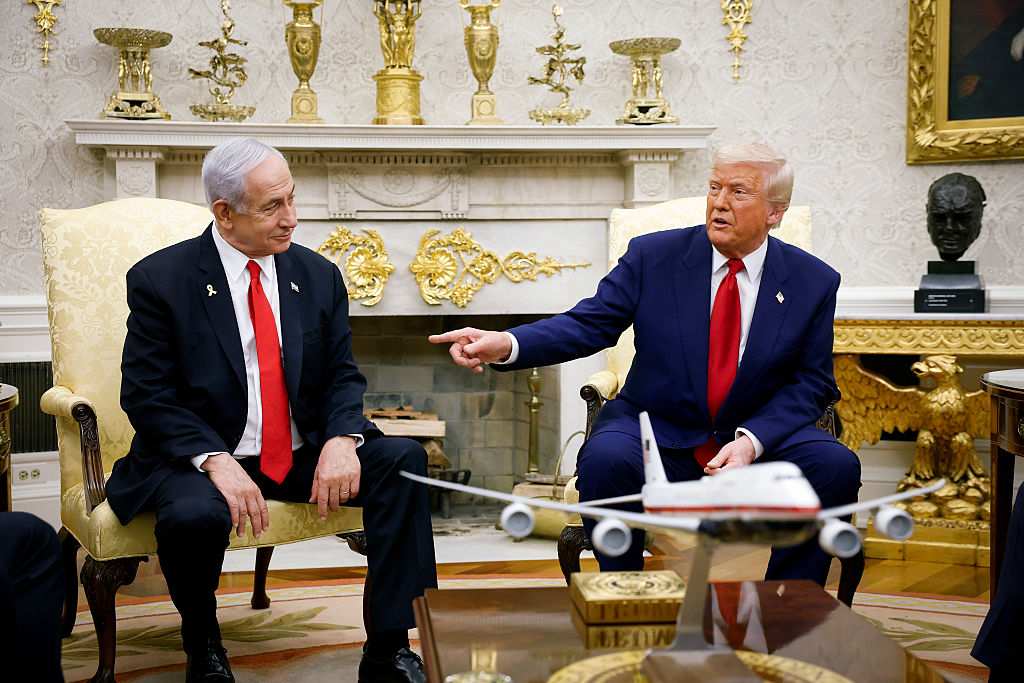
    MEI Senior Fellow Lucy Kurtzer-Ellenbogen joins hosts Alistair Taylor and Matthew Czekaj to discuss the latest developments in Gaza. Nearly four months after the Israeli government and Hamas agreed to President Donald Trump’s 20-point plan, Washington has announced that phase two of the process is now underway. Kurtzer-Ellenbogen, Taylor, and Czekaj examine the humanitarian situation in the devastated coastal strip, assess what phase two could entail, break down how international actors are responding, and explore what would need to happen to realize the plan’s aspirations.

    January 29, 2026

    The Transatlantic Alliance Will Survive Just Fine
  • تعليق
  • The Transatlantic Alliance Will Survive Just Fine

    Media and politicians on both sides of the Atlantic are hyping the idea that President Trump’s attempt to gain sovereign control of Greenland has caused unprecedented and irreparable damage to the over 75 year-old Transatlantic Alliance.  This “analysis” stems from multiple sources.  On both sides of the ocean, there are those who pounce on any deviation from the norm by Trump as evidence the world as we know it is ending. And in Europe, there is the human but unattractive reaction of weak, dependent states against their one powerful ally when it rejects Europe’s preferred script. Much of the US media criticism is summarized by the concept that our other NATO allies can never again “trust” the US.

    US Authorizes Chips for the UAE, Saudi Arabia
  • Policy Memo
  • US Authorizes Chips for the UAE, Saudi Arabia

    The US Commerce Department announced on November 19, 2025, that it had authorized the export of advanced American semiconductor chips to HUMAIN of Saudi Arabia and G42 of the United Arab Emirates. The approval enables both companies to purchase up to 35,000 Blackwell chips (GB300s). This sale is a core component of a broader “Compute Diplomacy” approach under the second administration of President Donald J. Trump, which was solidified following his May 2025 visit to the Gulf, where a series of multibillion-dollar artificial intelligence (AI) infrastructure agreements were signed.

    Ankara’s double win: Kurds, Israel, and the new Syria
  • التحليل
  • Ankara’s double win: Kurds, Israel, and the new Syria

    Whether the truce between Damascus and the Kurdish-led Syrian Democratic Forces holds or collapses will have major implications for neighboring Turkey, which has long-standing interests in Syria, but recent developments already point to a win for Ankara.

    Making Libya investable again
  • التحليل
  • Making Libya investable again

    The question facing international oil companies is not whether Libya has oil and gas to develop. It does. The question is whether the country’s current political, economic, and security conditions allow that potential to be converted into reliable returns — and whether near-term changes could alter that calculation.

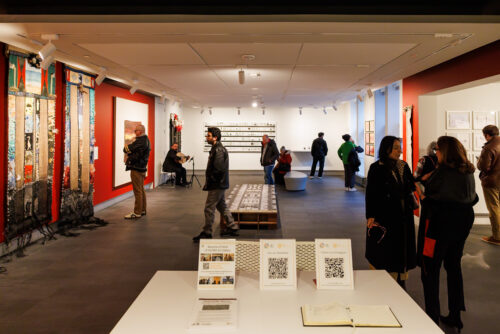
    عمر أوفندوم لايف: ليلة ختام معرض الفن العربي الشعبي
  • فنون وثقافة
  • عمر أوفندوم لايف: ليلة ختام معرض الفن العربي الشعبي

    انضموا إلينا في حفل اختتام معرض الفن العربي الشعبي الذي نظمه معهد الشرق الأوسط، والذي يتضمن عرضاً حياً للمغني الراب السوري الأمريكي والشاعر والراوي عمر أوفندوم.

    January 23, 2026, 6:30 PM – 8:30 PM

    معهد الشرق الأوسط 1763 N St NW واشنطن، مقاطعة كولومبيا 20036

    Bonus Episode: Can Yemen Hold Together?
  • Podcast
  • Bonus Episode: Can Yemen Hold Together?

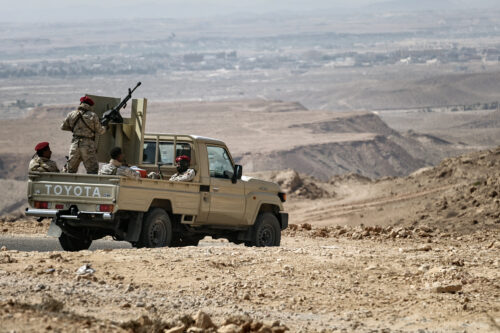
    This bonus episode of Middle East Focus features an excerpt from a recent MEI Virtual Briefing recorded on January 20. Director of Communications Zeina Al-Shaib is joined by MEI Affiliate Fatima Abo Alasrar and Associate Fellow F. Gregory Gause III to discuss the dramatically changing dynamics in Yemen’s civil war. Last month, Yemen emerged as a focal point of rising tensions between Saudi Arabia and the United Arab Emirates. The Southern Transitional Council, a UAE-backed southern separatist movement, has disbanded in recent weeks, following fierce clashes with Saudi-backed forces. In the conversation, Alasrar and Gause analyze the political, security, and socio-economic shifts affecting Yemen’s internal dynamics and what all this means for regional stability.

    23 يناير 2026

    The Pakistan-Afghanistan conflict: A strategic concern for the US
  • التحليل
  • The Pakistan-Afghanistan conflict: A strategic concern for the US

    Pakistan’s relationship with the Afghan Taliban has shifted from open sponsorship in the 1990s to a silent partnership following 2001 to alienation and belligerence since 2021. Their current conflict, which comes at great cost to both countries and seems to have no easy military or political resolution, also poses a threat to the stability and prosperity of neighboring states. Although American strategic interests in the region greatly diminished following the United States’ military withdrawal from Afghanistan in August 2021, the region’s altered political dynamics have prompted a growing American engagement with Pakistan and tentatively with Afghanistan. At the same time, the US has become a factor in how both Islamabad and Kabul have come to form their national security strategies.

    Can Yemen hold together?
  • سلسلة الإحاطات الافتراضية
  • Can Yemen hold together?

    January 21, 2026, 11:00 AM – 12:00 PM

    Virtual Briefing