This text has been translated by AI and may contain errors.
Skip to Content
The Other MoU: Launching a Europe-Gulf Resilience Initiative After the US-Iran Deal
  • Analysis
  • The Other MoU: Launching a Europe-Gulf Resilience Initiative After the US-Iran Deal

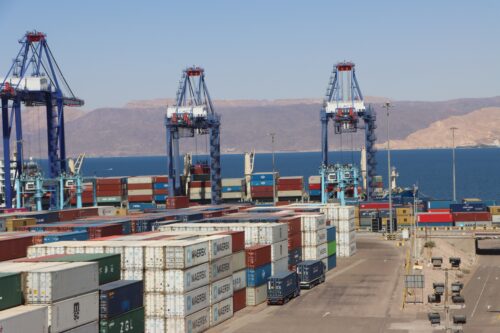
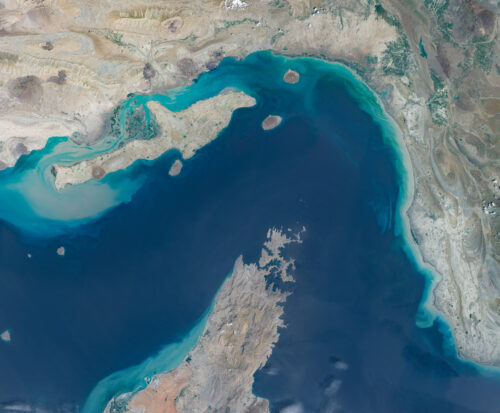
    The Islamabad Memorandum of Understanding (MoU) between the United States and Iran may have ended one of the most consequential Middle Eastern crises in decades, but it has not resolved the strategic problem it exposed. Whether the 60-day talks it set in motion will produce a final agreement remains far from certain.Yet the central lessons are already clear: Iran has preserved significant leverage, Washington has had to scale back its ambitions, and Europe and the Gulf face the prospect of protracted regional tension. Europe and the Gulf should therefore use the aftermath of the US-Iran deal to articulate their own “other MoU”: a Europe-Gulf Resilience initiative.

    A Post-War Model for Verifying Iran’s Missile Arsenal
  • Report
  • A Post-War Model for Verifying Iran’s Missile Arsenal

    This study proposes a model for constraining and verifying Iran’s ballistic missile arsenal by employing a layered Strategic Verification Model with seven components: comprehensive baseline declarations; missile test and launch monitoring; intrusive inspections; quantitative and qualitative limits on missile capabilities; production controls, especially on solid-fuel manufacturing; a robust enforcement and compliance architecture; and regional confidence building measures.

    A New US-Iraq Relationship?
  • Analysis
  • A New US-Iraq Relationship?

    The US administration appears to have great expectations for Iraq’s new prime minister, Ali Falah al-Zaidi. But the expectations need to be tempered.

    June 25, 2026

    Featured Experts

    Filter by
    4449 Results
    Libyan Intervention: Justified By the Circumstances
    Middle East Institute
  • Analysis
  • Libyan Intervention: Justified By the Circumstances

    It was absolutely predictable that Republicans would attack President Obama whatever he did in Libya, though Newt Gingrich, in his overeagerness, overreached by criticizing him for too explicitly opposite reasons. It was also likely that the anti-interventionist left, which sees (almost?) any use of American military power as imperialistic and unwarranted would likewise be opposed.

    March 30, 2011

    Cyberactivism and the Arab Revolt: Battles Waged Online and Lessons Learned
    Middle East Institute
  • Video
  • Cyberactivism and the Arab Revolt: Battles Waged Online and Lessons Learned

    The Middle East Institute is proud to host digital media experts Adel Iskandar and Courtney Radsch for a discussion on the nature of the cyberactivism that is fueling the uprisings spreading throughout the Middle East. Iskandar will examine the battle in Egypt between the government and the protesters to control online discourse, analyzing the obstacles and the successes.

    March 28, 2011

    A Crisis Squandered
    Middle East Institute
  • Analysis
  • A Crisis Squandered

    Rahm Emanuel famously quipped that a crisis should never go to waste. In his absence, the Administration seems determined not to take sufficient advantage of the ongoing and huge crisis in the Arab world. Its hesitant, uncertain, and (to date) completely ineffectual response to events in Libya sadly make this all too clear.

    March 18, 2011

    Libya: Better Late Than Never, But…
    Middle East Institute
  • Analysis
  • Libya: Better Late Than Never, But…

    It now appears that the US finally has gotten serious about doing something meaningful to assist opposition forces in Libya. Exaggerated fears and an insufficient grasp of the adverse consequences of not taking such action previously paralyzed US (and most European) policymakers with respect to even an eastern no-fly zone, let alone more robust measures. Meanwhile, what is left of the organized Libyan opposition is increasingly hard-pressed.

    March 17, 2011

    US-Syrian Relations: Changing Priorities After Egypt
    Middle East Institute
  • Podcast
  • US-Syrian Relations: Changing Priorities After Egypt

    The Middle East Institute is proud to host Joshua Landis and Andrew Tabler for a discussion about the current state of US-Syrian relations and the impact the changing regional dynamic will have on the relationship's priorities. How might the revolutionary wave crossing the Middle East effect Washington's discussions with Damascus? Should there be a greater emphasis on reform? Where does the Syrian-Israeli peace track stand and is it more urgent than ever?

    Speakers: Joshua Landis, Andrew Tabler

    March 16, 2011

    Congress Must Step Up on Libya
    Middle East Institute
  • Analysis
  • Congress Must Step Up on Libya

    The greatest threat to U.S. national security is Congress’s abdication of its constitutional responsibilities. Nothing could make this point more clear than the current discussion of whether Washington should bear the lion’s share of the costs and risks of a no-fly zone over Libya.

    March 16, 2011

    Popular Revolt in Yemen: Implications for Democracy and US Foreign Policy
    Middle East Institute
  • Video
  • Popular Revolt in Yemen: Implications for Democracy and US Foreign Policy

    The Middle East Institute is proud to host Janet Sanderson, Christopher Boucek and Charles Schmitz for a discussion about the challenges facing Yemeni President Abullah Ali Saleh as he confronts a third month of anti-government protests and growing calls for secession from southern separatists. Sanderson will examine US policy toward the Saleh government in the face of demands for reform, while Schmitz will examine the respective players in Yemen's protest movement and the government's response to their demands.

    March 10, 2011

    Protracted Mass Displacement in Afghanistan and Iraq
    Middle East Institute
  • Video
  • Protracted Mass Displacement in Afghanistan and Iraq

    The Middle East Institute, in partnership with the Fondation Pour le Recherche Strategique, is proud to host Dr. Susanne Schmeidl and Dr. Geraldine Chatelard for a discussion of situations of protracted mass displacement in Afghanistan and Iraq. Funded by the European Commission, the project aims to generate policy recommendations that will strengthen transatlantic cooperation to respond to the refugee crises in the above-mentioned countries. The event will feature the findings of the two project team leaders, based on more than two dozen field-research papers.

    March 1, 2011

    Kuwait at Fifty
    Middle East Institute
  • Analysis
  • Kuwait at Fifty

    *This Policy Insight first appeared as a feature article in the Majalla on February 9, 2011.

    Half a century after independence and two decades since the liberation from Iraqi occupation, Kuwait’s bitter experience with pan-Arabism and ongoing regional power plays have affected its growth. However, since the downfall of Saddam Hussein in 2003, and thanks to robust oil revenues, Kuwait has witnessed an unprecedented boom, albeit amidst raging internal disputes over the need for reform and the future direction of the country.

    Betrayal

    After Mubarak
    Middle East Institute
  • Analysis
  • After Mubarak

    The shock waves of Hosni Mubarak’s resignation have just started to roll across the Middle East, but in Egypt the upheaval has barely begun. The country now embarks on what the protesters in Tahrir square hope will be a transition to a true, civilian-led democracy. In the meantime, Egypt is headed for a period of military rule in some form, with the ultimate intentions of the armed forces leadership still in doubt. Will the military act to effect the “genuine transition” now demanded by the Obama Administration and the protesters themselves?

    February 14, 2011

    US-Libya Relations: Surviving the Wikileaks Controversy?
    Middle East Institute
  • Podcast
  • US-Libya Relations: Surviving the Wikileaks Controversy?

    US-Libya Business Association Honorary Chairman Amb. David Mack and Executive Director Charles Dittrich traveled to Libya for five days in mid-December. They met with Libyan government officials, Libyan private business leaders and representatives of American companies working in the country. They will share impressions regarding the political and economic climate in Libya and the implications for both overall US-Libyan relations and the prospects for American business interests.

    February 10, 2011

    Living with Soil Salinity: Is It Possible?
    Middle East Institute
  • Analysis
  • Living with Soil Salinity: Is It Possible?

    Soil and groundwater salinity has emerged as the most significant agricultural problem facing the Sultanate of Oman. Scant rainfall, coupled with high temperature, is always conducive to the accumulation of salts in soils. These conditions are predominant in Oman. Secondary soil salinity has increased at a very rapid rate due to the persistent use of saline groundwater, which, over time, has become more concentrated due to increased pumping by farmers in the Batinah region – the country’s most important agricultural area.

    February 10, 2011

    Read the Middle East Journal

    The oldest peer-reviewed publication dedicated to the study of the modern Middle East, MEI’s flagship journal covers politics, society, and culture in the region.