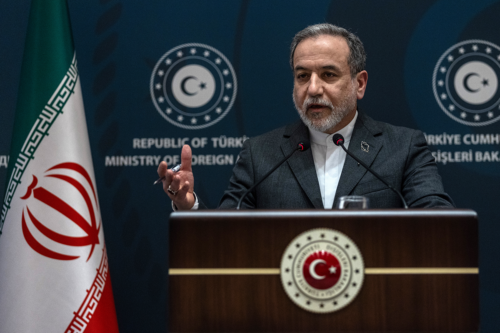
Pakistan-Afghanistan Tensions Drifting Into a Dangerous Escalation Cycle
The most recent cross-border hostilities between Afghanistan and Pakistan show how tensions have crossed a dangerous threshold.
MEI Senior Fellow Jaser AbuMousa joins hosts Alistair Taylor and Matthew Czekaj to unpack how Hamas is navigating the US-Israel conflict with Iran and its impact on Gaza. Nearly two and a half years after the start of the Gaza war, international attention has shifted away from the humanitarian crisis in the devastated coastal strip. Meanwhile, Hamas’ primary state sponsor, Iran, has been severely weakened by US-Israeli military strikes and the death of former Supreme Leader Ayatollah Ali Khamenei. AbuMousa examines how this could affect Hamas’ trajectory moving forward and its place within the Axis of Resistance, as well as what it all means for the Palestinian people.
North African states feel the consequences of the US-Israel war with Iran less through direct security risks than through economic shocks that affect long-term stability. The region remains highly exposed to disruptions in global food and energy markets, where price spikes can lead to fiscal pressure, inflation, and social unrest.
With the Strait of Hormuz closed and oil production from Iraq’s south in free fall, Baghdad’s failure to maximize the Iraq-Turkey Pipeline is no longer a policy dispute. It is a national emergency.
Nearly two weeks into the Iran war, one of Tehran’s most capable and disruptive regional allies, Yemen’s Houthi movement, has not entered the fight. The Houthis’ restraint reflects a strategic calculation by Iran’s Islamic Revolutionary Guard Corps.
After months of trying to head off a US-Israeli war with Iran, Turkey now finds itself caught in the middle of it — and deeply concerned that a prolonged, regionalized conflict could pose serious security, economic, and political risks.
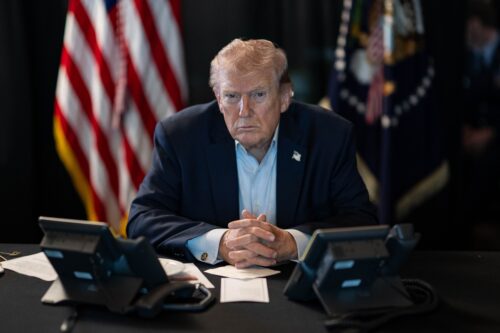
President Donald Trump said that the war against the Islamic Republic of Iran that he launched with Israel could last for four to five weeks with “the capability to go far longer than that.” Trump even left the door open to putting U.S. troops on the ground.
Hosts Alistair Taylor and Matthew Czekaj are joined by MEI Senior Fellow Fadi Nicholas Nassar to discuss Hizballah’s role in the escalating conflict in the Middle East and the implications for Lebanon. A day after the United States and Israel launched a joint military campaign against Iran, Tehran’s Lebanese proxy fired missiles at northern Israeli territory. Israel responded swiftly and forcefully, and Lebanon’s government and population now fear the Iranian-backed militia is dragging the country back into war. The conversation explores the broader repercussions of Hizballah’s actions against the backdrop of a widening war in Iran and Lebanon’s quickly evolving political climate. Nassar also outlines recommendations for how Lebanon can move forward as a sovereign and effective state.
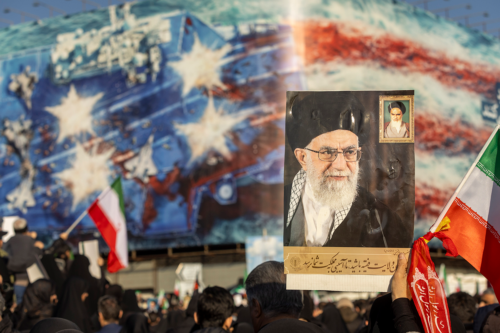
For nearly four decades, Ayatollah Ali Khamenei embodied the Islamic Republic’s certainty: a singular authority who shaped every major decision on war and peace, repression and reform, economics and ideology. His death, in a coordinated US-Israeli strike on his Tehran command compound on February 28, has ripped that certainty away in the most violent fashion imaginable.
The latest cycle of U.S.-Iran escalation has followed a familiar script: sharpened rhetoric from the United States, calibrated military signaling by Iran in the Persian Gulf, indirect diplomacy through Oman, and Israeli warnings that remain deliberately ambiguous but unmistakably real. Yet beneath this choreography lies a more consequential development inside Tehran. The current crisis is forcing Iran’s political class to reassess its central foreign-policy wager of the past decade: that deepening alignment with Russia and China would provide strategic insulation against Western coercion.
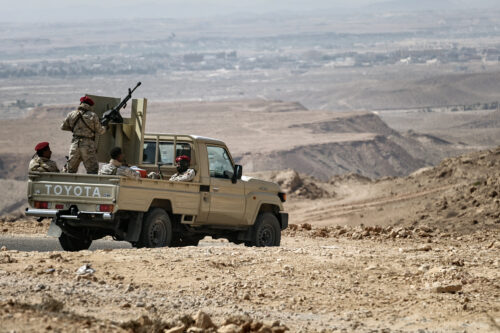
Saudi Arabia has stepped up its efforts to unify and restructure Yemen’s anti-Houthi forces after the rapid expansion and sudden implosion of the United Arab Emirates-backed secessionist Southern Transitional Council following Abu Dhabi’s military withdrawal from the country.
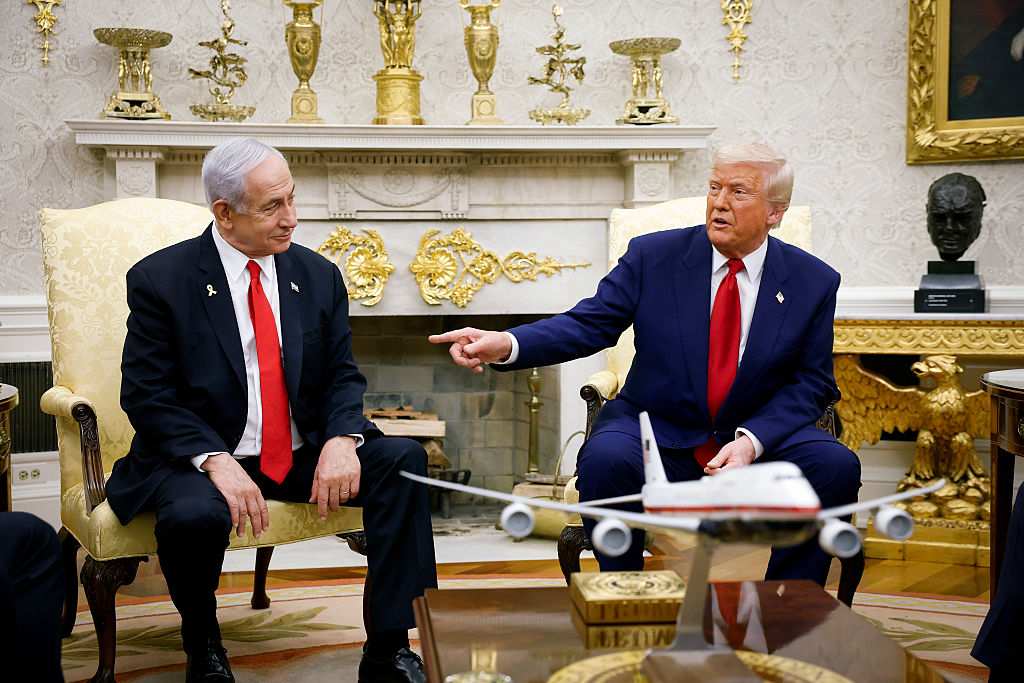
The United States is Israel’s closest ally, and its support is a central pillar of Israel’s national security. The US provides Israel access to purchase advanced weapon systems, ammunition and weapon emergency supplies in times of war, intelligence sharing, opportunities for cooperation in defense technology, and crucial diplomatic cover at the UN Security Council and elsewhere. It also provides Israel with regular security aid, to be spent in the United States, currently at an annual rate of $3.8bn (under an MOU that expires in 2028). Since October 2023, the US also offered active military support, in a break from the historical norm. It contributed substantially to Israel’s defense against Iranian ballistic missiles, in conjunction with Arab regional partners, and bombed nuclear sites in Iran in support of Israel’s campaign in the “12 Day War” of June 2025.
Hosts Alistair Taylor and Matthew Czekaj are joined by MEI Distinguished Military Fellow Mick Mulroy to discuss the Trump administration’s new National Defense Strategy (NDS) and its implications for the Middle East. While serving as the Deputy Assistant Secretary of Defense (DASD) for the Middle East from 2017 to 2019, Mulroy helped prepare the 2018 NDS, giving him an insider perspective on US defense planning. Together, Taylor, Czekaj, and Mulroy unpack what the new strategy means for US priorities globally and for the Middle East in particular, including how it could be reflected in a potentially looming military strike on Iran.
The decision by Washington and Tehran to shift their long-anticipated meeting, set for February 6, from Istanbul to Muscat is not merely a logistical detail. It is the latest reminder that when US-Iran diplomacy is on the verge of breaking down completely, Oman is the regional player the Iranian regime trusts the most to step in and mediate.