This report explores maritime security conditions in the Mediterranean and the evolving US engagement in the region. As critical infrastructure becomes increasingly vulnerable to sabotage, freedom of navigation is undermined by conflict, and energy disputes generate tension, US policy focus on the region has become fragmented and disengaged. The authors call for a sustained American role to strengthen maritime domain awareness, allied coordination, infrastructure protection, and the capacity to respond when Mediterranean crises affect US and transatlantic interests.
The Multiple Costs of the US–Iran War – From Hormuz to Europe and South Asia: The Widening Economic and Political Geography of the Conflict
Wars are decided by those who hold military power, but their costs are increasingly borne by those who have little or no voice in the decisions that start them. The US–Iran war shows this imbalance very clearly. Its economic consequences have gone far beyond the battlefield and have disrupted energy markets, trade routes, food supplies, public finances and investment in the Gulf, Europe, Africa and Asia. The most striking feature of the conflict, however, is not only the size of the damage but its very unequal distribution.
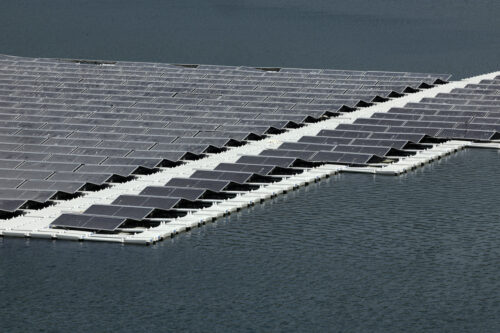
In less than two decades, a string of offshore discoveries has turned the Eastern Mediterranean into a significant gas-producing region, making Israel an exporter, twice lifting Egypt into the ranks of liquefied natural gas (LNG) exporters, and giving Cyprus finds it has yet to bring to market. This backgrounder explores the potential and challenges of exploiting and managing LNG resources in the region.
MINURSO’s Future: What the Security Council’s Choice May Reveal
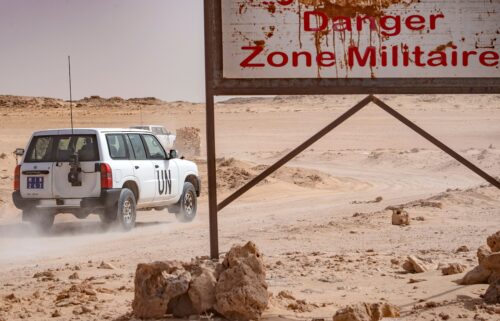
As the United Nations Security Council (UNSC) approaches the October 31 renewal deadline of the UN Monitoring Mission in Western Sahara (MINURSO), the mission’s longer-term future remains uncertain. Another largely unchanged renewal remains a likely immediate outcome. But beyond that holding pattern, three possible scenarios are also on the table.
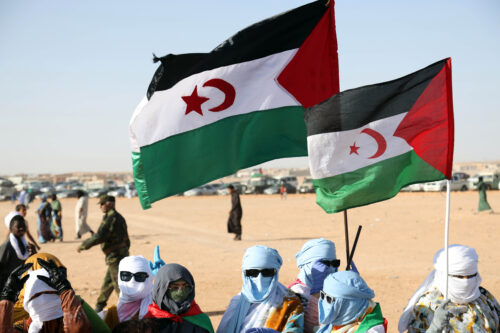
Western Sahara, a sparsely populated territory on the Atlantic coast of northwest Africa, is the site of one of the continent’s longest-running territorial disputes. The conflict dates to Spain’s withdrawal from the territory in 1975, after which Morocco Algeria, and Mauritania vied for control over the former colony.
This article is part of a collection of short essays written by the Fellows of the Middle East Institute to explore aspects of the ongoing war with Iran. The intent of the collection is to help readers see new and unexpected elements of the dynamics and impact of the ongoing hostilities and to think harder, deeper, and broader about the implications of the conflict.
Algeria and Morocco have long been at odds, but recent diplomatic moves may signal a widening geopolitical split in North Africa. Hosts Alistair Taylor and Matthew Czekaj are joined by MEI Senior Fellow Intissar Fakir to unpack Algeria’s decision to sever diplomatic ties with the United Arab Emirates and Morocco’s warming relations with both the UAE and Israel. They also explore linkages between these diplomatic shifts and the Western Sahara conflict, Moroccan domestic concerns, particularly in light of this week’s elections, as well as broader regional stability.
North African governments have sought to remain outside the US-Iran conflict, regardless of their differing alignments and preferences. Geography insulates them from the fighting, but not from the consequences. That duality is the region’s predicament: what makes North Africa useful to others is what leaves it exposed.
Beyond Ports: China’s Digital Networks of Influence in the Middle East and Africa
For more than a decade, assessments of Chinese strategy in the Middle East and Africa have focused on assets, including the ports Chinese firms own, the pipelines they finance, and the networks they build. This lens has produced familiar maps of Chinese “footholds” and debates over future military bases, but ownership alone reveals less about influence.
The more useful question is not what China owns, but how Chinese firms become embedded in the operational and digital systems that keep trade corridors moving. Influence derives not from controlling infrastructure outright but from participating in the governance of the networks that move goods, data, finance, and information across them.
United States Central Command (CENTCOM), one of the US Department of Defense’s (DoD) six geographical combatant commands, is responsible for countering threats, responding to crises, and strengthening regional stability in the Middle East, Central Asia, and parts of South Asia.
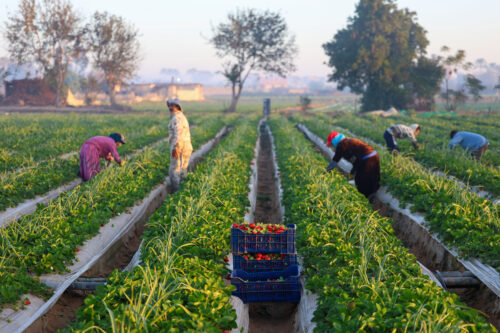
This summer, brutally hot temperatures, deepening water scarcity, and spiking fertilizer costs have put North Africa’s agricultural sector under intense pressure. Host Alistair Taylor is joined by Mohammed Mahmoud, CEO and founder of the Climate and Water Initiative and lead for Middle East Climate and Water Policy at the United Nations University Institute for Water, Environment, and Health, to unpack the region’s food and water security challenges. Drawing on Mahmoud’s new report card on agricultural sustainability in North Africa, they explore the diverging picture across the region, why some countries have weathered the strain better than others, and what it will take to build a more resilient and secure food system.
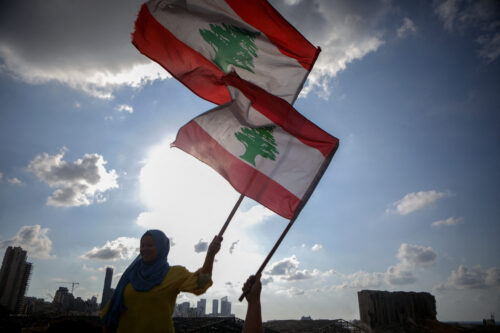
Lebanon is America’s next foreign policy win — if Washington acts now. The US has committed blood and treasure to neutralize Iran’s ability to project power and destabilize the Middle East. Lebanon is now the clearest opening to convert those investments into strategic gains and permanently dislodge the Islamic Republic from its most important regional foothold. Securing a sovereign Lebanon, achieving a lasting Israel-Lebanon peace, and dismantling Hizballah — the blueprint of Iran’s proxy model — would irreversibly weaken Tehran’s threat and consolidate a new regional order led by America’s partners before Iran has a chance to reverse its losses.
Outlook for Sustainable Agriculture in North Africa: Report Card Assessment
This report assesses the future sustainability of agriculture across North Africa using a multidimensional approach that considers the dynamics of water, climate, land, and economics. To enable this assessment of sustainable agriculture across the region, the author evaluates water resources reliability, water use efficiency, agricultural land sustainability, and the food sector economy for Egypt, Sudan, Libya, Tunisia, Algeria, Morocco, and Mauritania, and provides recommendations for action.
When the Strait of Hormuz closed in March, fertilizer prices spiked within weeks, triggering a food security crisis across North Africa and the Sahel. Host Alistair Taylor is joined by MEI Senior Fellow Intissar Fakir to explore what it means for the region, unpack the link between food security and regional stability, and assess how the strait’s reopening could impact those affected.
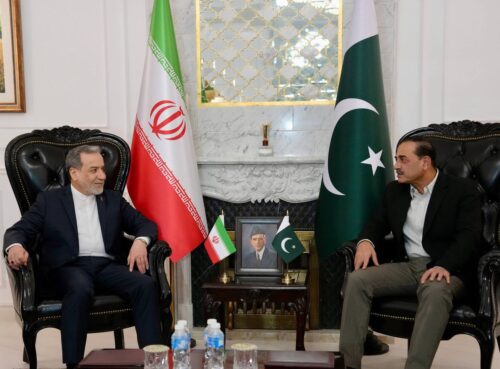
A Strategic Conundrum: Pakistan’s Transit Corridor to Iran as Lifeline or Liability
The US-Iran standoff over the Strait of Hormuz — disruptive to global trade and energy flows, and devastating for debt-burdened economies — has handed Pakistan an unexpected geoeconomic opportunity, one that may persist even if the framework agreement announced on June 14 results in a lasting peace and permanent reopening of the strait. But seizing it will have interlocking consequences for Islamabad’s ties with Tehran, Washington, and the Gulf states.