تمت ترجمة هذا النص بواسطة الذكاء الاصطناعي وقد يحتوي على أخطاء.
تخطي إلى المحتوى

الأبحاث والتعليقات

اقرأ الأبحاث والتحليلات والتعليقات المتعمقة من زملاء وخبراء معهد الشرق الأوسط عن الشرق الأوسط. 

Trump’s South Caucasus Peacemaking Is His Most Successful, but It Remains Unfinished
  • تعليق
  • Trump’s South Caucasus Peacemaking Is His Most Successful, but It Remains Unfinished

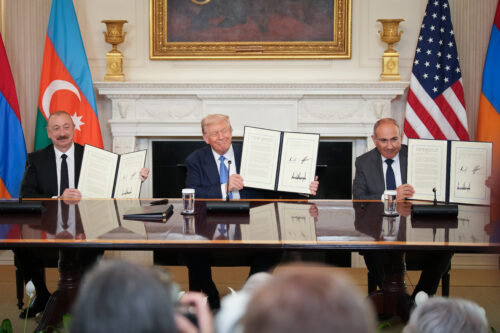
    Of all the fronts in President Trump’s peacemaking agenda, the South Caucasus has delivered the most concrete results. The August 2025 Washington Declaration, signed between Armenia and Azerbaijan and witnessed by Trump, marked an important step toward peace in the region. The two sides initialed a peace agreement and advanced plans to unblock regional connectivity, including through the establishment of the Trump Route for International Peace and Prosperity (TRIPP), which would connect Azerbaijan to its Nakhijevan exclave through southern Armenia. Implementation of TRIPP has since made notable progress, but construction has yet to start. A breakthrough on those two tracks would, in turn, unlock Armenia–Türkiye normalization, transforming a long-fractured region into an area of trade and interdependence.
    The Iran War Was Always About Regime Change
  • تعليق
  • The Iran War Was Always About Regime Change

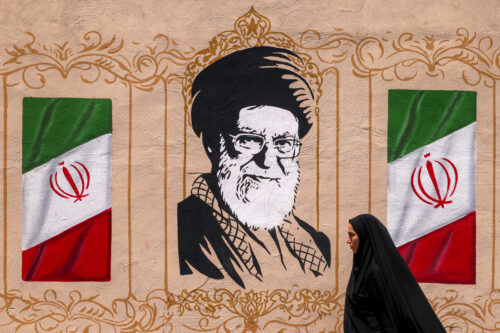
    Wars don’t just end. They get interpreted, reinterpreted, and turned into strategic doctrine. That is what happened after the Iran-Iraq War of the 1980s, a conflict that saw the United States back Tehran’s Iraqi adversaries. The war taught Tehran three lessons it never unlearned: that Washington wants the Islamic Republic gone, that Iran stands essentially alone in the world, and that it cannot survive a direct, overt fight with the U.S. and Israel.

    Iran’s New War Cabinet Is Really an Old One
  • التحليل
  • Iran’s New War Cabinet Is Really an Old One

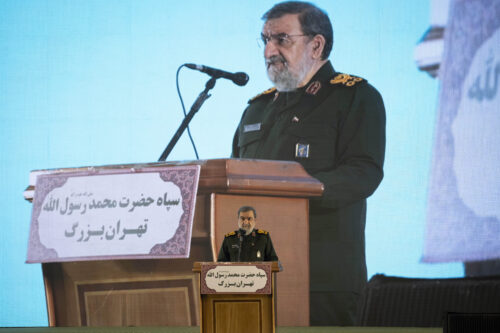
    Within 48 hours this week, Iran filled six of the most important posts in its battered military and security establishment. Read together with the biographies and mandates behind them, the appointments show how Tehran is drawing lessons from successive wars and preparing for a prolonged period of insecurity, without proving it has abandoned negotiation.

    Additional Research & Commentary

    معلومات أساسية

    Israeli Settlements in the West Bank
  • معلومات أساسية
  • Israeli Settlements in the West Bank

    Since 1967, Israeli settlements in the West Bank have been a contested feature of the Israeli-Palestinian conflict. The ultimate disposition of the settlements and ongoing activity related to their growth have repeatedly defied agreement in negotiations over a resolution to the conflict.

    June 9, 2026

    The Houthis
  • معلومات أساسية
  • The Houthis

    The Houthis are a political-military faction and Zaydi religious movement founded in northwestern Yemen in the 1980s. A key member of Iran’s Axis of Resistance with links to other militant organizations in the Arabian Peninsula and the Horn of Africa, the group has continued to pose a threat to Western interests on a global scale.

    May 15, 2026

    The India-Middle East-Europe Economic Corridor
  • معلومات أساسية
  • The India-Middle East-Europe Economic Corridor

    The India-Middle East-Europe Economic Corridor (IMEC) is a proposed multinational infrastructure initiative aimed at upgrading connectivity between the three regions through integrated trade, energy, and digital networks. Announced at the G20 summit in New Delhi in September 2023, IMEC is envisioned partially as a counterweight to China’s international infrastructure project, the Belt and Road Initiative.

    June 3, 2026

    Turkish Foreign Policy
  • معلومات أساسية
  • Turkish Foreign Policy

    After a decade of post-Arab Spring isolation, Turkey’s leaders have recognized that their ambition to position the country as an agenda-setter on the world stage requires active engagement in all directions. President Recep Tayyip Erdoğan’s consolidation of executive authority has centralized foreign policy decision-making and tied it to his domestic political priorities, transforming the country’s revisionist approach to one shaped primarily by personal and pragmatic interests.

    April 23, 2026

    المدونات الصوتية

    التركيز على الشرق الأوسط

    البودكاست الأسبوعي الرائد لمعهد الشرق الأوسط حول السياسة الخارجية الأمريكية والقضايا السياسية والاجتماعية المعاصرة في الشرق الأوسط.

    إزالة الحافة من الشرق الأوسط

    براين كاتوليس، زميل أول في معهد الشرق الأوسط كاتوليس يشارك الأصدقاء والزملاء وخبراء السياسة في محادثات غير رسمية حول أهم الأحداث في الشرق الأوسط. 

    إعادة التفكير في الديمقراطية

    زميل أول في معهد الشرق الأوسط غونول تول تستضيف كبار العلماء وقادة الفكر حول اتجاهات الديمقراطية العالمية وحالة النظام الدولي الليبرالي. 

    تصفية حسب
    8783 Results
    Inside the United Nations Assistance Mission in Afghanistan
    معهد الشرق الأوسط
  • Video
  • Inside the United Nations Assistance Mission in Afghanistan

    The Middle East Institute is proud to host Staffan De Mistura, the Special Representative of the UN Secretary-General for Afghanistan, for a lecture and discussion on the UN's mission in Afghanistan. De Mistura will speak at MEI following the UN Security Council debate on the mandate renewal of the United Nations Assistance Mission in Afghanistan (UNAMA). The Security Council resolution with the new mandate is scheduled to be adopted on March 22, 2011, the day of this event.

    March 22, 2011

    A Crisis Squandered
    معهد الشرق الأوسط
  • التحليل
  • A Crisis Squandered

    Rahm Emanuel famously quipped that a crisis should never go to waste. In his absence, the Administration seems determined not to take sufficient advantage of the ongoing and huge crisis in the Arab world. Its hesitant, uncertain, and (to date) completely ineffectual response to events in Libya sadly make this all too clear.

    March 18, 2011

    Libya: Better Late Than Never, But…
    معهد الشرق الأوسط
  • التحليل
  • Libya: Better Late Than Never, But…

    It now appears that the US finally has gotten serious about doing something meaningful to assist opposition forces in Libya. Exaggerated fears and an insufficient grasp of the adverse consequences of not taking such action previously paralyzed US (and most European) policymakers with respect to even an eastern no-fly zone, let alone more robust measures. Meanwhile, what is left of the organized Libyan opposition is increasingly hard-pressed.

    March 17, 2011

    US-Syrian Relations: Changing Priorities After Egypt
    معهد الشرق الأوسط
  • Video
  • US-Syrian Relations: Changing Priorities After Egypt

    The Middle East Institute is proud to host Joshua Landis and Andrew Tabler for a discussion about the current state of US-Syrian relations and the impact the changing regional dynamic will have on the relationship's priorities. How might the revolutionary wave crossing the Middle East effect Washington's discussions with Damascus? Should there be a greater emphasis on reform? Where does the Syrian-Israeli peace track stand and is it more urgent than ever?

    March 16, 2011

    US-Syrian Relations: Changing Priorities After Egypt
    معهد الشرق الأوسط
  • Podcast
  • US-Syrian Relations: Changing Priorities After Egypt

    The Middle East Institute is proud to host Joshua Landis and Andrew Tabler for a discussion about the current state of US-Syrian relations and the impact the changing regional dynamic will have on the relationship's priorities. How might the revolutionary wave crossing the Middle East effect Washington's discussions with Damascus? Should there be a greater emphasis on reform? Where does the Syrian-Israeli peace track stand and is it more urgent than ever?

    Speakers: Joshua Landis, Andrew Tabler

    March 16, 2011

    Congress Must Step Up on Libya
    معهد الشرق الأوسط
  • التحليل
  • Congress Must Step Up on Libya

    The greatest threat to U.S. national security is Congress’s abdication of its constitutional responsibilities. Nothing could make this point more clear than the current discussion of whether Washington should bear the lion’s share of the costs and risks of a no-fly zone over Libya.

    March 16, 2011

    A Two State Peace: Defining the Border
    معهد الشرق الأوسط
  • Podcast
  • A Two State Peace: Defining the Border

    The Obama administration's efforts to win a settlement freeze as a confidence-building measure have failed, and the U.S.has not presented a new vision for resuming the moribund peace process. Nevertheless, many analysts now recommend shifting the diplomatic focus to negotiations to define the border between Israel and the future state of Palestine. Resolving the border would address the issues of settlements and Jerusalem as well as potential land swaps between the two states.

    March 11, 2011

    Egyptians Want Freedom, Not an Islamic Republic
    معهد الشرق الأوسط
  • التحليل
  • Egyptians Want Freedom, Not an Islamic Republic

    When Egyptians, fed up with corruption, dictatorship, and lousy government, pushed President Hosni Mubarak out the door, some worried whether the burst of enthusiasm for free, open elections and democracy would be squelched by Islamist groups like Egypt’s Muslim Brotherhood. History teaches that the real question isn’t who starts revolution, but who wins it. What begins as a quest for democracy can produce a new dictatorship.

    Popular Revolt in Yemen: Implications for Democracy and US Foreign Policy
    معهد الشرق الأوسط
  • Podcast
  • Popular Revolt in Yemen: Implications for Democracy and US Foreign Policy

    The Middle East Institute is proud to host Janet Sanderson, Christopher Boucek and Charles Schmitz for a discussion about the challenges facing Yemeni President Abullah Ali Saleh as he confronts a third month of anti-government protests and growing calls for secession from southern separatists. Sanderson will examine US policy toward the Saleh government in the face of demands for reform, while Schmitz will examine the respective players in Yemen's protest movement and the government's response to their demands.

    March 10, 2011

    Popular Revolt in Yemen: Implications for Democracy and US Foreign Policy
    معهد الشرق الأوسط
  • Video
  • Popular Revolt in Yemen: Implications for Democracy and US Foreign Policy

    The Middle East Institute is proud to host Janet Sanderson, Christopher Boucek and Charles Schmitz for a discussion about the challenges facing Yemeni President Abullah Ali Saleh as he confronts a third month of anti-government protests and growing calls for secession from southern separatists. Sanderson will examine US policy toward the Saleh government in the face of demands for reform, while Schmitz will examine the respective players in Yemen's protest movement and the government's response to their demands.

    March 10, 2011

    Protracted Mass Displacement in Afghanistan and Iraq
    معهد الشرق الأوسط
  • Video
  • Protracted Mass Displacement in Afghanistan and Iraq

    The Middle East Institute, in partnership with the Fondation Pour le Recherche Strategique, is proud to host Dr. Susanne Schmeidl and Dr. Geraldine Chatelard for a discussion of situations of protracted mass displacement in Afghanistan and Iraq. Funded by the European Commission, the project aims to generate policy recommendations that will strengthen transatlantic cooperation to respond to the refugee crises in the above-mentioned countries. The event will feature the findings of the two project team leaders, based on more than two dozen field-research papers.

    March 1, 2011

    Protracted Mass Displacement in Afghanistan and Iraq, An EU-sponsored Project
    معهد الشرق الأوسط
  • Podcast
  • Protracted Mass Displacement in Afghanistan and Iraq, An EU-sponsored Project

    The Middle East Institute, in partnership with the Fondation Pour le Recherche Strategique, is proud to host Dr. Susanne Schmeidl and Dr. Geraldine Chatelard for a discussion situations of protracted mass displacement in Afghanistan and Iraq. Funded by the European Commission, the project aims to generate policy recommendations that will strengthen transatlantic cooperation to respond to the refugee crises in the above-mentioned countries. The event will feature the findings of the two project team leaders, based on more than two dozen field-research papers.

    March 1, 2011

    Israel After Egypt: Opportunities and Challenges for Peace
    معهد الشرق الأوسط
  • Podcast
  • Israel After Egypt: Opportunities and Challenges for Peace

    The Middle East Institute is proud to host the Honorable Robert Wexler and Dr. Yoram Peri for a discussion about the challenges facing Israel and the Middle East peace process in the wake of the resignation of Egyptian president Hosni Mubarak. Some in Israel, including former Israeli Prime Minister Ehud Olmert, argue that current events in the region make it imperative that Israel move quickly to secure a peace treaty with the Palestinians. Others insist Israel proceed with caution, given the increased instability in the region.

    February 23, 2011

    After the People's Revolution: An Examination of the Egyptian Military
    معهد الشرق الأوسط
  • Podcast
  • After the People's Revolution: An Examination of the Egyptian Military

    The Middle East Institute is proud to host Dr. Graeme Bannerman and Col. Joseph Engelhardt for an in-depth look at the Egyptian military and its anticipated role in the wake of the resignation of Egyptian President Hosni Mubarak. Bannerman and Engelhardt have had extensive interaction with members of the Egyptian military over the past thirty years.

    February 18, 2011

    اقرأ مجلة الشرق الأوسط

    تُعد المجلة الرئيسية لمعهد الشرق الأوسط أقدم مطبوعة محكّمة مكرّسة لدراسة الشرق الأوسط الحديث، وتغطي المجلة الرئيسية في المعهد السياسة والمجتمع والثقافة في المنطقة.





