تمت ترجمة هذا النص بواسطة الذكاء الاصطناعي وقد يحتوي على أخطاء.
تخطي إلى المحتوى

الأبحاث والتعليقات

اقرأ الأبحاث والتحليلات والتعليقات المتعمقة من زملاء وخبراء معهد الشرق الأوسط عن الشرق الأوسط. 

Trump’s South Caucasus Peacemaking Is His Most Successful, but It Remains Unfinished
  • تعليق
  • Trump’s South Caucasus Peacemaking Is His Most Successful, but It Remains Unfinished

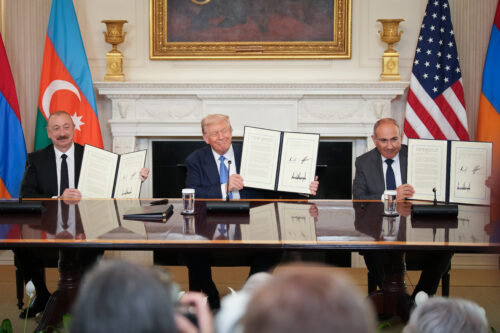
    Of all the fronts in President Trump’s peacemaking agenda, the South Caucasus has delivered the most concrete results. The August 2025 Washington Declaration, signed between Armenia and Azerbaijan and witnessed by Trump, marked an important step toward peace in the region. The two sides initialed a peace agreement and advanced plans to unblock regional connectivity, including through the establishment of the Trump Route for International Peace and Prosperity (TRIPP), which would connect Azerbaijan to its Nakhijevan exclave through southern Armenia. Implementation of TRIPP has since made notable progress, but construction has yet to start. A breakthrough on those two tracks would, in turn, unlock Armenia–Türkiye normalization, transforming a long-fractured region into an area of trade and interdependence.
    The Iran War Was Always About Regime Change
  • تعليق
  • The Iran War Was Always About Regime Change

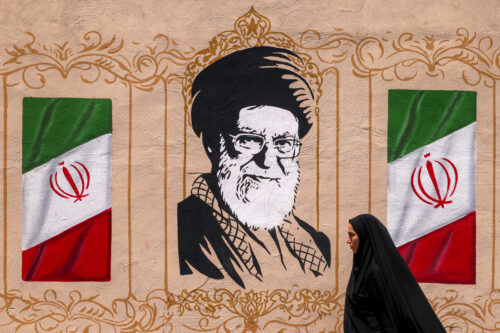
    Wars don’t just end. They get interpreted, reinterpreted, and turned into strategic doctrine. That is what happened after the Iran-Iraq War of the 1980s, a conflict that saw the United States back Tehran’s Iraqi adversaries. The war taught Tehran three lessons it never unlearned: that Washington wants the Islamic Republic gone, that Iran stands essentially alone in the world, and that it cannot survive a direct, overt fight with the U.S. and Israel.

    Iran’s New War Cabinet Is Really an Old One
  • التحليل
  • Iran’s New War Cabinet Is Really an Old One

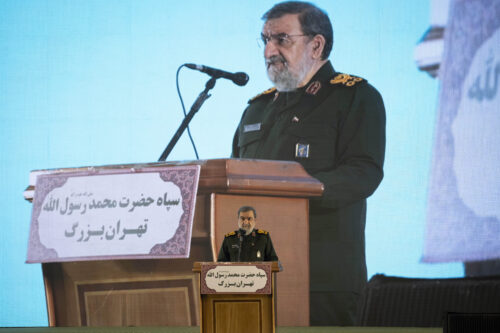
    Within 48 hours this week, Iran filled six of the most important posts in its battered military and security establishment. Read together with the biographies and mandates behind them, the appointments show how Tehran is drawing lessons from successive wars and preparing for a prolonged period of insecurity, without proving it has abandoned negotiation.

    Additional Research & Commentary

    معلومات أساسية

    Israeli Settlements in the West Bank
  • معلومات أساسية
  • Israeli Settlements in the West Bank

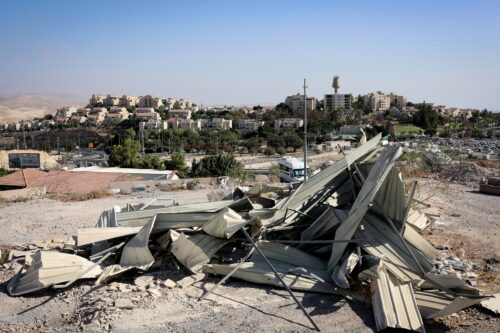
    Since 1967, Israeli settlements in the West Bank have been a contested feature of the Israeli-Palestinian conflict. The ultimate disposition of the settlements and ongoing activity related to their growth have repeatedly defied agreement in negotiations over a resolution to the conflict.

    June 9, 2026

    The Houthis
  • معلومات أساسية
  • The Houthis

    The Houthis are a political-military faction and Zaydi religious movement founded in northwestern Yemen in the 1980s. A key member of Iran’s Axis of Resistance with links to other militant organizations in the Arabian Peninsula and the Horn of Africa, the group has continued to pose a threat to Western interests on a global scale.

    May 15, 2026

    The India-Middle East-Europe Economic Corridor
  • معلومات أساسية
  • The India-Middle East-Europe Economic Corridor

    The India-Middle East-Europe Economic Corridor (IMEC) is a proposed multinational infrastructure initiative aimed at upgrading connectivity between the three regions through integrated trade, energy, and digital networks. Announced at the G20 summit in New Delhi in September 2023, IMEC is envisioned partially as a counterweight to China’s international infrastructure project, the Belt and Road Initiative.

    June 3, 2026

    Turkish Foreign Policy
  • معلومات أساسية
  • Turkish Foreign Policy

    After a decade of post-Arab Spring isolation, Turkey’s leaders have recognized that their ambition to position the country as an agenda-setter on the world stage requires active engagement in all directions. President Recep Tayyip Erdoğan’s consolidation of executive authority has centralized foreign policy decision-making and tied it to his domestic political priorities, transforming the country’s revisionist approach to one shaped primarily by personal and pragmatic interests.

    April 23, 2026

    المدونات الصوتية

    التركيز على الشرق الأوسط

    البودكاست الأسبوعي الرائد لمعهد الشرق الأوسط حول السياسة الخارجية الأمريكية والقضايا السياسية والاجتماعية المعاصرة في الشرق الأوسط.

    إزالة الحافة من الشرق الأوسط

    براين كاتوليس، زميل أول في معهد الشرق الأوسط كاتوليس يشارك الأصدقاء والزملاء وخبراء السياسة في محادثات غير رسمية حول أهم الأحداث في الشرق الأوسط. 

    إعادة التفكير في الديمقراطية

    زميل أول في معهد الشرق الأوسط غونول تول تستضيف كبار العلماء وقادة الفكر حول اتجاهات الديمقراطية العالمية وحالة النظام الدولي الليبرالي. 

    تصفية حسب
    8783 Results
    Reforming Radical Islam: The Moroccan Model
    معهد الشرق الأوسط
  • Video
  • Reforming Radical Islam: The Moroccan Model

    The Middle East Institute is proud to host Moroccan scholar and author Dr. Mohsine El Ahmadi. Dr. El Ahmadi has written extensively on Islamist movements in Morocco and will examine the government’s efforts to fight radical Islamist movements in the wake of the Casablanca bombings of 2003.

    January 14, 2010

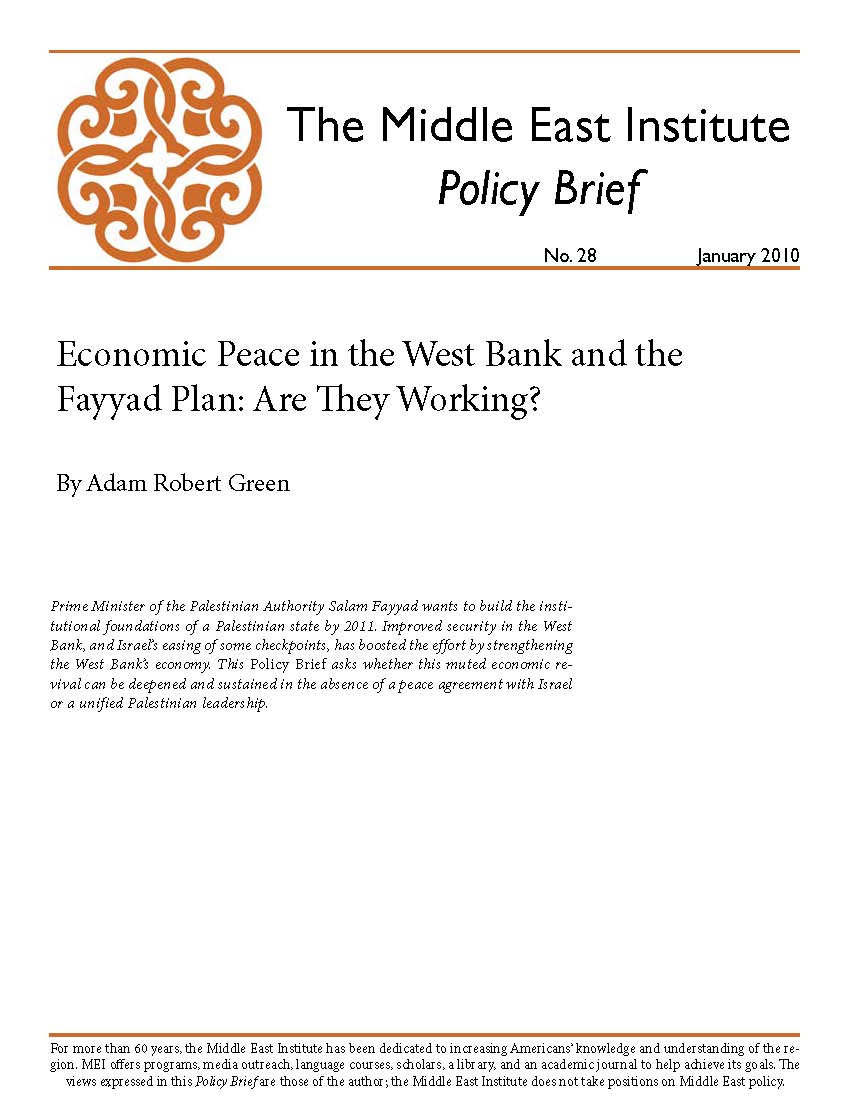
    Economic Peace in the West Bank and the Fayyad Plan: Are They Working?
  • التحليل
  • Economic Peace in the West Bank and the Fayyad Plan: Are They Working?

    There can be a democratic, de facto Palestinian state by 2011, according to Salam Fayyad, the Prime Minister of the Palestinian Authority (PA). The goal was outlined in an eloquent two-year plan entitled “Ending the Occupation, Establishing the State,”[1] published in August 2009, which called for the formation of the institutional foundations of statehood prior to, and independent of, an agreement with Israel.

    January 1, 2010

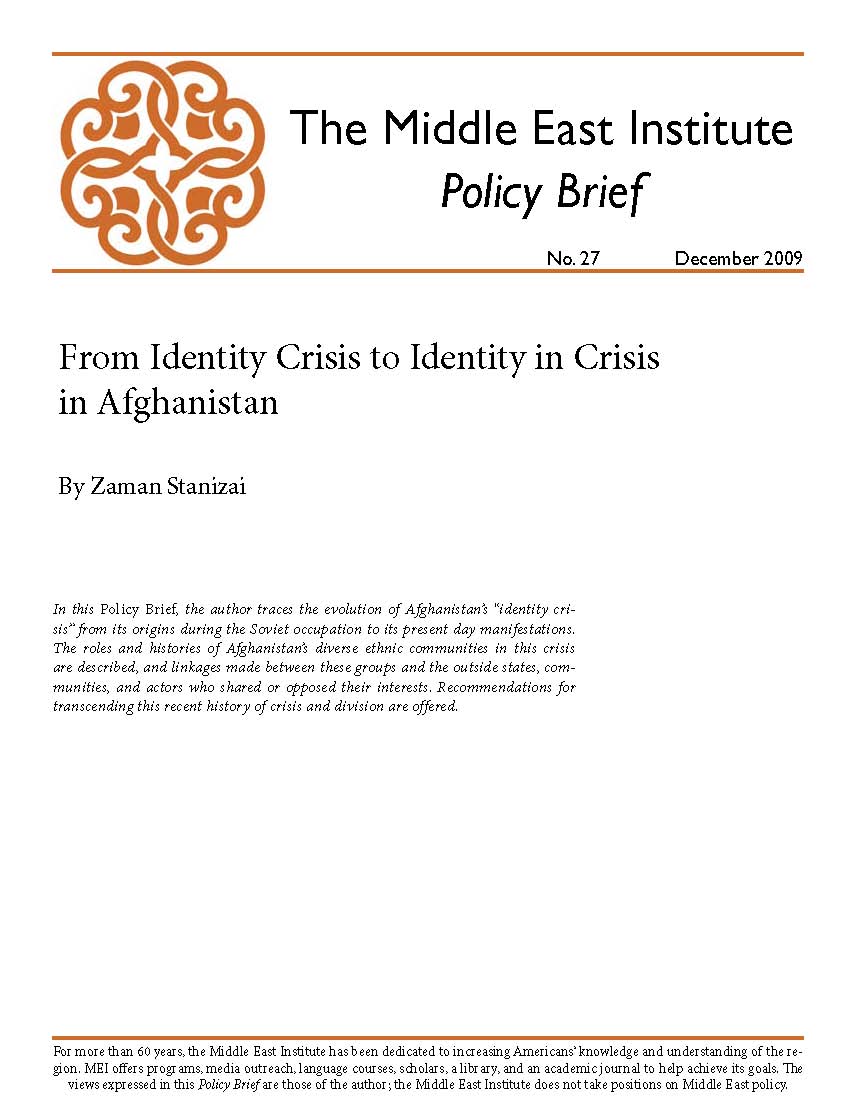
    From Identity Crisis to Identity in Crisis in Afghanistan
  • التحليل
  • From Identity Crisis to Identity in Crisis in Afghanistan

    When social order is politically disturbed in a society like Afghanistan, inter- and intra-group dynamics set forces in motion that cannot be harnessed once unleashed. While group dynamics dictate, for instance, that majorities behave as an integrative and cohesive force as their sense of loyalty lies in the wellbeing of the collective whole, a minority’s interests may on occasion diverge in the pursuit of greener pastures across the fence, allowing themselves to be used as vulnerable pawns by others.

    December 16, 2009

    The Egyptian Culture in Spoken Language
    معهد الشرق الأوسط
  • التحليل
  • The Egyptian Culture in Spoken Language

    The spoken word is the bearer of culture. Common expressions in daily use by ordinary people are not only the means by which they communicate with each other, but are the essential elements of a society bound together in time and place. The continuous injection of new vocabulary and forms of expression into the everyday spoken language further enriches and at the same time alters it. With the passage of time, a new “generation” of idioms and colloquialisms displaces the old.

    December 2, 2009

    Sabiha Sumar — Pakistan's Award-Winning Filmmaker
    معهد الشرق الأوسط
  • التحليل
  • Sabiha Sumar — Pakistan's Award-Winning Filmmaker

    Sabiha Sumar of Pakistan is not just a pretty face. The smiling, dark eyes, framed by flowing dark hair, and an apparently sunny personality, hide a passionate woman with a lot to say. She is an award-winning documentary maker and film director focusing on ordinary Pakistani women whose lives have been disturbingly disrupted by the political, religious, and social changes that have taken place over the last 60 years or so.

    December 2, 2009

    Introduction to The State of the Arts in the Middle East Vol III
    معهد الشرق الأوسط
  • التحليل
  • Introduction to The State of the Arts in the Middle East Vol III

    The trials, tribulations, and taboos faced by ordinary youths, the deep cultural significance of the ordinary spo­ken word, and the actions of ordinary women surmounting the barriers of silence and passivity — these are the subjects covered in this third edition of MEI Viewpoints on the State of the Arts in the Middle East.

    December 1, 2009

    Secretary Clinton's Challenges in Pakistan
    معهد الشرق الأوسط
  • التحليل
  • Secretary Clinton's Challenges in Pakistan

    Secretary Clinton’s visit to Pakistan has been a serious attempt to use public diplomacy to help the troubled US Pakistan relations. Her reaching out to people with a mix of soft power and hard talk was refreshing. It is time to ‘clear the air’ she said. But a lot more work needs to be done in the realm of policy to bring about a meaningful change in the relationship. The problems between Pakistan and the United States, referred to as the “trust deficit” for want of a better word, are many and mask much complexity at the heart of policy and systemic issues on both sides.

    November 5, 2009

    On Opposite Trajectories
    معهد الشرق الأوسط
  • التحليل
  • On Opposite Trajectories

    This Commentary first appeared as an op-ed on BitterLemons-International.org, October 22, 2009

    Syria could not be more ecstatic at the row that has recently developed between Turkey and Israel. Turkey, once among Israel's staunchest allies, now sees eye-to-eye with Syria regarding the difficulties in dealing with Israel and Israel's abusive treatment of Palestinians.

    October 28, 2009

    All Is Not Yet Lost
    معهد الشرق الأوسط
  • التحليل
  • All Is Not Yet Lost

    This Commentary was originally published as an op-ed in The Washington Times on October 11, 2009.

    October 13, 2009

    Liberal Enclaves: A Royal Attempt to Bypass Clerical Power
    معهد الشرق الأوسط
  • التحليل
  • Liberal Enclaves: A Royal Attempt to Bypass Clerical Power

    Within the first months of ‘Abdullah’s term as King, the Saudi government pursued a number of policies to improve the Kingdom’s economic profile. Saudi Arabia became a member of the World Trade Organization (WTO) and the limits were raised on foreign stakes in sectors such as banking, telecommunications services, wholesale, retail, and franchising. These reforms were intended to answer the economic priorities of diversifying from dependence on oil revenues, finding jobs for young Saudis, and opening up foreign investment.

    October 1, 2009

    The Rise of a Media Kingdom
    معهد الشرق الأوسط
  • التحليل
  • The Rise of a Media Kingdom

    Even Saudi film production has revived recently, following the move of Saudi Television empires such as Rotana and ART to cinematic production. This comes after more than two decades of suppression by conservative Islamist groups who prohibited film screenings to Saudi citizens. In 2005, the Kingdom saw the opening of the first movie theatre in Riyadh, followed by the release of a couple of Saudi films with Saudi actors. The first Saudi production was Zelal Assamt (2006), followed by the film Keif al Hal.

    October 1, 2009

    اقرأ مجلة الشرق الأوسط

    تُعد المجلة الرئيسية لمعهد الشرق الأوسط أقدم مطبوعة محكّمة مكرّسة لدراسة الشرق الأوسط الحديث، وتغطي المجلة الرئيسية في المعهد السياسة والمجتمع والثقافة في المنطقة.