Qatar’s Turkish Security Hedge Exposes the Limits of America’s Guarantee
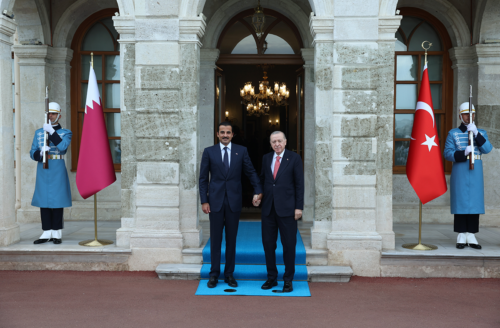
Qatar’s new mutual defense pact with Turkey reflects Doha’s effort to hedge against the limits of its US security guarantee, which failed to prevent Iran’s strike on Ras Laffan, but no partner can remove Qatar’s dependence on the Strait of Hormuz.
More than 100,000 people registered for the UN’s 31st annual climate change conference, COP31, now under way in Antalya, Turkey, in what could be the largest climate summit to date. Mohammed Mahmoud, CEO and founder of the Climate and Water Initiative, joins hosts Alistair Taylor and Matthew Czekaj to discuss the key takeaways from the conference so far and the negotiations around a final agreement. They unpack the fight over fossil fuels and climate finance, the US government’s absence, and whether participants can deliver on their agenda.
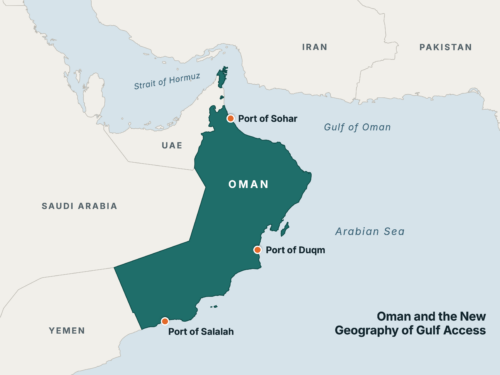
For decades, Oman’s location has been both an advantage and a liability. Its access to the Indian Ocean has given it a maritime reach beyond the Strait of Hormuz, while leaving it on the periphery of the Gulf’s economic boom, dominated by its larger neighbors.
Turkey Sees Short-Term Pain, Long-Term Gain in the Iran War
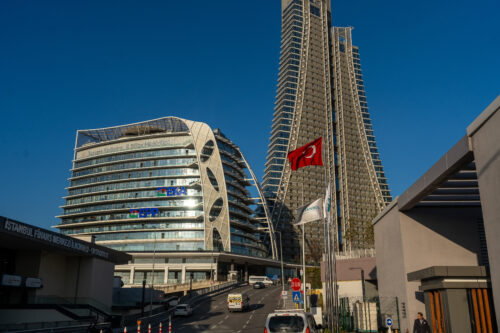
The Iran war has posed significant immediate challenges for Turkey, including rising energy prices. But Turkish officials think that Ankara could reap benefits from the war in the long term.
Hosts Alistair Taylor and Matthew Czekaj are joined by MEI Distinguished Diplomatic Fellow Amb. (ret.) Robert S. Ford to examine what is at stake for Iraq in the Iran war. The only country to have been hit by both sides, Iraq is caught in the middle of a regional conflict, with the local Iranian-backed Popular Mobilization Forces (PMF) carrying out attacks on American interests and personnel — and the US responding. This escalation comes at a period of internal political transition in Iraq, which has been locked in negotiations to form a new government since the November 2025 elections. Ford, who served as Deputy and later Acting Ambassador in Baghdad from 2008 until 2010, unpacks how Iraq is navigating the current moment, how the Kurdistan region fits into this equation, and what this all means for the future of US-Iraqi relations.
Libya’s Fragile Equilibrium: Succession Risk and Energy Stability
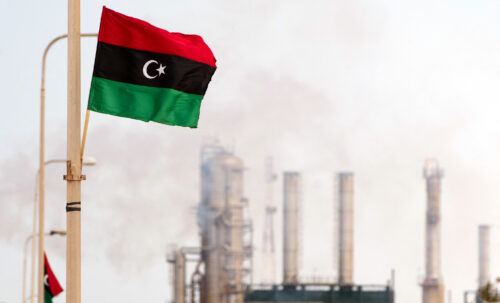
Libya’s stability has taken on renewed strategic importance as the impact of the US and Israeli war with Iran reverberates through global energy markets. Sustaining existing Libyan oil production depends on a governing arrangement capable of keeping ports open, pipelines flowing, and revenues distributed without triggering conflict.
How the War Is Redefining Gulf Economic Power and Energy Strategy
The Gulf Cooperation Council (GCC) states are confronting the greatest threat to their economic security and energy strategy since their formation. The economic fallout of the US-Israeli war with Iran is severe, but uneven across the Gulf. So too is each state’s ability to sustain energy exports and protect critical infrastructure—both of which have been targeted unequally by Iran.
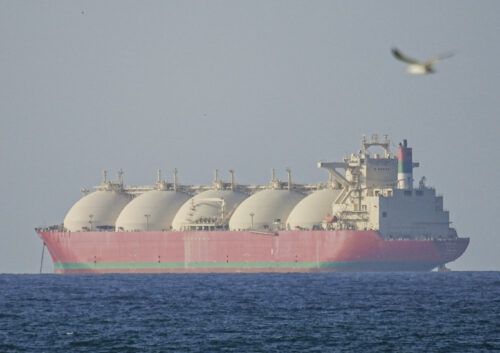
The US-Israeli war against Iran has created the largest disruption to global oil and liquefied natural gas supplies in modern history. There is a tremendous amount of economic uncertainty for Gulf states to navigate, and it will reshape the way they engage with one another and with Iran, Israel, and the United States for years to come. But this war has also laid bare how urgently the United States needs to update its own approach toward the Gulf states when it comes to energy.
What vulnerabilities has the Iran crisis exposed in GCC economies?
The economic stress points vary considerably across the Gulf. Assuming a resumption of exports by May, Kuwait, Iraq, Bahrain, and Qatar still face sharply declining revenues and contracting GDP—as much as 14 percent in Kuwait and Qatar—because of shut ins, time to restart, and lack of alternative delivery routes. After the Iranian attacks on Ras Laffan, Qatar’s economic outlook and time to recovery look much more difficult.
The relative resilience of GCC countries to the Iran crisis
Gulf states — including their national oil companies and sovereign and related entities — are energy giants. They understand the risks of a prolonged threat from Iran and did not choose this war. They also recognize the risks of their geographic location, should the region endure another bout of instability and dislocation from a fragmented and collapsing neighbor.
Iraq’s oil paralysis: A self-inflicted wound and a gift to Tehran
With the Strait of Hormuz closed and oil production from Iraq’s south in free fall, Baghdad’s failure to maximize the Iraq-Turkey Pipeline is no longer a policy dispute. It is a national emergency.
Shockwaves Across Asia: The Iran War’s Strategic Fallout
The Israeli-U.S. military strikes on Iran that began on February 28 have done more than ignite a Middle Eastern war. They have sent shockwaves rolling across Asia, from the Strait of Hormuz to the Sea of Japan, exposing the brittle underpinnings of regional energy systems, straining diplomatic balancing acts, and forcing governments to make hard choices they have long deferred.
After the Most Intense Day of Strikes on Iran: What Comes Next?
Watch a discussion with MEI Distinguished Military Fellow General Kenneth F. McKenzie (USMC, ret.) and MEI Senior Fellow Alex Vatanka as they seek make sense of the US military strategy and Iran's calculations as the conflict continues to shift and expand.
The oldest peer-reviewed publication dedicated to the study of the modern Middle East, MEI’s flagship journal covers politics, society, and culture in the region.