This report explores maritime security conditions in the Mediterranean and the evolving US engagement in the region. As critical infrastructure becomes increasingly vulnerable to sabotage, freedom of navigation is undermined by conflict, and energy disputes generate tension, US policy focus on the region has become fragmented and disengaged. The authors call for a sustained American role to strengthen maritime domain awareness, allied coordination, infrastructure protection, and the capacity to respond when Mediterranean crises affect US and transatlantic interests.
The Multiple Costs of the US–Iran War – From Hormuz to Europe and South Asia: The Widening Economic and Political Geography of the Conflict
Wars are decided by those who hold military power, but their costs are increasingly borne by those who have little or no voice in the decisions that start them. The US–Iran war shows this imbalance very clearly. Its economic consequences have gone far beyond the battlefield and have disrupted energy markets, trade routes, food supplies, public finances and investment in the Gulf, Europe, Africa and Asia. The most striking feature of the conflict, however, is not only the size of the damage but its very unequal distribution.
In less than two decades, a string of offshore discoveries has turned the Eastern Mediterranean into a significant gas-producing region, making Israel an exporter, twice lifting Egypt into the ranks of liquefied natural gas (LNG) exporters, and giving Cyprus finds it has yet to bring to market. This backgrounder explores the potential and challenges of exploiting and managing LNG resources in the region.
Egypt Braces for Anniversary of Rabaa and Nahda Bloodshed
Days before the first anniversary of the August 14 violent police crackdown on the Rabaa and Nahda squares in Cairo, Egypt’s High Administrative Court ordered the dissolution of the Muslim Brotherhood’s Freedom and Justice Party and the liquefaction of its assets.[1] Since the ouster of Mohamed Morsi in July 2013, the Muslim Brotherhood and its supporters have faced a state crackdown. Thousands are currently in prison and hundreds have been killed in clashes with security.
The current crisis in Gaza represents the first real foreign policy test for Egyptian president Abdel Fattah el-Sisi. Hamas’s rejection of the Egyptian initiative to end hostilities calls into question Egypt’s ability to maintain its decades-long special status as mediator, a role it assumed by virtue of its relations with all parties – Israel and the United States on one hand, and the PLO and Hamas on the other.
When the Nidaa Tounes (“Call for Tunisia”) party was formally licensed in July 2012, it positioned itself as a “modern” alternative to the Islamist Ennahda party. Led by former interim prime minister Béji Caid Essebsi, Nidaa Tounes drew a wide range of people, including supporters of Tunisia’s Destourian (“Constitution”) movement, trade unionists, leftists, and independents, as well as former members of Zine el-Abidine Ben Ali’s Constitutional Democratic Rally (RCD) party.
Egypt’s Least Bad Option for Addressing Energy Troubles
A proposed deal to export Israeli natural gas through Egypt has the potential to enable Israel’s entry into its first major export markets, help Egypt escape a deepening energy crisis, and welcome the first European players into Israel’s natural gas industry. However, the deal is complicated by political realities and a history of deeply rooted grievances between the two countries, made worse by the recent violence between Israel and Hamas in Gaza.
Egypt’s Sexual Harassment Law: An Insufficient Measure to End Sexual Violence
A few days ago, heavy court sentences were imposed on seven men who were convicted of attempted rape, attempted murder, and torture, in a ruling seen by many as unprecedented in Egypt. In the words of one activist, the verdict was “a strong message to all harassers that their actions are no longer tolerated or accepted.”[1] This comes in the wake of the government’s vows to combat the problem of sexual harassment; a new law passed last month criminalized sexual harassment for the first time.
Egypt’s New Parliamentary Election Law: Back to the Future
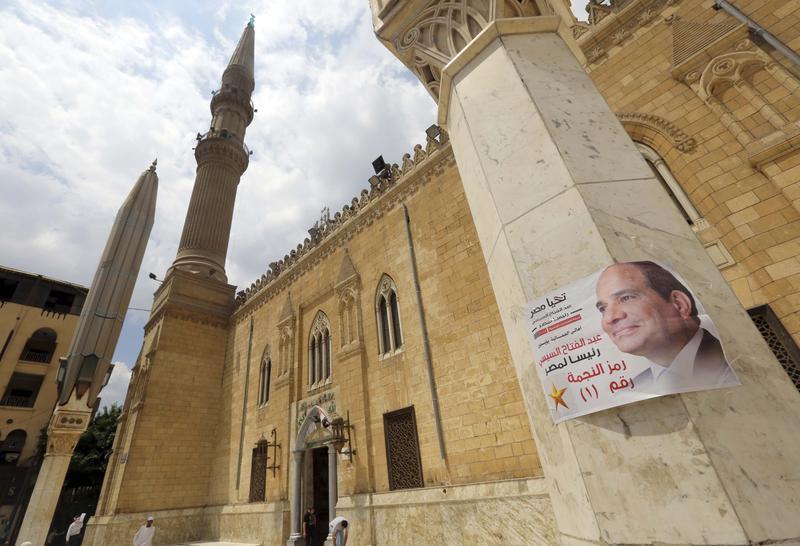
Just 48 hours before handing over the reigns to now President Abdel Fattah al-Sisi, Egypt’s interim President Adly Mansour signed into law a controversial piece of legislation that regulates elections for Egypt’s new House of Representatives.[1] Since the law was announced in early June, it has generated conflicting analysis regarding its impact on the nature of the electoral system, the character of the legislature that will be elected as a result, and the extent to which it might further empower the president.
One year after the massive June 30 demonstrations against the Muslim Brotherhood (MB) and the July 3 ouster of President Mohammad Morsi by the military, the Egyptian MB is facing grave challenges that will shape the group’s future and that of political Islam.
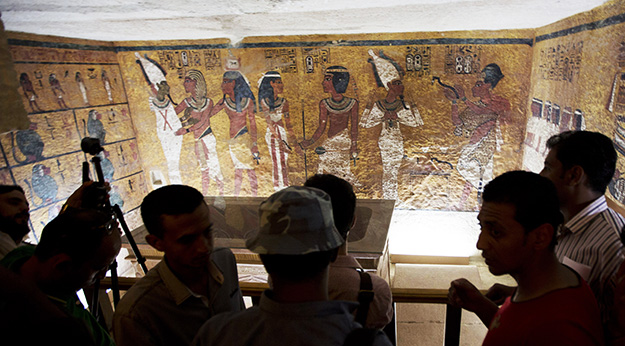
The Science of Preserving Egypt’s Cultural Heritage
Around the world, priceless monuments and artifacts are disintegrating due to exposure to pollution and hordes of visitors coupled with the sheer weight of age. The inexorable loss of cultural heritage concerns us all, but is especially troubling for decision-makers in places like Egypt that rely on cultural tourism-generated income to stay afloat. How to reconcile the need to make decaying treasures available to the public with the fact that public display is ruining them?
The oldest peer-reviewed publication dedicated to the study of the modern Middle East, MEI’s flagship journal covers politics, society, and culture in the region.