This report explores maritime security conditions in the Mediterranean and the evolving US engagement in the region. As critical infrastructure becomes increasingly vulnerable to sabotage, freedom of navigation is undermined by conflict, and energy disputes generate tension, US policy focus on the region has become fragmented and disengaged. The authors call for a sustained American role to strengthen maritime domain awareness, allied coordination, infrastructure protection, and the capacity to respond when Mediterranean crises affect US and transatlantic interests.
The Multiple Costs of the US–Iran War – From Hormuz to Europe and South Asia: The Widening Economic and Political Geography of the Conflict
Wars are decided by those who hold military power, but their costs are increasingly borne by those who have little or no voice in the decisions that start them. The US–Iran war shows this imbalance very clearly. Its economic consequences have gone far beyond the battlefield and have disrupted energy markets, trade routes, food supplies, public finances and investment in the Gulf, Europe, Africa and Asia. The most striking feature of the conflict, however, is not only the size of the damage but its very unequal distribution.
In less than two decades, a string of offshore discoveries has turned the Eastern Mediterranean into a significant gas-producing region, making Israel an exporter, twice lifting Egypt into the ranks of liquefied natural gas (LNG) exporters, and giving Cyprus finds it has yet to bring to market. This backgrounder explores the potential and challenges of exploiting and managing LNG resources in the region.
Shifting Allegiances: The Israel-Gaza-Egypt Triangle
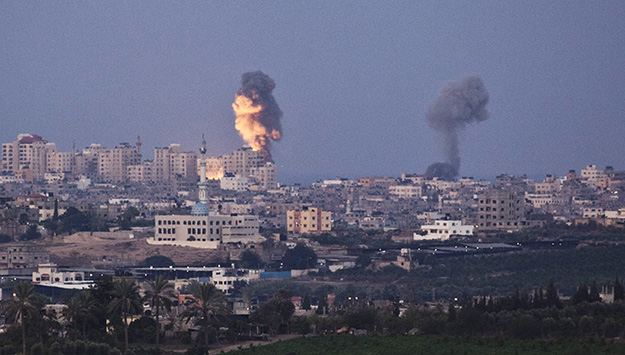
U.S. diplomatic efforts to resolve the conflict between Israel and the Palestinians have in the last year focused on relations between Israel and the Ramallah-based Palestinian Authority, led by PLO chairman Mahmoud Abbas. Yet there is arguably a far more dynamic and perilous front: one that encompasses Israel, Egypt’s lawless Sinai Peninsula, and the Gaza Strip, the latter of which is run by Hamas.
Challenges to State Building after the Fall of Qaddafi
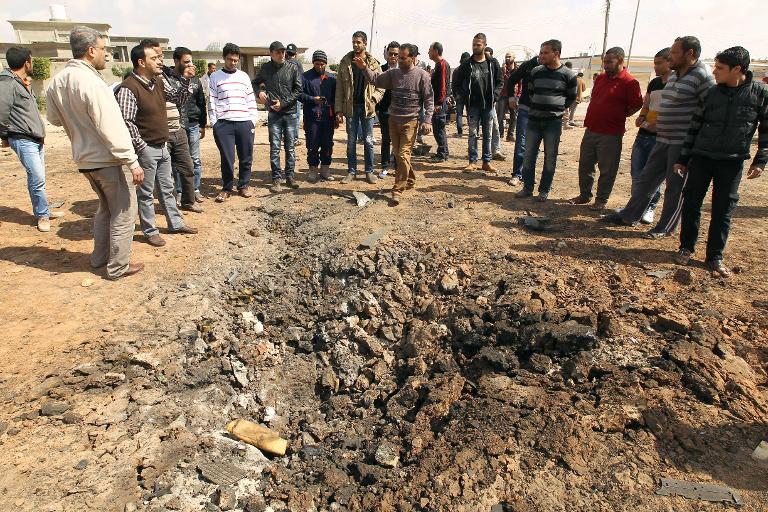
The fall of the Qaddafi regime and the loss of the state monopoly on violence gave way to a duopoly of power in Libya whereby rudimentary “national” forces—under the control of the National Transitional Council (NTC) from March 2011 to August 2012—were established in competition with the non-state “Revolutionary Brigades,” which had borne the brunt of the military struggle against Qaddafi’s forces. Since then, the Revolutionary Brigades have increasingly sought to assert themselves in the political arena.
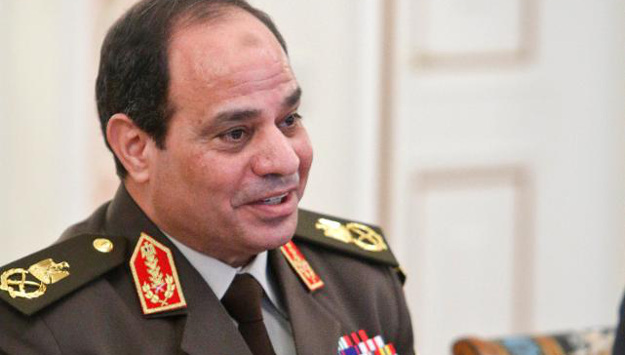
On March 26, Egyptian Field Marshal Abdul-Fattah el-Sisi resigned from the military and announced his presidential bid. What do we know of Sisi’s platform, and what kind of military leadership does he leave behind? MEI spoke with resident scholar Mohamed Elmenshawy about these and other issues.
Will any challengers take on the enormously popular Sisi?
The political crisis in Ukraine and subsequent annexation of Crimea by Russia have sent reverberations throughout the Middle East, where Western and Russian influences continue to weave a complex geopolitical web. MEI interviewed four of its scholars to produce this detailed account of the challenges the conflict poses to the region’s political, security, and economic conditions.
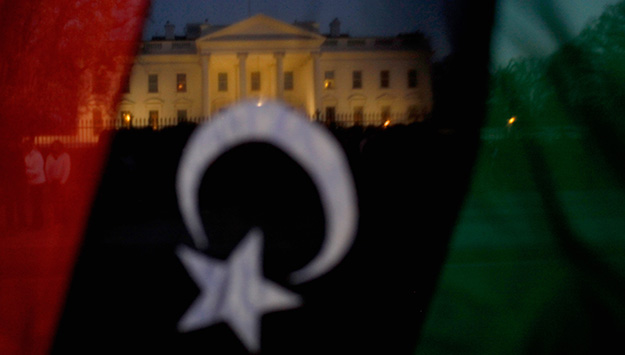
Libyan popular and political support for engaging the international community offers the United States and Western partners an opportunity to help stabilize a North African energy producer and encourage orderly political change. Conversely, a failure to act could have costly, long-term regional and international security consequences. Domestic political limitations to direct U.S. government engagement, along with other issues that compete for attention and resources, are constraints on a more active policy. Moreover, Libyans themselves would not tolerate a dominating U.S. role.
Bad Neighbor, Good Neighbor: Libya-Egypt Relations
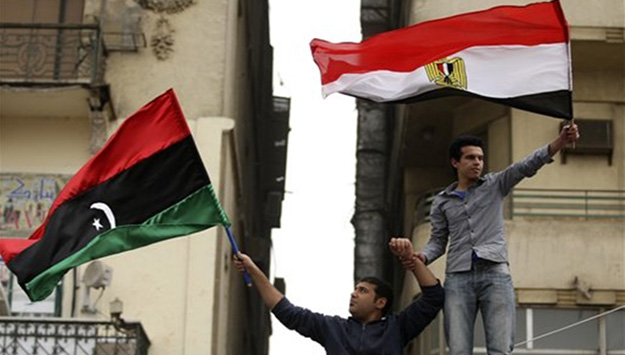
In 2011, many observers predicted that relations between Libya and Egypt would become closer after both countries underwent similar revolutions followed by attempts at democratic transition. But three years later, the realization of this prediction appears unlikely. Political realities and ideological differences have led to a relationship that is contentious at best.
Jawad Nabulsi was looking straight at the policeman the moment he was shot in the face. The black-clad officer raised the barrel of his gun, pointed it directly at Nabulsi’s eyes, and pulled the trigger.
It was 11pm on January 28, 2011. The “Friday of Rage,” as protesters called it, would later be labeled the bloodiest day in the revolution that toppled autocrat Hosni Mubarak.
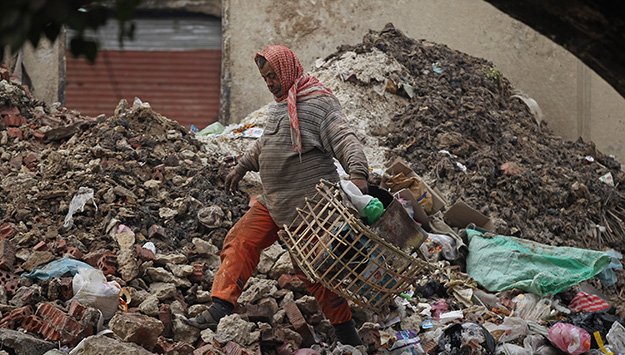
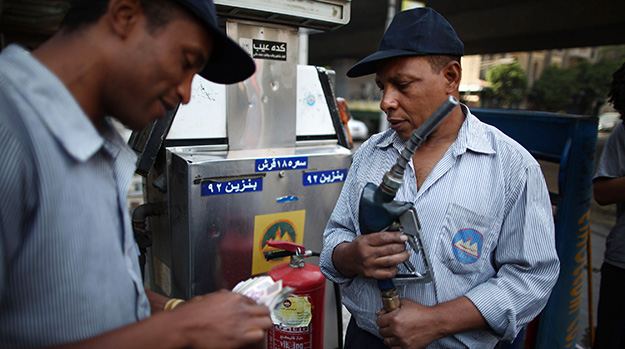
Coverage of Egypt over the past three years has focused on the dramatic political events, yet it was the dire economic situation that created the pressure for the multiple uprisings. And if economic decline is not reversed over the next few years, Egypt might fall over an economic precipice that risks rendering the country eventually ungovernable. Security and political reform are urgently necessary in their own right, and will have a positive effect on the economy if achieved, but bold structural economic reform is also necessary to reverse Egypt’s downward spiral.
Libya on the Brink: Insecurity, Localism, and the State Not Back In
This essay is part of the Middle East-Asia Project (MAP) series on “’Civilianizing’ the State in the Middle East and Asia Pacific Regions.” The series explores the past and ongoing processes of Security Sector Reform (SSR) in Asia-Pacific countries and examines the steps already taken and still needed in the MENA region. See More
All Retributive Justice, No Restorative Justice in the Post-Arab Spring Middle East
In the wake of the revolutionary fervor that has swept the Middle East and North Africa since the beginning of 2011, retributive justice has taken precedence over restorative justice approaches as countries seek to address human rights violations.
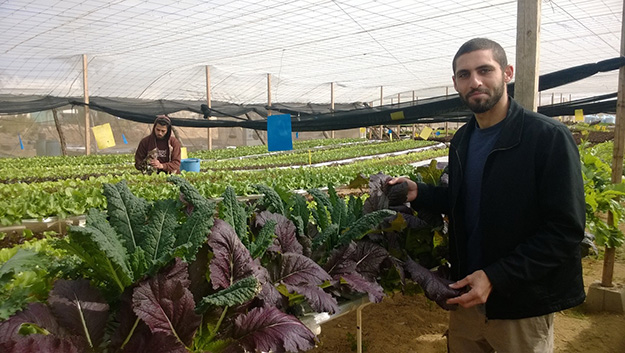
The Egyptian revolutionary motto, “bread, freedom, social justice,” which echoed over 18 days until Hosni Mubarak’s ouster on February 11, 2011, illustrated how restricted access to food had become one of the people’s main grievances. In the aftermath of the revolution, infused by a renewed sense of ownership of their country, many citizens launched environmental initiatives with a focus on sustainable agriculture.
The oldest peer-reviewed publication dedicated to the study of the modern Middle East, MEI’s flagship journal covers politics, society, and culture in the region.