This report explores maritime security conditions in the Mediterranean and the evolving US engagement in the region. As critical infrastructure becomes increasingly vulnerable to sabotage, freedom of navigation is undermined by conflict, and energy disputes generate tension, US policy focus on the region has become fragmented and disengaged. The authors call for a sustained American role to strengthen maritime domain awareness, allied coordination, infrastructure protection, and the capacity to respond when Mediterranean crises affect US and transatlantic interests.
The Multiple Costs of the US–Iran War – From Hormuz to Europe and South Asia: The Widening Economic and Political Geography of the Conflict
Wars are decided by those who hold military power, but their costs are increasingly borne by those who have little or no voice in the decisions that start them. The US–Iran war shows this imbalance very clearly. Its economic consequences have gone far beyond the battlefield and have disrupted energy markets, trade routes, food supplies, public finances and investment in the Gulf, Europe, Africa and Asia. The most striking feature of the conflict, however, is not only the size of the damage but its very unequal distribution.
In less than two decades, a string of offshore discoveries has turned the Eastern Mediterranean into a significant gas-producing region, making Israel an exporter, twice lifting Egypt into the ranks of liquefied natural gas (LNG) exporters, and giving Cyprus finds it has yet to bring to market. This backgrounder explores the potential and challenges of exploiting and managing LNG resources in the region.
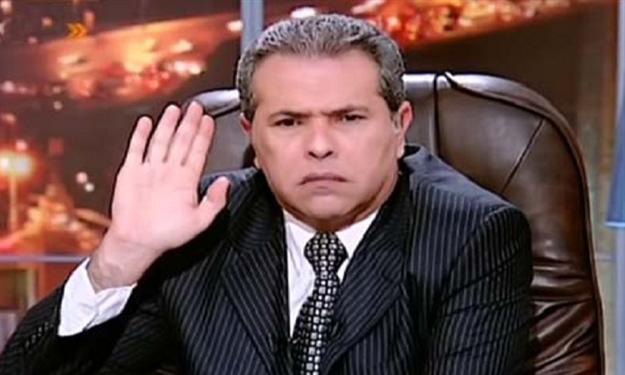
The Egyptian media landscape both before and after Hosni Mubarak’s ouster has been one in which the polemical television personality Tawfik Okasha has thrived. But Okasha, known for his conspiracy theories and strident rhetoric, particularly against the Muslim Brotherhood, has perhaps risen to greater fame and influence recently. With a convergence between anti-Brotherhood positions and Egyptian government policy and public opinion occurring since the mass protests that culminated in Mohamed Morsi’s removal by the military on July 3, Okasha’s views have become more mainstream.
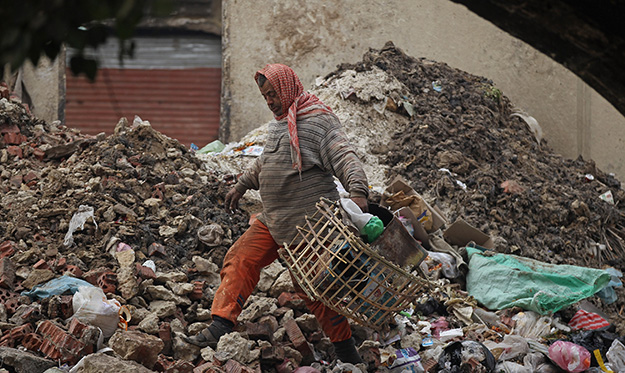
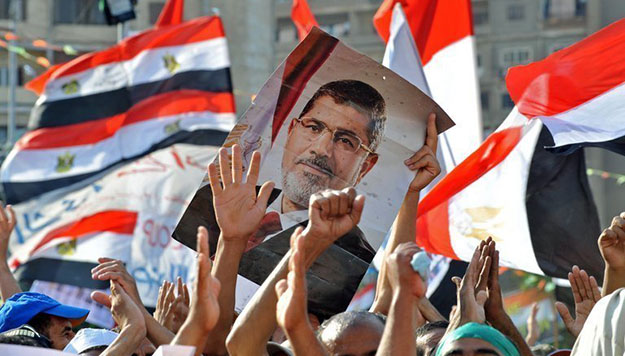
Reporting on Egypt since the July 3 ouster of former president Mohamed Morsi has focused on political dimensions and unrest. However, it is the new government’s success—or lack thereof—in meeting the country’s economic challenges that will largely determine whether Egypt returns to stability, just as surely as it was Egypt’s economic woes that underpinned the country’s repudiation of Morsi.
The struggle for bodily integrity—a right broadly defined as the inviolability of the human body and the self-determination of humans over their bodies—has been at the center of revolutionary aspirations in Egypt. Sexual assaults, arbitrary arrests, and torture by security forces; corrupt and defunct state healthcare systems; the abuse of agricultural subsidies resulting in innutritious food products—all of these are realities that took a painful physical toll on Egyptians and helped drive them to demand an end to Mubarak’s regime.
Dr. Abdel Moneim Aboul Fotouh, once a prominent member of the Muslim Brotherhood, former presidential candidate, and head of the Strong Egypt Party, spoke with Cornelis Hulsman, editor of Arab-West Report, in an interview for MEI regarding his break from the Brotherhood, Morsi’s ouster, and what he sees as necessary for Egypt’s future.
You were once a member of the Muslim Brotherhood. Why did you leave the organization?
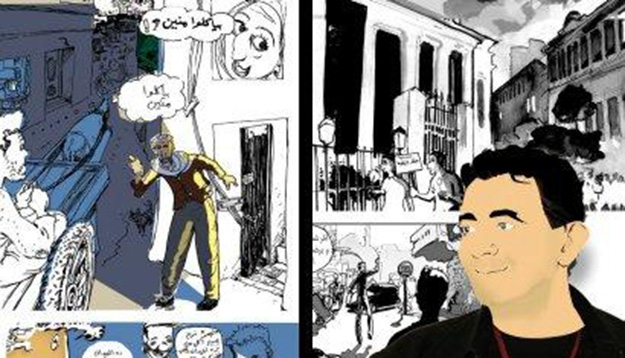
In April, Egyptian graphic novelist Magdy el-Shafee went to Abdel Moneim Riad Square in downtown Cairo to protest a draft law put forth by the Muslim Brotherhood’s political arm, the Freedom and Justice Party (FJP). It would only be two months until the Brotherhood president, Mohamed Morsi, would be ousted by the Egyptian military.
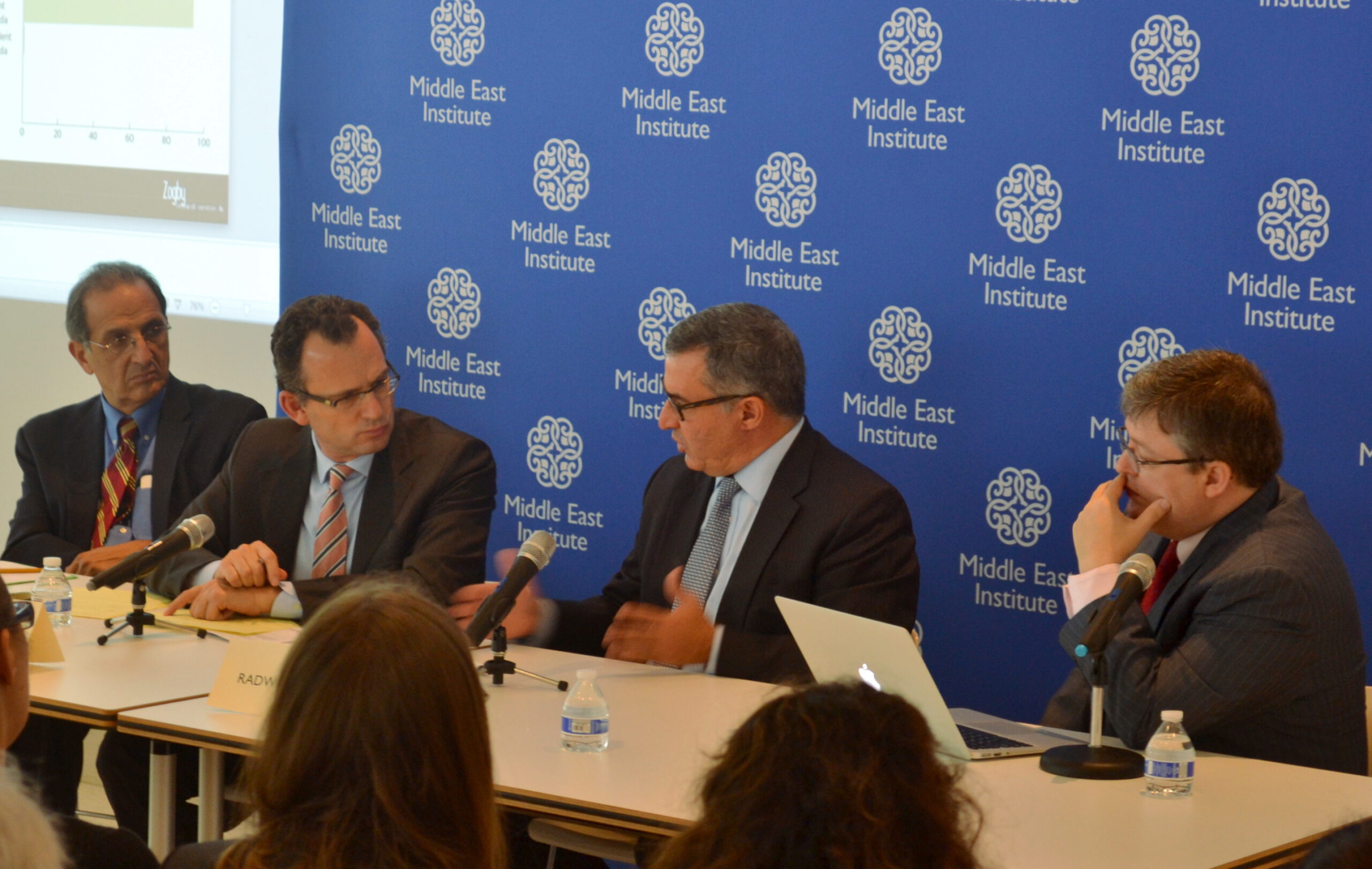
The Middle East Institute (MEI) is pleased to welcome James Zogby, president of the Arab American Institute and founder of Zogby Research Services (ZRS), William Lawrence, Professorial Lecturer in Political Science and International Affairs at George Washington University’s Elliot School of International Affairs, and Radwan Masmoudi, Center for the Study of Islam and Democracy, for a discussion about the findings of a recent poll on Tunisian attitudes toward their country’s political actors and institutions, moderated by MEI Vice President Paul Salem.Zogby Research Services recently surveye
Think of American mainstream media in the aftermath of 9/11 and you might get a general idea of the state of the Egyptian equivalent since the June 30 uprising against Muslim Brotherhood rule—allowing, that is, for less sophistication and a considerably greater measure of crudity. The fluttering flags at the top of television screens, along with variations on the “war on terror” banner, were copied almost identically, if less tastefully, by both state-owned and private Egyptian television stations from CNN, FOX, and the rest.
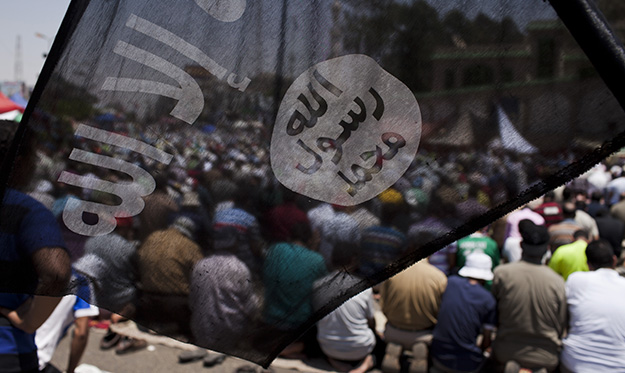
Three months after the ousting of President Mohamed Morsi, Egypt’s Muslim Brotherhood remains in shock. In two and a half years, the group went full circle, from an outlawed organization to one that won a plurality in parliamentary elections and saw its candidate win the presidential election, to that president’s ouster a year later and the subsequent court verdict ordering the group’s shutdown. During this short journey, the Brotherhood shifted alliances.
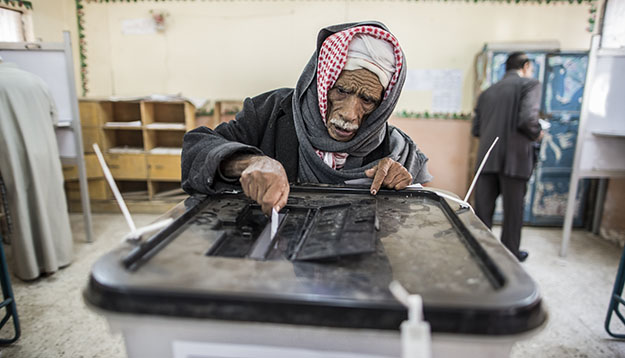
In early 2012, Hagg Hassan had a complaint. A resident of the village of Ab’adeyet Wally Mizar in Fayoum, 65 miles southwest of Cairo, Hagg Hassan had been receiving a monthly pension of 300 Egyptian pounds. But one day, he was given only 250. Hagg Hassan was livid. The budget cut would also apply to his wife and widowed daughter—a loss of 150 pounds for the household. Hagg Hassan lit a cigarette and asked his daughter to write a petition.
There can be no doubt that revolutionary activities gripped Egypt after the January 2011 uprising began. Yet, just as revolutionary waves pushed for greater freedoms and social justice, counterrevolutionary forces responded to maintain some semblance of a Mubarakist-regime without Mubarak. The prospects for increased political freedom look dim at the moment.
Panel IV: Engaging the International CommunityModerated by Michael Hanna, The Century Foundation Jason Brownlee, University of Texas at AustinAmy Hawthorne, Atlantic CouncilMohamed Elmenshawy, Middle East InstituteAbdel Monem Said, al Masry al YoumClosing remarks by Kate Seelye, The Middle East Institute.
The oldest peer-reviewed publication dedicated to the study of the modern Middle East, MEI’s flagship journal covers politics, society, and culture in the region.