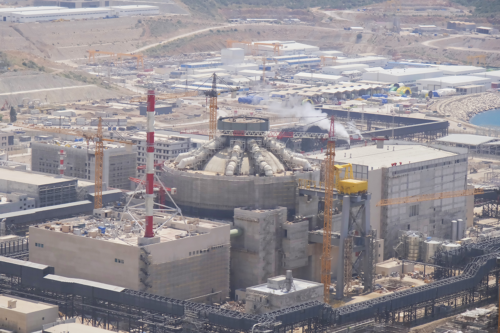
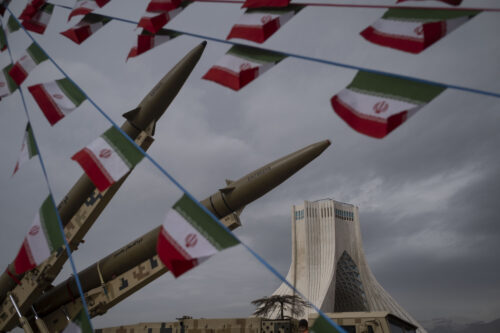
As a result of the Iran war, Turkish thinking about nuclear weapons appears to be shifting. Iran’s emergent ability to threaten regional states (and possible determination to acquire a nuclear weapon itself), growing concern about Israeli aggressiveness, doubts about US security guarantees, and greater Saudi nuclear autonomy are all pushing Ankara to consider a future nuclear option.
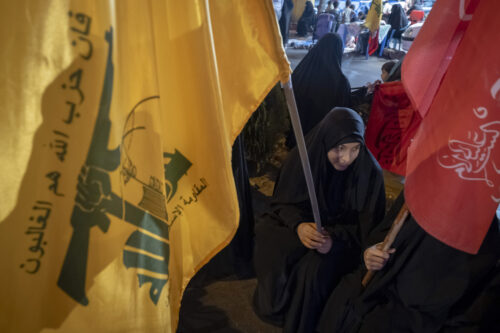
Hizballah: The murderers of elected Lebanese politicians, the killers of peacekeepers, the thugs of the streets they dominated because all other militias had disarmed, the agents of destruction of their own communities on behalf of foreign paymasters reigning 1,000 miles away from Beirut, the brainwashers of children into an ideology of “resistance” that only invited invasion. That’s the Hizballah that today is begging the Lebanese state to return to them the 1,000 pounds of explosives so rudely taken from them by Lebanese soldiers doing their job at a checkpoint in the Bekaa Valley.
Many of the immediate consequences of the Israeli-American war with Iran are already clear. The further emergence of drones and missiles as dominant weapons of war; the danger to the global economy from the threats to vital chokepoints such as the Strait of Hormuz and the Bab el-Mandeb; and the inadequacy of US weapons procurement, among other issues, have garnered widespread and entirely merited attention.
Since 1967, Israeli settlements in the West Bank have been a contested feature of the Israeli-Palestinian conflict. The ultimate disposition of the settlements and ongoing activity related to their growth have repeatedly defied agreement in negotiations over a resolution to the conflict.
The Houthis are a political-military faction and Zaydi religious movement founded in northwestern Yemen in the 1980s. A key member of Iran’s Axis of Resistance with links to other militant organizations in the Arabian Peninsula and the Horn of Africa, the group has continued to pose a threat to Western interests on a global scale.
The India-Middle East-Europe Economic Corridor (IMEC) is a proposed multinational infrastructure initiative aimed at upgrading connectivity between the three regions through integrated trade, energy, and digital networks. Announced at the G20 summit in New Delhi in September 2023, IMEC is envisioned partially as a counterweight to China’s international infrastructure project, the Belt and Road Initiative.
After a decade of post-Arab Spring isolation, Turkey’s leaders have recognized that their ambition to position the country as an agenda-setter on the world stage requires active engagement in all directions. President Recep Tayyip Erdoğan’s consolidation of executive authority has centralized foreign policy decision-making and tied it to his domestic political priorities, transforming the country’s revisionist approach to one shaped primarily by personal and pragmatic interests.
MEI Senior Fellow Brian Katulis engages friends, colleagues, and policy experts in casual conversations on the most important happenings in the Middle East.
The Other MoU: Launching a Europe-Gulf Resilience Initiative After the US-Iran Deal
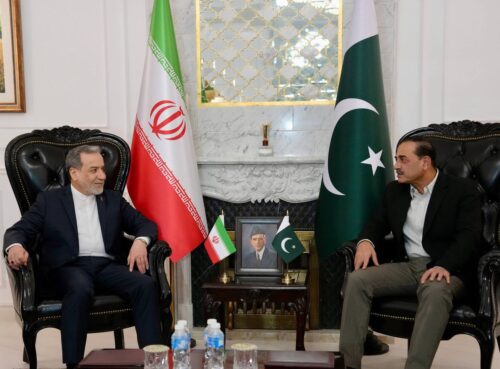
The Islamabad Memorandum of Understanding (MoU) between the United States and Iran may have ended one of the most consequential Middle Eastern crises in decades, but it has not resolved the strategic problem it exposed. Whether the 60-day talks it set in motion will produce a final agreement remains far from certain.Yet the central lessons are already clear: Iran has preserved significant leverage, Washington has had to scale back its ambitions, and Europe and the Gulf face the prospect of protracted regional tension. Europe and the Gulf should therefore use the aftermath of the US-Iran deal to articulate their own “other MoU”: a Europe-Gulf Resilience initiative.
A Post-War Model for Verifying Iran’s Missile Arsenal
This study proposes a model for constraining and verifying Iran’s ballistic missile arsenal by employing a layered Strategic Verification Model with seven components: comprehensive baseline declarations; missile test and launch monitoring; intrusive inspections; quantitative and qualitative limits on missile capabilities; production controls, especially on solid-fuel manufacturing; a robust enforcement and compliance architecture; and regional confidence building measures.
The 2026 Iran war has made Lebanon a core Gulf security concern, and Saudi Arabia, the UAE, and Qatar now have a narrow opportunity to curb Hizballah’s influence by leading reconstruction, strengthening Lebanese state institutions, and tying economic re-engagement to reform.
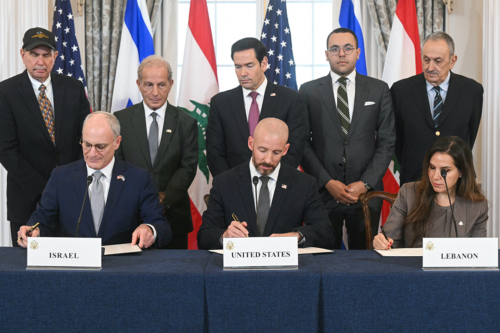
After nearly four months of war, the US and Iran have signed a 14-point memorandum of understanding declaring the conflict over, reopening the Strait of Hormuz, and beginning talks toward a final deal. Alan Eyre, MEI Distinguished Diplomatic Fellow and a core member of the 2015 JCPOA negotiating team, joins host Alistair Taylor to unpack the deal’s implications for both countries, its ripple effects across the region, and what a lasting settlement would take.
Outlook for Sustainable Agriculture in North Africa: Report Card Assessment
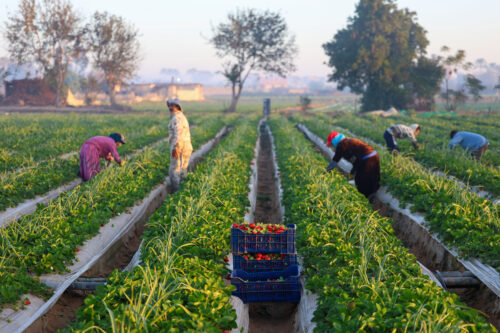
This report assesses the future sustainability of agriculture across North Africa using a multidimensional approach that considers the dynamics of water, climate, land, and economics. To enable this assessment of sustainable agriculture across the region, the author evaluates water resources reliability, water use efficiency, agricultural land sustainability, and the food sector economy for Egypt, Sudan, Libya, Tunisia, Algeria, Morocco, and Mauritania, and provides recommendations for action.
Unconditional surrender of an adversary is possible only if the victor conducts unconditional war, which the American public clearly was not prepared for in the conflict with Iran. Ending this conflict was always going to entail some compromises. The U.S.-Iran MOU is being oversold by virtually everyone. The tangible parts of it are a ceasefire, sanctions relief for Iran and the reopening of Hormuz. Everything else in the agreement is conditioned to good faith negotiations on Iran’s nuclear program.
When the Strait of Hormuz closed in March, fertilizer prices spiked within weeks, triggering a food security crisis across North Africa and the Sahel. Host Alistair Taylor is joined by MEI Senior Fellow Intissar Fakir to explore what it means for the region, unpack the link between food security and regional stability, and assess how the strait’s reopening could impact those affected.
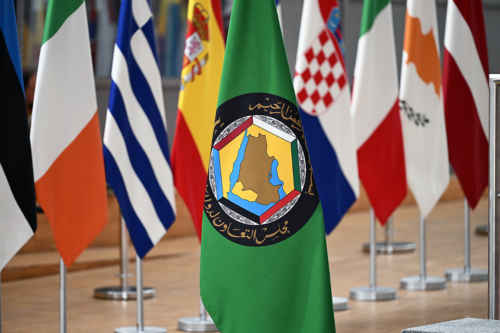
This backgrounder provides an overview of the Gulf Cooperation Council (GCC), a regional political and economic alliance comprising six states in the Arabian Peninsula: Bahrain, Kuwait, Oman, Qatar, Saudi Arabia, and the United Arab Emirates.
A Strategic Conundrum: Pakistan’s Transit Corridor to Iran as Lifeline or Liability
The US-Iran standoff over the Strait of Hormuz — disruptive to global trade and energy flows, and devastating for debt-burdened economies — has handed Pakistan an unexpected geoeconomic opportunity, one that may persist even if the framework agreement announced on June 14 results in a lasting peace and permanent reopening of the strait. But seizing it will have interlocking consequences for Islamabad’s ties with Tehran, Washington, and the Gulf states.
Iran: What’s Next for US Policy as the Region Seeks to Move On
As the US and Iran move to reopen the Strait of Hormuz, the war’s real lesson lies in how Gulf states rapidly adapted — building pipelines, ports, and rail to bypass the chokepoint. Washington should seize this momentum, pursuing a “long game” of regional connectivity that serves shared security and economic interests.
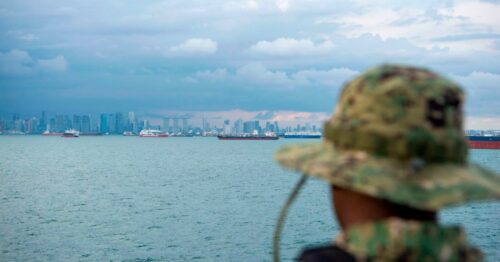
Beyond the Malacca Dilemma: China’s Emerging Corridor-Hedging Logic
China’s approach to external connectivity recognizes that different trade routes perform different functions under different political and operational conditions.
China’s Private Security Companies in the Middle East: Commercial Actors, Strategic Tools
Chinese PSCs are state-adjacent actors embedded in China’s overseas economic expansion, particularly under the Belt and Road Initiative (BRI), generating new arenas of US–China security competition in fragile environments.
The oldest peer-reviewed publication dedicated to the study of the modern Middle East, MEI’s flagship journal covers politics, society, and culture in the region.