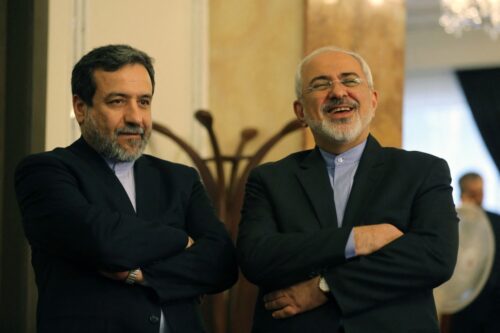
After decades of political setbacks, Iran’s former Revolutionary Guards commander has returned to the center of power. Is he an incidental beneficiary of war, or have observers underestimated him all along?
The Unavoidable Neighbor: Managing Iran Beyond the War
Gulf states and their partners are increasingly looking beyond their most immediate interests of containing the war with Iran. While recent talks between Saudi Arabia, Turkey, Pakistan, and Iran have kept de-escalation on the agenda, a broader regional security framework and non-aggression pact has also emerged, envisioning a longer-lasting solution to regional conflicts. The talks have yet to produce a settlement, but they reflect a growing recognition that Gulf security cannot depend entirely on Washington. Iran will still be there, and its neighbors will have to find ways of living with it.
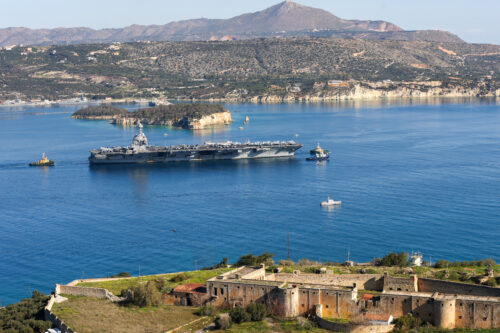
This report explores maritime security conditions in the Mediterranean and the evolving US engagement in the region. As critical infrastructure becomes increasingly vulnerable to sabotage, freedom of navigation is undermined by conflict, and energy disputes generate tension, US policy focus on the region has become fragmented and disengaged. The authors call for a sustained American role to strengthen maritime domain awareness, allied coordination, infrastructure protection, and the capacity to respond when Mediterranean crises affect US and transatlantic interests.
Fixing America’s Failed Strategies in the Middle East
The Middle East is both central to key United States interests and prone to instability. Yet US national security and defense strategic guidance has struggled to account for the unique demands of the region. Calls for strategic divestiture from the region have grown in prominence among analysts and policymakers alike in recent years.
Former CIA operative: regime change in Iran is much harder than the US thinks
The United States and Israel have done significant damage to Iran’s military and security apparatus. Senior commanders have been killed at a pace rarely seen in modern warfare.
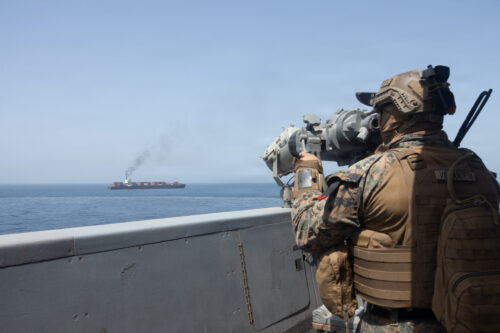
This special episode of Middle East Focus features a conversation from MEI’s Virtual Briefing Series. Host Alistair Taylor is joined by former National Security Council Senior Director Stephen Flanagan and MEI Senior Fellow Iulia-Sabina Joja to discuss the impacts of the Iran war on US-European relations. The conflict has hit Europe’s economy hard and created deep divisions across the continent, even as some European countries play a quiet supporting role to the US. President Donald Trump has called for NATO member states to help secure shipping through the Iranian-blocked Strait of Hormuz, a critical chokepoint for international maritime trade. Flanagan and Joja explore the prospects for stepped-up European military involvement, the knock-on effects on the war in Ukraine, and the potential longer-term impact on the future of the US-European alliance.
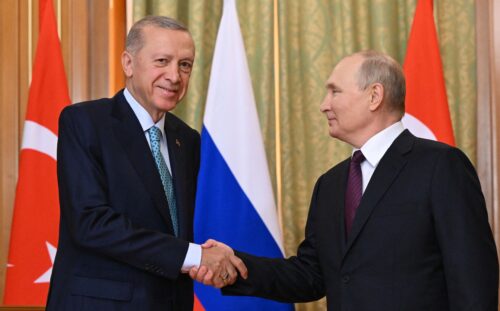
Nearly two weeks into the US and Israel’s war with Iran, MEI Senior Fellow Gönül Tol joins hosts Alistair Taylor and Matthew Czekaj to explore the impact of the widening regional conflict on Turkey. On March 9, Ankara announced that NATO air defenses shot down a second Iranian ballistic missile that had entered Turkish airspace since the start of the war and stated it would take all necessary defensive measures. Turkey is now caught in the middle of an escalating conflict that could pose risks to the country’s security, economy, and foreign policy. Tol, Taylor, and Czekaj discuss what a prolonged regional conflict could mean for Turkish President Recep Tayyip Erdoğan, his regional political objectives, and Turkey’s relationship with key Middle Eastern neighbors.