This collection of short essays written by the Fellows of the Middle East Institute explores various aspects of the war with Iran. The intent is to help readers see new and unexpected elements of the dynamics and impact of the ongoing hostilities and to think harder, deeper, and broader about the implications of the conflict.
This report presents a collection of short essays written by the Fellows of the Middle East Institute to explore aspects of the ongoing war with Iran that have received less attention than they merit. This is not to say that the coverage of the war has been insufficient or misguided. Only that, as experts on the Middle East, we see this war having impacts well beyond what even a ceaseless, ubiquitous news cycle can cover.
Our charge in fashioning these essays was to help readers see new and unexpected elements of the dynamics and impact of the ongoing hostilities. Some highlight unrecognized ways that the war is shaping different parts of the world. Some place its events in a different context. Some point out potential pitfalls or opportunities deep into the future, while others illustrate immediate issues that have been hidden by the explosive storylines that understandably monopolize attention. All of them present new insights into aspects of the conflict that illuminate it more fully than it has been so far.
There is no unified perspective or overarching theme to these essays except the implicit consensus that the impact of the war is likely to reverberate across the Middle East and the world in unexpected ways for many years to come. To some extent, that is the nature of all interstate conflicts. However, the current war with Iran has been exceptional in this respect both because of the salience of the countries waging it and the relevance of its central issues to so many nations around the world. The war is bound up with questions regarding the global energy supply, the security of key transportation chokepoints, nuclear proliferation, the emergence of new military technologies, the changing distribution of power across the globe, and the utility of force in the information age. Even countries very far from the principal theater of combat have both direct and indirect interests in each of these matters, making this war potentially far more important than the number of combatants or casualties alone might suggest.
We hope these essays both help and challenge you to think harder, deeper, and broader about the implications of this long, strange, new war.
Kenneth M. Pollack Vice President for Policy, Middle East Institute September 15, 2026
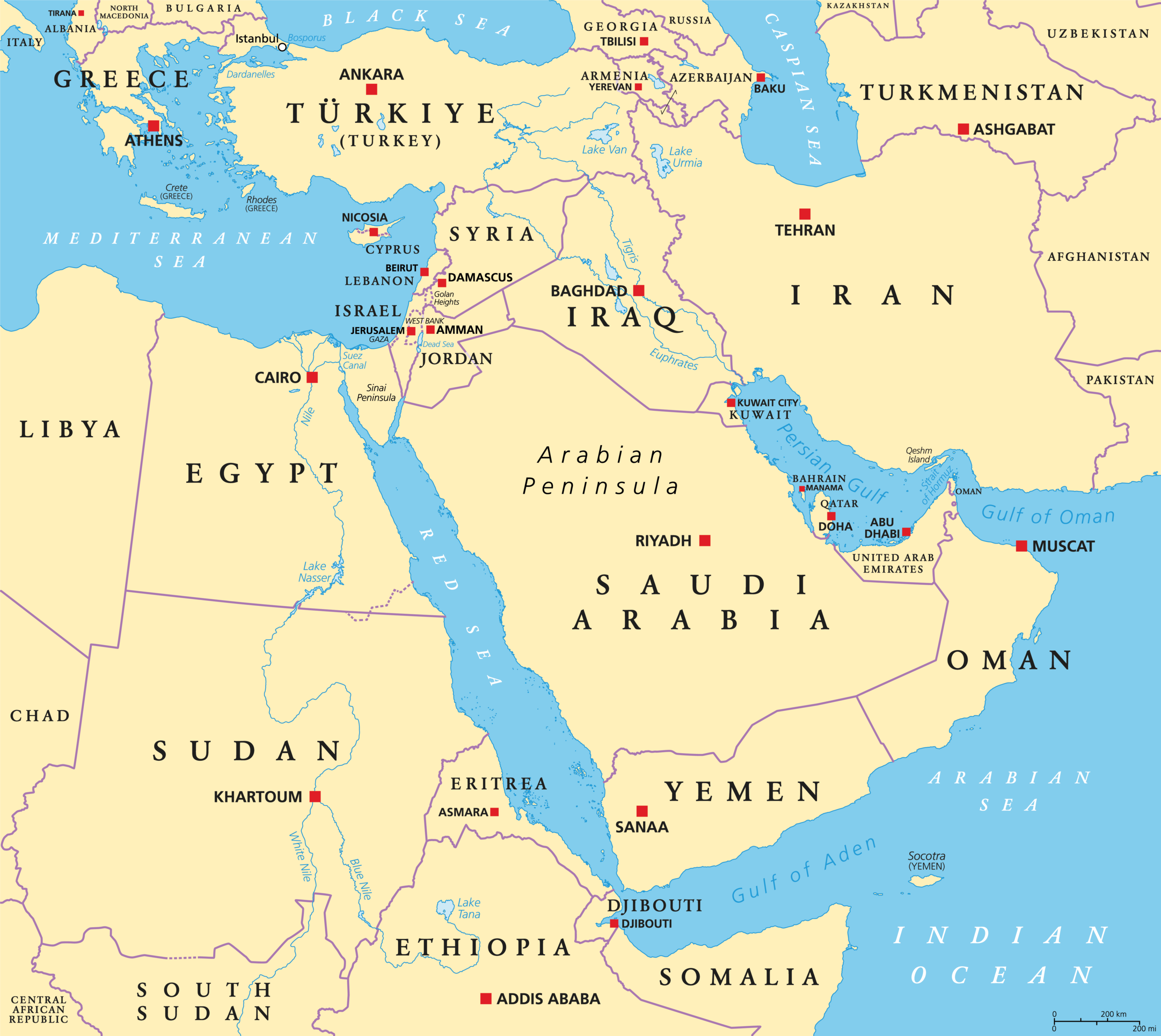
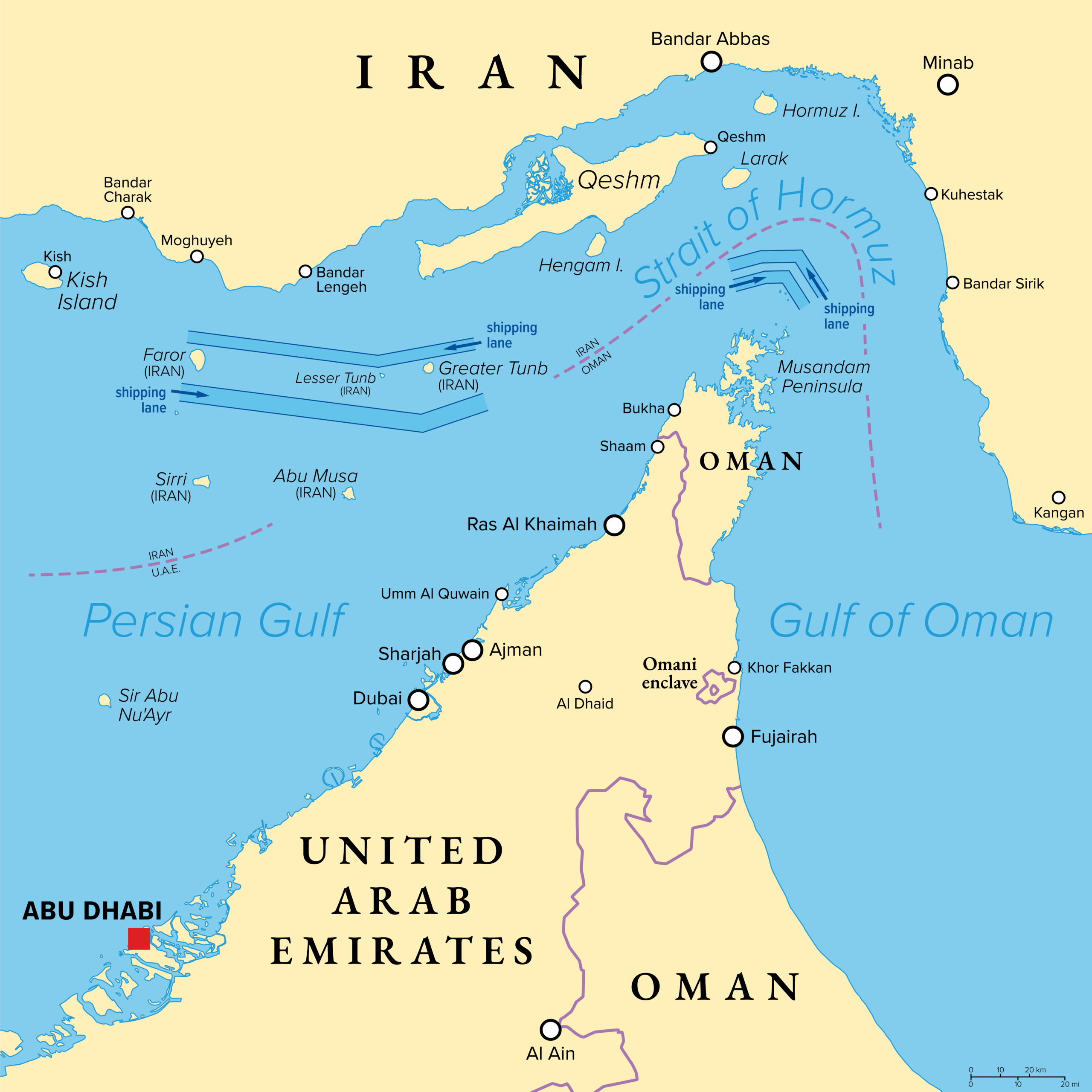
Regional Maps
Political map of the Middle East. iStock/Getty Images Plus
Political map of the Strait of Hormuz. iStock/Getty Images Plus
About the Middle East Institute
The Middle East Institute is a center of knowledge dedicated to narrowing divides between the peoples of the Middle East and the United States. With over 70 years’ experience, MEI has established itself as a credible, nonpartisan source of insight and policy analysis on all matters concerning the Middle East. MEI is distinguished by its holistic approach to the region and its deep understanding of the Middle East’s political, economic and cultural contexts. Through the collaborative work of its three centers — Policy & Research, Arts & Culture, and Education — MEI provides current and future leaders with the resources necessary to build a future of mutual understanding.
الاستقلال الفكري
MEI maintains strict intellectual independence in all of its projects and publications. MEI as an organization does not adopt or advocate positions on particular issues, nor does it accept funding that seeks to influence the opinions or conclusions of its scholars. Instead, it serves as a convener and forum for discussion and debate, and it regularly publishes and presents a variety of views. All work produced or published by MEI represents solely the opinions and views of its scholars.
Additional Photos
Top photo by US Central Command Public Affairs
Contents photo by Atta Kenare/AFP via Getty Images